Tracing the history of forced labor rulings

Yuka Aoki, 37, lawyer and author of a new book on the Korean Supreme Court's last year ruling on forced labor, poses for a photo after an interview, Saturday. Aoki is visiting Seoul to attend the International Bar Association (IBA) conference this week. / Korea Times photo by Lee Suh-yoon
Japanese lawyers make historical case for why court victories for victims do not violate the 1965 Korea-Japan treaty
By Lee Suh-yoon
In a historic ruling, Oct. 30 last year, Korea's Supreme Court ordered Nippon Steel to compensate Korean victims of wartime forced labor. The decision, soon followed by subsequent ones against Mitsubishi, Fujikoshi and Hitachi, prompted a fierce backlash from the Japanese government.
Condemnations were issued from top-levels and diplomatic barb-throwing followed. Japanese Prime Minister Shinzo Abe even rolled out economic warfare.
The conveyed logic for the extreme measures was simple: the 1965 Korean-Japan Treaty settled compensation issues for individual wartime victims, or at least transferred the responsibility to the Korean government for good.
But despite all its resolve and force, the Abe administration's criticism of the forced labor rulings is ungrounded and blind to history, according to Japanese lawyers familiar with forced labor cases tried in Japan in the 1990s and early 2000s.
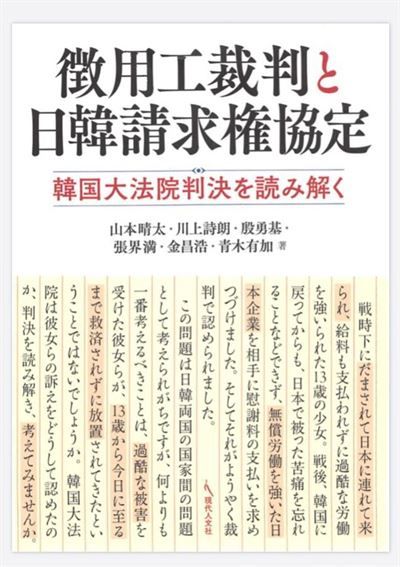
The cover of the book written by six Japanese lawyers to explain Korean Supreme Court ruling to the Japanese public / Courtesy of Yuka Aoki
Six Japanese lawyers including Seita Yamamoto, the lawyer who represented Korean plaintiffs in forced labor damage suits against the Japanese government, recently published a book explaining the Korean Supreme Court ruling to the Japanese public.
“We wrote it not because we had new findings, but because so little was known to the public about basic facts regarding the forced labor lawsuits,” Aoki Yuka, one of the co-authors, told The Korea Times in an interview in Seoul. “Back in the 1990s, Japanese media outlets empathized with the Korean victims in Japanese courts but now they just adopt the government's stance. Most citizens just believe what the Abe administration tells them because they lack the historical education to think otherwise.”
The book is written in a Q & A format, made to be accessible to a middle school reader. While studying the rulings made in the Japanese courts more than a decade before the Oct. 30 ruling, Aoki said she was “surprised” by the detail and extent to which Japanese courts recognized the wrongs done to the victims. Though they did not accept the victims' claims for damages, these rulings specifically outlined how young Koreans were tricked and forced into unpaid labor at Japanese factories under inhumane conditions during World War II, Aoki says.
The book also picks apart the Japanese government's political maneuvering around the forced labor lawsuits filed in its own country.
Throughout the 90s, the 1965 Korea-Japan Treaty was not a viable argument against the victims. Earlier, the Japanese government had made it clear that the San Francisco Peace Treaty did not transfer to them the U.S. government's responsibility to compensate individual Japanese victims, saying the state could give up “diplomatic protection, but not individual compensation rights.” It upheld the same stance for the 1965 Korea-Japan Treaty to justify it held no responsibility to compensate Japanese citizens who were not able to take their property out of Korea.
According to the book, the Japanese government's interpretation of the diplomatic treaties changed after they realized it could work against them in damage suits by Korean or Chinese wartime victims. Starting in the early 2000s, it started to claim that according to the treaties, victims can retain their “right for compensation” only in private damage negotiations with Japanese firms. In 2007, the Japanese top court accepted this stance by ruling against Chinese victims of forced labor and sexual slavery.
“Though the damage suits by Korean forced labor victims recognized in great detail that forced labor took place and the individuals held the right to press for damages, it dismissed their cases for various reasons including new interpretations of the San Francisco and 1965 treaties,” Aoki said.
Aoki, currently based in Nagoya, is representing plaintiffs in the recent controversy of the closing of the sex slavery statue exhibit in Aichi Prefecture art festival and a constitutionality suit against the 2015 collective self-defense legislation.
“I hope that this historical context can help the Japanese public see the problem as a human rights matter, not just a political one,” she said.