Urban poor trapped in vicious circle of poverty
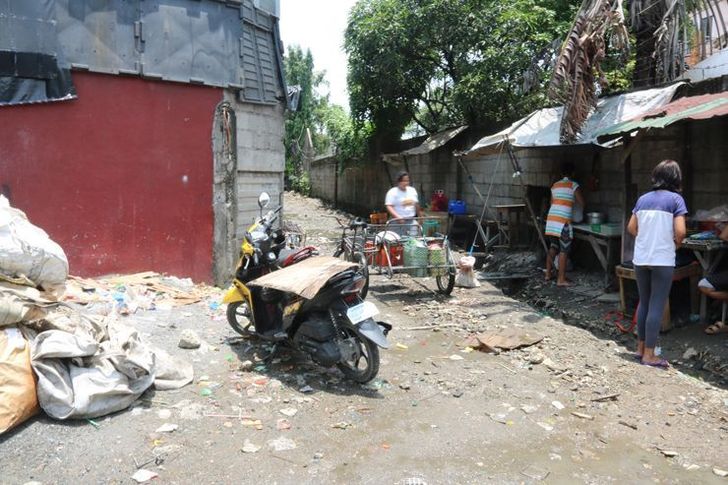
Some residents of urban slums in Metro Manila make their living by collecting recyclable waste from nearby dumpsites or laboring as factory workers. / Korea Times
In Metro Manila slums, poverty is passed down from one generation to the next
By Kang Hyun-kyung
Metro Manila _ A life with dignity has long been forgotten by people in the urban slum of Mabolo in Maysilo, 23 kilometers north of the Philippine capital city of Manila.
Some of the residents are illegal occupants, or squatters, who had migrated to Metro Manila from rural areas for jobs but ended up in extreme poverty, with shattered dreams and no means to lead decent lives.
Stretched over 636 square kilometers around the Philippine capital, Metro Manila consists of 12 cities and five municipalities. Like many other urban areas, the region has two faces _ the rich and prosperous downtown areas and the slums on the outskirts.
The residents of the slums, who are the poorest of the poor, make their living by collecting recyclable waste from nearby dumpsites or working as factory workers. Their tiny incomes make it hard for them and their families to meet such basic human needs as decent food and housing.
Like other poor people in Metro Manila, people in Mabolo live in ramshackle homes in dark, humid and unsanitary environments. Each home has one or two rooms in which an entire family sleeps side by side on wooden floors.
During weekdays, some humanitarian workers provide free meals to kindergarten and elementary school students at a warehouse near a factory in Mabolo. Maria Hobayan, a cook who prepares free meals for the children, said those children would not have anything to eat without the free meal program.
She mentioned her conversation with a man in his 30s who was taking home three plates of rice and noodles for his three children, who were sick with chickenpox at home.
Residents in Mabolo are trapped in a vicious circle of poverty, that is, poverty is passed down from generation to generation.
“In the Philippines, the urban poor and the slums are a decades-long story,” said Jung Bup-mo, a research fellow at the Seoul National University Asian Center. “The slums in Metro Manila were created three or four decades ago at the beginning of urbanization. People in rural areas migrated to the suburbs of the capital city in search of jobs and better lives, but the high unemployment in the city had left them jobless.”
They chose to stay in the suburbs, not going back to their hometowns, built new homes with salvaged materials in government-owned territories and lived there as illegal occupants.
The decades-old slums have puzzled those who are familiar with the resilient Philippine economy.
The Philippines, one of the world’s fastest-growing economies, experienced GDP growth of 6.8 percent last year, a 0.9 percent increase from 2015. According to the World Bank’s Global Economic Prospects, the country’s GDP growth is expected to reach between 6.5 and 7.5 percent this year.
However, the benefits of the country’s economic growth don’t trickle down to the poor.
In the slums, children inherit their parents’ socioeconomic status, as they are forced to work from a very young age, instead of going to school. When they grow up, they become vendors or construction laborers to support their families.
Child labor is common in the poor northwestern seaside city of Navotas. Shirtless children collect bottles and other recyclable garbage from dumpsites to earn income. When the reporter was stuck in traffic in a taxi while heading from the Manila Ninoy Aquino International Airport to Maysilo, Malabon City, on July 31, two kids approached the car and begged for money. The driver gave them some coins but later charged the reporter 1,850 Philippine pesos for the 23-kilometer trip, a fare over three times higher than that of Uber.
Some poor people in the Philippines are able to jump to a higher socioeconomic status and end the vicious circle of poverty through overseas guest worker programs, from which they earn much more money than what they can earn at home. But such opportunities are off-limits to the urban poor, according to Jung.
“The guest worker program, which is the last resort of the poor to escape poverty, is not an option for the slum residents because it requires a certain amount of initial investment such as for visa processing fees and other expenses for language and other necessary job training,” he said. “The urban poor cannot afford to make such an investment. Thus, they continue to live in the vicious circle of poverty.”
According to the International Monetary Fund, the Philippines, along with India and Mexico, is one of the world’s largest recipients of remittances. Overseas Filipino guest workers work in various fields, including health care, aviation and construction. Over 50,000 Filipinos work in Korea, mostly in the manufacturing sector.
Health risks are another threat to the urban poor. Slum residents are vulnerable to various infectious diseases, as their homes are located mainly on low-lying floodplains along river banks or dumpsites.
The World Health Organization (WHO) warned of health risks from various infectious diseases after tropical storm Ondoy ripped through the country in April 2010. According to the WHO, cases of acute watery diarrhea increased within Metro Manila and leptospirosis broke out in three villages in Marikina City during the typhoon. Nearly 64 percent of the post-typhoon leptospirosis cases were from Metro Manila.
Jung, who earned his doctoral degree in anthropology from the University of the Philippines and did research on the urban poor during his 10-year stay in the Southeast Asian country, said the slums have remained a headache to the Philippine government, as its previous efforts to tackle the problem have borne little fruit.
According to him, the Philippine government had, among others, implemented a relocation project to help the urban poor lead better lives outside the city, such as Cabuyao Southville.
“The project was a partial success. Some of the relocated people successfully settled in their new territory,” he said. “But some returned to the capital area because there were no jobs available for them in the new location.”
The slums remain and pose a grave threat to balanced urban development because urban migration continues despite the high unemployment in the city area.
According to 2015 Philippine government data, 26.3 percent of Filipinos live below the poverty line, which means those people cannot afford to meet basic human needs, including food.
“The Philippines is not the only country wrestling with slums. In Korea, we also have urban poor. The difference is that the ratio of the poorest of the poor in the Philippines is much higher than that in other countries,” said Jung.
He said a relocation plan that lacks job creation for migrants is doomed to fail. “Once jobs are created in the relocation area, people would not return to the urban area because the reason they left their home (in the first place) was for better lives. So if job creation accompanies the government-led relocation project, it could bear fruit,” he said.