Number of heat-related patients jumps over 70 percent: How to stay safe during extreme heat
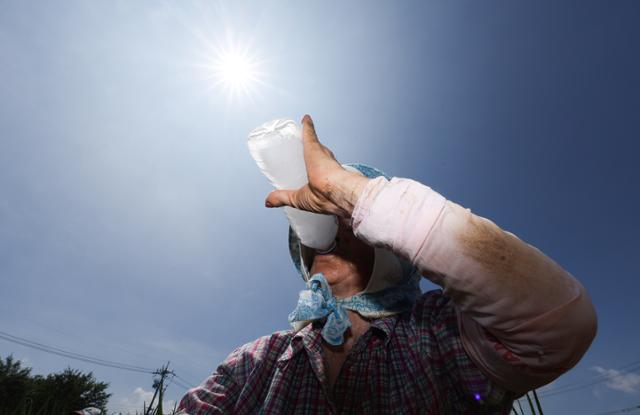
A farmer drinks ice water to cool down while planting green onion seedlings in a field in Goryeong County, North Gyeongsang Province, Wednesday, as a heat wave advisory remains in effect. Yonhap
With heat wave advisories issued across South Korea — from Seoul on Monday to other regions like Incheon, Suwon, Gangwon and South Chungcheong by Wednesday — oppressive heat and humidity continue to grip the country. Such weather puts added stress on the body’s ability to regulate its temperature, raising the risk of heat-related illnesses including heat exhaustion, heat cramps and heatstroke.
Experts advise checking the weather forecast before any outdoor activity, and staying indoors on days with heat wave alerts. Drinking plenty of water and wearing lightweight, breathable clothing can also help prevent heat-related conditions.
According to the Health Insurance Review and Assessment Service, 27,248 patients were treated for heat-related illnesses in 2024 — up about 74 percent from 15,638 cases in 2022. These conditions, triggered by prolonged exposure to high temperatures, include heat exhaustion, heat cramps and the more dangerous heatstroke.
Heatstroke is a medical emergency caused by the failure of the hypothalamus — the brain’s temperature regulation center. Symptoms include a body temperature above 40 degrees Celsius, confusion or loss of consciousness, low blood pressure, severe headaches and chills. If left untreated, it can lead to multiple organ failure or death.
Heat exhaustion typically results from excessive sweating, leading to dehydration and electrolyte imbalance. It causes fatigue, dizziness and low blood pressure. Heat cramps, caused by salt depletion, lead to involuntary muscle spasms, often in the arms, legs or abdomen. At the first sign of these symptoms, people are advised to stop all activity, rest in a cool place and drink fluids containing electrolytes. Gently massaging and stretching affected muscles can help relieve cramps.
“Even mild symptoms of heat-related illness can escalate into heatstroke if neglected,” said Lee Yoo-jeong, a family medicine specialist at Korea University Guro Hospital. “If symptoms persist for more than an hour or worsen, it is critical to seek medical attention. Early response is especially vital for high-risk groups such as the elderly, young children and people with chronic illnesses.”
Outdoor workers — including those in construction, agriculture and delivery services — are particularly vulnerable during heat waves. Experts recommend avoiding outdoor labor between noon and 5 p.m., when sunlight is strongest. If outdoor work is unavoidable, it is essential to take regular breaks every 20 to 30 minutes and hydrate frequently.
“Checking your temperature and physical condition before and after work can go a long way in preventing serious heat-related illness,” Lee said, adding that preventive education in the workplace and access to air-conditioned rest areas are also important.
This article from the Hankook Ilbo, the sister publication of The Korea Times, is translated by a generative AI system and edited by The Korea Times.