Why do experts say jjamppong broth could be deadly?
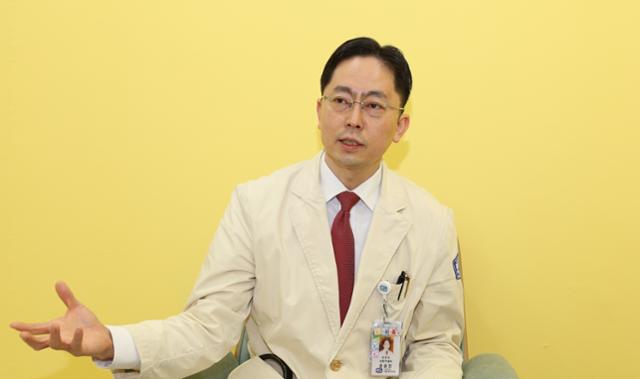
Professor Yoon Jong-chan / Courtesy of Seoul St. Mary’s Hospital
Heart failure — often called the “final stage of heart disease” — has become the leading cause of hospitalization among Koreans aged 65 and older. With nearly half of all patients dying within five years of diagnosis, experts warn it can be even more dangerous than many cancers.
“Because Korea’s population is aging faster than any other country in the world, heart failure is likely to become an even greater public health issue,” said Yoon Jong-chan, a cardiology professor at Seoul St. Mary’s Hospital in Seocho District, Seoul, on April 4.
In 2002, fewer than one in 100 Koreans (0.77 percent) had heart failure. By 2020, that number had surged to 2.58 percent — more than tripling in less than two decades.
“Once diagnosed with heart failure, patients should never stop taking their medication on their own, even if symptoms improve,” Yoon said. “We also need to consider expanding the use of left ventricular assist devices (LVADs) to patients with weakened right heart function as well.”
“Among major cancers, the five-year survival rate is lowest for lung cancer, followed by ovarian and colorectal cancer in women and colorectal and prostate cancer in men,” Yoon said. “The five-year survival rate for heart failure is higher than lung cancer but lower than ovarian or colorectal cancer. At hospitals like ours, roughly one in 20 patients admitted with heart failure dies of acute complications before they are discharged.”
Heart failure occurs when the heart’s structure or function becomes impaired and can no longer pump enough blood throughout the body. If the left side of the heart (which sends oxygen-rich blood to the body) is affected, organ function may decline due to poor circulation. When the right side of the heart (which sends blood to the lungs for oxygen) weakens, blood pools in the veins, causing swelling in the legs and feet.
An estimated 64 million people worldwide suffer from heart failure.
“Even while lying down, patients may feel chest tightness or have difficulty breathing,” Yoon said. “Other symptoms include ankle swelling, chronic fatigue and indigestion. By the time patients seek diagnosis, they are typically already in Stage C of the disease.”
Heart failure is classified into four stages. Stage A includes individuals with risk factors like hypertension or diabetes. In Stage B, there are structural or functional abnormalities in the heart but no symptoms — such as when an enlarged left ventricle or valve issues are detected during routine checkups. Stage D represents severe heart failure that does not improve with medication or procedures and requires advanced interventions like heart transplants or LVADs.
“An LVAD is a pump implanted in the heart to help the left ventricle push blood into the aorta,” Yoon explained. “It works much like a water pump. Only patients who pass a pre-approval review by the Health Insurance Review and Assessment Service can receive the procedure.”
Although the surgery costs around 200 million won (about $147,000), insurance coverage introduced in 2018 has reduced patients’ out-of-pocket costs to roughly five percent.
For severe heart failure patients, the one-year survival rate is about 25 percent with medication, 68 percent with LVAD and 88 percent with a heart transplant. Unlike heart transplants, which may not be viable for patients over 70, LVADs can be used by patients up to 80 years old.
“LVADs currently support only the left heart,” Yoon said. “Patients with both left and right heart failure are usually advised to undergo heart transplants. However, about five percent of patients needing LVADs also have severely weakened right hearts. In these cases, we need to consider using LVADs for the right heart as well, but this is currently not permitted.”
Yoon believes exceptions should be allowed on a case-by-case basis. “These patients have no option but to wait for a heart transplant while their right heart remains unsupported,” he said.
The number of people on Korea’s heart transplant waiting list surpassed 1,000 in 2022 (1,034) and rose to 1,210 last year. However, actual transplants fell from 245 in 2023 to 194 in 2024. “Some patients receive a heart transplant after getting an LVAD, while others may live with the device for 10 to 20 years without needing a transplant,” Yoon added.

gettyimagesbank
“It’s quite common for heart failure patients to end up in the hospital after eating something like jjamppong (spicy seafood noodles),” Yoon said. “Salty broths and stews increase sodium levels in the body, which in turn retain water. This worsens swelling and shortness of breath — key symptoms of heart failure. Avoiding salty food is essential.”
Asked whether patients can stop medication once symptoms improve, Yoon warned against it. “If medication causes side effects like frequent urination or dizziness, you should adjust the dose under your doctor’s guidance,” he said. “Stopping medication on your own can cause symptoms to worsen dramatically. It’s like sliding down a slippery slope.”
This article from the Hankook Ilbo, the sister publication of The Korea Times, is translated by a generative AI system and edited by The Korea Times.