Experts see no peak in Korea's COVID-19 infection numbers

Graphic by Cho Sang-won
Daily cases hit record new high of 2,223
By Lee Hyo-jin
The COVID-19 pandemic is spiraling out of control in Korea with daily confirmed cases for Tuesday reaching an all-time high of over 2,000. Medical experts also believe that this current fourth wave of infections, which is proving tougher to curb than previous ones, has not even reached its peak.
The Korea Disease Control and Prevention Agency (KDCA) reported 2,223 daily new infections for Tuesday, a significant jump from the previous day which saw 1,537 cases, and bringing the total caseload to 216,206
The tally is the highest figure since the coronavirus outbreak began here in January 2020, breaking the previous record of 1,895 set July 27. The number has stayed above 1,000 for over a month since July 6.
The latest uptick which came despite the month-long toughest anti-virus measures in the capital area have put the health authorities on high alert as they had assessed that current infections in the region were “gradually decreasing” just two days ago.
“We are entering a new phase, a new critical moment in terms of COVID-19 response,” Health Minister Kwon Deok-cheol said at a coronavirus response meeting, Wednesday. “The only ways to protect the safety and lives of the people are to increase the vaccination rate and prevent the spread of the virus.”
Medical experts insisted that the government should immediately introduce additional antivirus measures as the current distancing measures ― Level 4 in the Seoul metropolitan area and Level 3 in other regions ― are failing to curb the spread of the coronavirus.
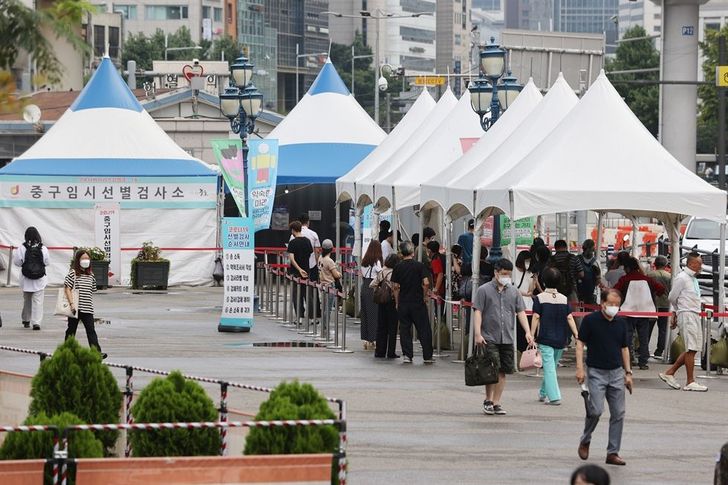
People stand in line to receive a coronavirus test at a makeshift testing center near Seoul Station, Wednesday. Yonhap
Concern is rising that increased travel over the summer vacation period and the upcoming Liberation Day holiday from Saturday to next Monday, as well as the reopening of schools later this month may lead to an explosive growth of infections in the coming weeks.
“The current social distancing plan was revised with the aim of relieving the socio-economic burden, so it is less effective in curbing the virus,” said Kim Woo-joo, an infectious disease specialist at Korea University Guro Hospital. “The daily tally may climb to 3,000 unless stronger regulations are implemented.”
Jung Jae-hun, a professor at Gachon Medical University also shared this pessimistic view. “We might not be seeing a peak in daily infections for the time being. The number is not expected to fall drastically in the near future.”
He added, “Current distancing measures are not effective due to the increasing cases of the Delta variant along with accumulated public fatigue over the regulations.”
The experts said that vaccination is key to reducing the infection rate, and thus the government should fully focus on vaccinating at-risk groups including the elderly and chronically ill patients.
“One of the most important goals of the vaccination drive is to prevent elderly people from falling into a critical condition and reducing the death rate among them,” Kim said. “It seems appropriate to finish the second round of vaccinations for people aged 60 or older, and then proceed to those in their 50s.”
Kim said, “The first dose is insufficient to prevent Delta variant infections. Recent findings show that the variant is as twice as contagious than the original virus and more likely to cause severe illness.”