COVID-19 cases over 1,000 again, daily deaths 40

One of the inmates at Dongbu Detention Center in Seoul's Songpa District waves on Tuesday. A mass COVID-19 cluster infection at the rising hotbed of the disease spread involved 233 on Dec. 28 alone, bringing the total cases there to 757. Yonhap
After a respite of three days, daily new COVID-19 cases headed back to over 1,000 for Monday despite tougher curbs that have been extended for another week. Deaths from the disease also hit another high of 40 amid a looming medical system crisis.
The Korea Disease Control and Prevention Agency (KDCA) said the country added 1,046 more coronavirus infections, including 1,030 local cases, raising the total caseload to 58,725.
The daily infections rebounded from 808 cases for Sunday and 970 for Saturday ― the country's new daily virus cases have hovered around 1,000 since mid-November.
The 40 people who died raised the death toll to 859, and marked the highest-ever daily total since the first confirmed COVID-19 case was reported in late January.
On Sunday, the KDCA extended the current Level 2.5 distancing measures in the capital area and the Level 2 restrictions in the rest of the country until Jan. 3 over concerns on the impact on the economy.
The government will decide whether to raise restrictions to Level 3, the highest in its five-tier system, before the extended deadline.
Instead of applying measures that would deal a heavy blow to millions of small merchants, the administration has deployed "targeted" curbs
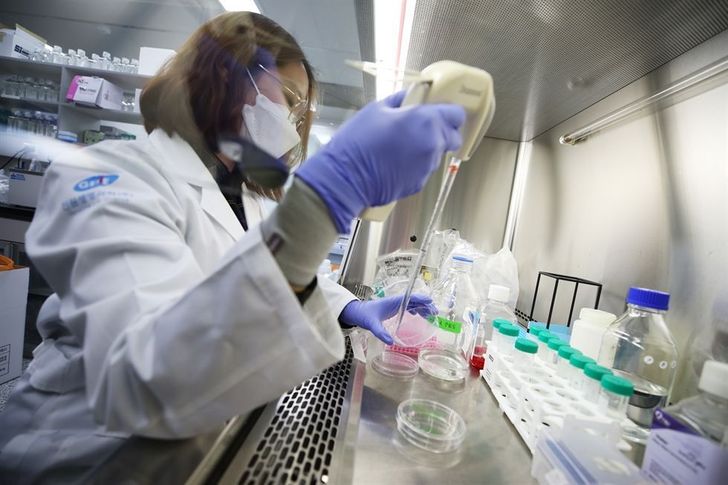
Scientists at Geneone Life Science in Seoul's Gangnam District work on developing a COVID-19 vaccine, Tuesday. Yonhap
Since last Wednesday, the greater Seoul area has banned gatherings of five or more people with restaurants in the greater capital area facing a fine if they serve groups of more than four. The strongest-ever measures have been applied nationwide since last Thursday.
Ski resorts and tourist sites have been shut down to slow the spread of the virus during the New Year's holiday season.
Adding woes to the country's battle against the pandemic, however, was the KDCA report Monday that it had confirmed a new, potentially more transmissible coronavirus variant in three people who arrived from Britain last Tuesday.
The government said it will suspend all flights from London to Incheon until Jan. 7 to prevent the variant from spreading in Korea, while making all incoming passengers from Britain and South Africa submit documents that prove they tested negative for COVID-19.
A relentless rise in virus cases has spawned concerns about a shortage of intensive care unit (ICU) beds in hospitals ― the health authorities issued a rare order to private hospitals to secure more ICU beds for COVID-19 patients.
The third wave of the pandemic is raging across the country, although of the newly identified local infections Monday, nearly 80 percent were reported in the capital and surrounding areas.
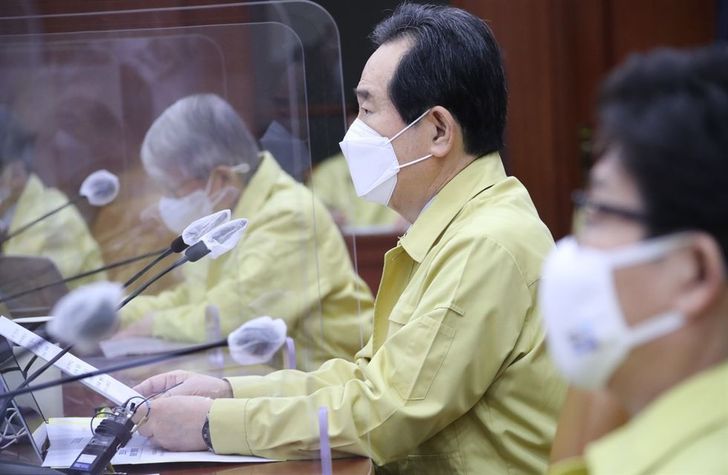
Prime Minister Chung Sye-kyun speaks during a COVID-19 countermeasures meeting at the Government Complex Seoul in Jongno District, Tuesday. Yonhap
Of the local infections, 519 cases were reported in Seoul and 251 cases in Gyeonggi Province that surrounds the capital. Incheon, west of Seoul, reported 32 more cases.
Other municipalities reported new infections, with the country's largest port city of Busan adding 17 and North Gyeongsang Province reporting 28.
The number of seriously or critically ill COVID-19 patients reached 330, up from 295 the previous day.
The total number of people released from quarantine after making a recovery stood at 40,703, up 1,435 from the previous day.
Meanwhile, 16 imported cases were reported, increasing the total to 5,334 ― 10 came from Asian countries except China, followed by three from the United States and three from Europe.
The country has carried out 4,098,181 coronavirus tests since Jan. 3, including 59,874 tests in the past 24 hours.
The pandemic, which started in China late last year, has killed more than 1.77 million people worldwide and infected more than 81 million as of Tuesday, according to a tally from Johns Hopkins University. (Yonhap)