Biopharmaceutical emerges as SK's next big thing

SK Bioscience CEO Ahn Jae-yong, right, poses with AstraZeneca Korea CEO Kim Sang-pyo, left, and Minister of Health and Welfare Park Neung-hoo at SK Bioscience's research laboratory in Pangyo, Gyeonggi Province, Tuesday.
By Nam Hyun-woo
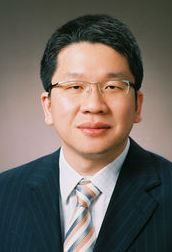
SK Discovery Vice Chairman Chey Chang-won
The biopharmaceutical business is emerging as SK Group's new growth engine, as SK Bioscience is grabbing market attention with a COVID-19 vaccine development cooperation agreement following SK Biopharmaceutical's successful initial public offering (IPO).
Industry officials said SK Bioscience is also preparing for its debut on the bourse, which will likely result in a successful outcome for the group’s continued investments in the biopharmaceutical business.
Shares of SK Chemicals were trading at 320,000 won as of 9:20 a.m., Monday, up 14 percent from the previous session, on investors’ hopes for its subsidiary SK Bioscience. SK Chemicals owns a 98.04 percent stake in SK Bioscience.
Compared to a month earlier, when SK Chemicals closed at 111,000 won on June 26, the company’s shares nearly tripled in value.
The rally came after SK Biosciences agreed Tuesday to manufacture AstraZeneca’s experimental COVID-19 vaccine, as part of the latter’s plan to build a global supply base for the vaccine, which is in Phase 3 clinical trials after showing promising results against the coronavirus. SK Bioscience will become the second contract manufacturing organization for the vaccine, following Russia’s R-Pharm.
Upon signing the agreement, SK Bioscience is preparing for its debut on the KOSPI. According to the company, it has tapped NH Investment & Securities as the lead manager and Korea Investment as the co-lead manager to offer its shares on the Seoul bourse.
“We have been pushing ahead with a plan to sell our shares on the Seoul bourse by 2021 to raise funds for the expansion of our business and additional growth,” the company said.
Though no further details for SK Bioscience’s IPO have been disclosed, brokerages reportedly anticipated the company’s value will reach 3 trillion won ($2.5 billion). SK Bioscience and its parent SK Chemicals are subsidiaries of SK Discovery, which is a holding firm controlled by Vice Chairman Chey Chang-won with a 40.2 percent stake.
Though the companies are recognized as members of the SK conglomerate, they are independent from SK holdings, which controls SK Group’s main units including SK Innovation, SK Telecom and SK E&S. Chey Chang-won is a cousin of SK Group Chairman Chey Tae-won.
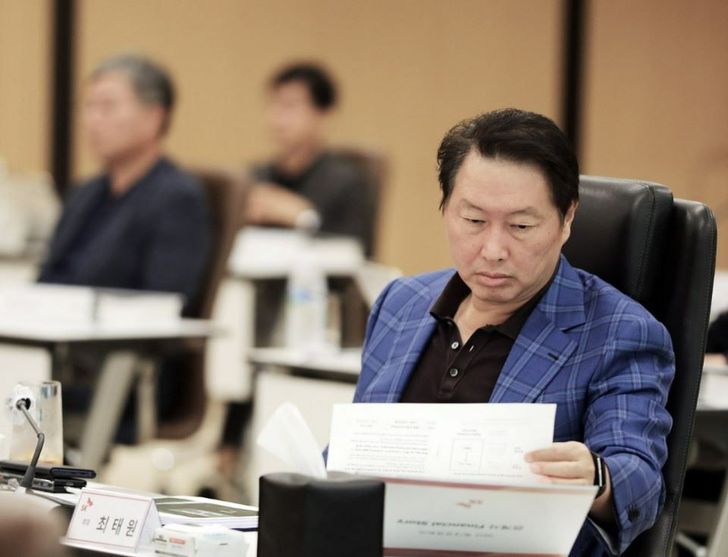
SK Group Chairman Chey Tae-won Courtesy of SK Group
With SK Bioscience hitting its stride with the AstraZeneca deal, the company is expected to follow in the footsteps of SK Biopharmaceuticals, which stirred the domestic stock market with its IPO.
SK Biopharmaceuticals went public, July 2, with an initial price of 49,000 won per share, which quickly shot up to 216,500 won by July 7.
This came after the company’s partial-onset seizure treatment XCOPRI began sales in the U.S. in May, after winning U.S. Food and Drug Administration (FDA) approval last November. The firm also licensed out its sleep disorder treatment Solriamfetol to Jazz Pharmaceuticals, which won European Medicines Agency approval for sale in January.
With the company now trading at slightly over 185,000 won on foreign investors’ unloading, analysts are anticipating the company will show stable growth, with its sales reaching 1.8 trillion won by 2030.
Eugene Investment & Securities analyst Han Byung-hwa suggested 110,000 won as SK Biopharmaceuticals’ target price, comparing the company to Belgium’s UCB, which successfully morphed itself into a biopharmaceutical firm based on its abundant capital raised from film and chemical businesses in the past.
“Unlike other bio and pharma companies, SK Biopharmaceuticals has its basis on the giant industrial capital of SK Group,” Han said. “This means the chance is high that the company’s new drugs in the pipeline will be commercialized after getting support from SK Group’s abundant cash supply.”
As the two biopharmaceutical units are showing noticeable outcomes, SK Group’s continued investment in the biopharmaceutical business is gaining fresh recognition.
SK Group began betting on the biopharmaceutical business in 1988, when former SK Group Chairman Chey Jong-hyon announced a plan to nurture it within the group. At that time, Chey established a pharmaceutical division in SK Chemicals, and set up a biopharmaceutical research lab in the U.S. in 1993.
Since then, current Chairman Chey Tae-won has been making continued investments in biopharmaceuticals, suggesting them as one of the group’s growth engines by 2030.