Top court rules against prescription without seeing patients
By Bahk Eun-ji
The Supreme Court has overturned an appeals court ruling in favor of a doctor who gave a prescription to a patient, who he had never met in person but had consulted with over the phone, Monday, which now sees the case returning to the appeals court for a rehearing and possible presentation of new evidence.
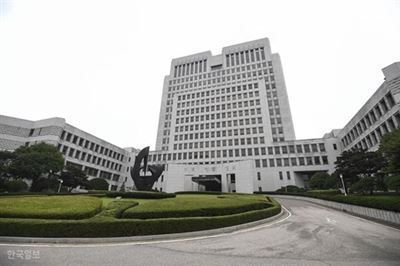
The Supreme Court building in Seocho, southern Seoul. / Korea Times file
The Supreme Court has overturned an appeals court ruling in favor of a doctor, Monday, who gave a prescription to a patient he had never met in person but had consulted with over the phone.
The ruling was made as “distance medicine” is gaining traction amid the COVID-19 pandemic. Patients and medical professionals alike have been turning to phone consultations to reduce chances of contact with potential carriers of coronavirus at local clinics.
Although the current law stipulates that prescriptions should not be given to patients unless they are directly monitored or examined by doctors, the government has temporarily allowed doctors to give consultations and prescriptions over the phone for patients with mild cold symptoms since February this year.
The doctor, whose name has not been made public, gave a prescription for antidepressants including Futin capsules to the patient whom he had never met. He claimed he was asked to do so by a friend in February 2011.
In the original hearing the court ruled the doctor had violated the Medical Law and fined him 1 million won ($804.60). However, the matter proceeded to the appeals court which overturned the initial ruling saying the doctor was able to examine the patient over the phone even though the patient didn't visit the clinic in person.
“The 'direct examination' in order to prescribe, which is stipulated by the Medical Law, is to prevent persons from posing as doctors, without having an actual medical license,” the appeals court ruled initially.
The prosecution applied for the matter to be adjudicated by the Supreme Court which referred the case back to the appeals court for a rehearing stating a doctor should be aware of their patient's condition by having them visit a clinic for treatment in advance, if they intend to give prescriptions over the phone.
“He was not fully aware of the patient's health condition during the phone call. Therefore, the doctor cannot be considered to have examined the patient in person,” the top court said. “A medical examination could only be considered if there was an act to make a specific diagnosis or prescription based on a patient's seen and verifiable condition.”