It is time to move into action toward achieving universal health coverage for all
By Park Neung-hoo
I visited Geneva again after one year to attend the 72nd World Health Assembly (WHA), which was held under the theme of “Universal Health Coverage (UHC): Leaving no one behind.” This year's WHA was particularly important as it provided a platform for the discussion of concrete and advanced plans to improve access to medicines.
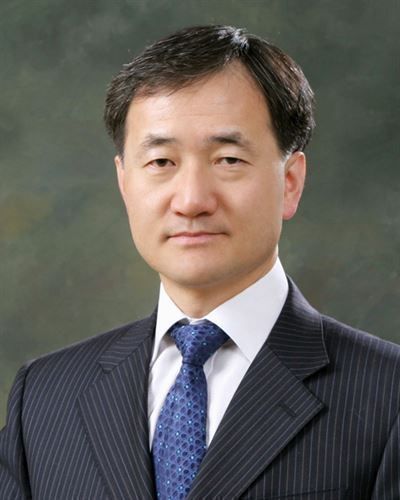
Health and Welfare Minister Park Neung-hoo
Since my keynote speech at the WHA last year, I have stressed the importance of strengthening international cooperation on access to medicines whenever I had the opportunity. I have met with ministers and government officials from various regions, including Southeast and Central Asia, the Middle East and Europe. They have agreed with the view of the Korean government and expressed their strong support.
The pharmaceutical sector is a highly specialized field with unique characteristics. Compared with general commodities, developing medicines demands significantly greater time, resources and highly advanced technology. Overseas studies show that developing anticancer drugs costs about $200 million to $2.9 billion on average. Considering the high cost of inventing new drugs, most countries allow exclusive sales of novel medicines for a certain period of time. The aim is to ensure that pharmaceutical companies continue to invest in new drug development with the assurance of recouping investment.
Meanwhile, pharmaceutical products also serve the public interest since they are essential to saving lives. This is the major reason that reimbursement decisions and price adjustments are not completely left to the market, but controlled through government intervention in countries like Korea, Australia and Austria.
Regrettably, however, monopolies on medicines often cause negative side effects such as sharp price increases or market withdrawals. Without alternative medicines or treatments available, the damage resulting from monopolies can be even more detrimental. The case in point is the recent price hike for Lipiodol we experienced last year.
During the 72nd WHA, there were two important occasions for member states to share their concerns and responses regarding access to medicines.
On May 19, I met with health ministers from seven countries, including the Netherlands, Canada, Germany and Austria. We exchanged our perspectives on drug price transparency, access to high-priced medicines, and priority setting.
On May 20, Korea, along with 15 other countries with similar concerns held a side event to seek concrete solutions and action plans. The theme of the side event was “Access to medicines, vaccines and health products: A multi-dimensional approach for ensuring transparency of markets, affordable and quality products to achieve UHC.” Ministers and senior officials from nine countries, including Italy, the Netherlands, Portugal, Spain and Greece, participated as high-level discussion panelists. More than 350 people showed up for the event, far exceeding the room capacity of 200 seats. The popularity of the side event demonstrated a high interest in access to medicines across the globe.
Both of the meetings identified lack of transparency in drug prices and limited access to relevant information as the biggest obstacles to strengthening accessibility of medicines. To address this issue, joint efforts at the regional level have been on the rise. At the side event, Mr. Bruno Bruins, Minister of Health, Welfare and Sports of the Netherlands, called on Member States to actively participate in the Beneluxa Initiative, which is operated in partnership with Belgium, Luxembourg, Austria and Ireland. Dr. Nikolaos Raptis, Adviser to the Minister of Health of Greece, also introduced a joint committee operated by Greece and its neighboring countries to promote understanding of local pharmaceutical markets, joint procurement and information sharing.
Moving forward, the Korean government intends to focus on preparing follow-up measures to make sure that the above discussion will not end as a one-off event. The Ministry of Health and Welfare will consider adopting concrete action plans to move forward with the agenda proposed through the side event and seek ways to hold such events on a regular basis. In addition, cooperation between Korea and international organizations will be further reinforced. As part of this effort, Korea and the WHO will hold the first Policy Dialogue in Seoul in June this year. Whenever opportunities arise, I will also try to gain support from other countries by reiterating the necessity of boosting international cooperation.
This will certainly not be an easy road, but we urgently need to take a step forward. It is time to move into action toward achieving universal health coverage for all.
Park Neung-hoo is Minister of Health and Welfare of Korea.