Korean parents let YouTube babysit their children
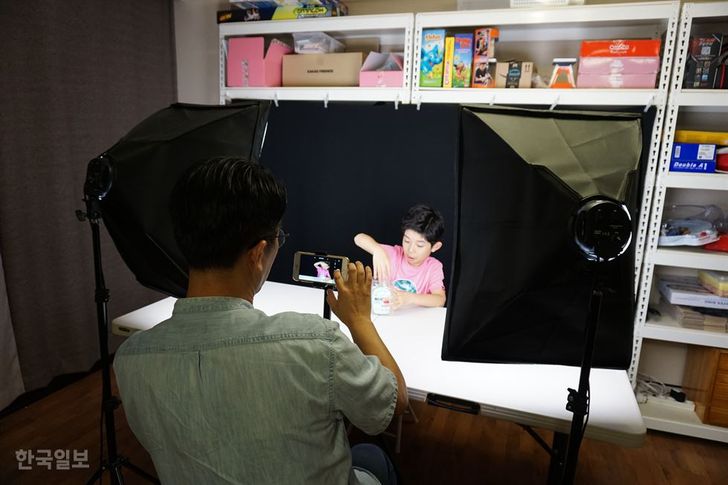
A kid YouTuber plays with slime while his father films him. / Korea Times file
By Lee Suh-yoon
For Kim, an office worker in her late 30s, the smartphone used to be a useful childcare device.
“When my daughter was still three or four-years-old, she didn't leave me alone for a single moment,” Kim said. “I found myself handing her my smartphone so she could occupy herself with a Pororo cartoon or something. I felt some guilt for letting the child get immersed in the mobile world, but it was the only way I could finish some housework, or when we were at a cafe, chat with my friends.”
Kim is not alone in this dilemma. According to a recent survey by Yonsei University's Barun ICT Research Center, six out of 10 Korean parents with children between the age of one and six give their smartphones to their children to either get other work done or pacify them. Only 7 percent responded it was for educational purposes.
The same survey showed 80 percent of the material viewed by young Korean children through a parent's smartphone was through video platforms like YouTube. The most popular contents include cartoons, children songs, and “play simulation” videos where brightly dressed YouTube stars — sometimes as young as five — fiddle around with the latest toy.
More than half of the respondents said children can get an education through smartphones and tablets. However, just 7.8 percent of the apps used by the children in the surveyed households were education-purposed ones.
More than 57 percent of the respondents said they want to reduce the time their children spend using smartphones, and another 9.2 percent even said they want to ban the use of them completely.
“Many parents are using smartphones as a way to conveniently pacify children and that's why children use play and cartoon contents rather than educational ones,” Kim Bum-soo, head of the research center, said. “For smartphones to have a more educational effect, parents should watch digital content with their children, communicating with them and leading discussions.”