Beware of ticks and poisonous mushrooms in fall
By Kim Hyun-bin
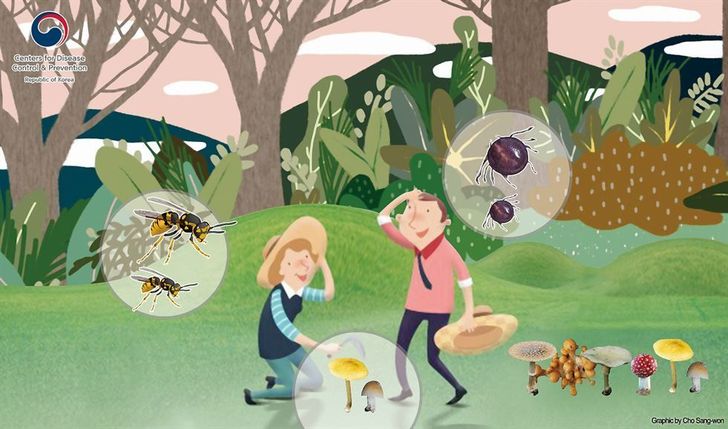
Many people enjoy outdoor activities in the mild fall weather. But there are diseases easily caught in the season, so health authorities are urging people to take caution.
Trombiculiasis is one of the leading infectious diseases prominent during the fall season, which is a rash caused by trombiculid mites, also referred to as a chigger bite.
According to the Korea Centers for Disease Control and Prevention (KCDC), over 10,500 Trombiculiasis patients were reported in 2017 and among them 18 died. The peak season is between September and November, when over 80 percent of the total are usually reported.
Most of the infected were over the age 50 and located in rural farming areas. Some 60 percent of the infected were women.
Mites are the cause of several infectious disease including thrombocytopenia syndrome (SFTS), Lyme disease and tick-borne encephalitis. SFTS is caused by Haemaphysalis longicornis, while Lyme disease and tick-born encephalitis are caused by ticks.
As of July, there have been 56 cases of SFTS, but that number is expected to sharply rise in the coming month as the tick peak season is well under way.
Health officials advise people to wear long sleeves and pants when going out to harvest or dealing with crops. Using tick repellent is also recommended.
They also advise not to sit or lie down in grass fields, and to head straight to the hospital if there are any signs of fever.
Poisonous mushrooms alert
The Korea National Arboretum (KNA) issued a poisonous mushroom alert Sept. 21, after four residents from Mungyeong County in North Gyeongsang Province accidently consumed poisonous mushrooms after picking them on the mountains.
“The heat wave followed by heavy rain lowered the temperatures drastically, increasing the number of poisonous mushrooms,” a KNA official said. “That is why we issued the warning.”
Many mistakenly consume poisonous mushrooms as they look similar to edible ones, he said.
The KNA says there are some misconceptions when identifying poisonous mushrooms, such as placing a silver spoon against the mushrooms to see if the color of the spoon changes or trying to identify them by its color and textures. Experts advise people not to consume mushrooms that they are unsure of.
An upset stomach, vomiting, muscle cramps are a couple of common signs after consuming poisonous mushrooms. Those showing such symptoms are advised to immediately vomit and seek doctor's help.
Look out for bees and snakes
There are other unwelcomed guests during the fall: bees and snakes tend to be more active during the season.
According to the Gyeonggi Provincial Emergency Services, there were over 35,000 bee hives found in the province alone last year where rescue workers removed bee hives. About 22 percent of the cases took place in July, 35.9 percent in August and 24.3 percent in September, meaning 82.2 percent of the hive removal operations were conducted between July and September.
Across the nation, ambulances were also dispatched 7,300 times due to bee stings last year and 680 times for snake bites.
Most of the bee stings occurred between September and October, as many were stung visiting ancestral graves over the Chuseok holidays, the Korean version of Thanksgiving. Over 2,800 cases, or 39 percent of last year's total bee stings cases, were reported during these months.
The regional emergency authorities advised people not to wear strong perfume or cosmetics, and refrain from drinking alcoholic beverages outdoors as bees are sensitive to smell, which raises the possibility of a bee attack.
People are also recommended not to wear dark clothes when working in the fields or visiting ancestral graves as bees become more aggressive. Once stung, one needs to quickly remove the stinger and wash the wound with soap and apply an ice pack on the swelling.