GBN Live House releases 42-band CD to survive plague, flood

GBN Live House is located in the basement of an industrial building in southwestern Seoul's Mullae-dong. / Korea Times photo by Jon Dunbar
By Ian White
Mullae-dong in southwestern Seoul is home to many loud things. None louder than a small basement, surrounded by grinding steel shops, that many call the home of punk and heavy metal in Korea.
, a DIY venue and center of loud, experimental and obnoxious music in Seoul, is in danger of shutting down due to the COVID-19 crisis and from structural damage to the 50-year-old building incurred by flooding. The venue is raising funds by releasing a compilation titled “
,” featuring 42 local bands, and selling “Smash the COVID-19” T-shirts to raise funds.
The compilation, available to purchase as a digital album and as a CD via indie music platform Bandcamp, includes internationally known bands like the Geeks, Scumraid, Little Puppy Princess and Slant through to more local and occasionally eclectic artists such as Sulsa, The 1234-Dah! and Tank Boys.
GBN was born in late 2015 out of necessity. “I booked shows starting around 2009 in Hongdae”, Lee Yuying, owner of GBN as well as drummer for Little Puppy Princess and Sulsa and guitarist for Slant, told The Korea Times. “I would never get paid. I would organize events, but most venue owners would be really rude to loud bands and the rental fees were hella expensive. So we started moving to cheaper places like Jarip HQ in Euljiro and Space Moon in Mullae. When they eventually closed, I had no choice but to take over (and later rename) Moon so my friends could keep doing shitty music and I could pay them, which was a win-win.”
While it may seem strange to focus on a niche community during the pandemic, it is important to note that DIY spaces like GBN are vital meeting places to participate in sharing experiences and creating music for an increasingly wider domestic and international audience.
Societal outliers like GBN serve as important microcosms of challenging art in Korea. They help build roots with similar underground institutions around the world. While it is unlikely that the cultural primacy of K-pop will, or could ever be, supplanted even fractionally, these roots endure and help create an alternative legacy in the minds of the many people who wish to appreciate, experience and participate in contemporary culture here.
“It's probably the only underground venue that's actively connected internationally, so touring bands keep wanting to come there,” explained Jongha, guitarist of death metal band Fecundation.
Some of the international bands that have played the venue include
, Power Trip,
, Napalm Death Is Dead and dozens of others.
Community is what drives many people to regard saving GBN as an existential priority for not only the artists that rely on it, but also the audience members, zine writers, photographers and even other venues that share its DIY outlook.
Ryu Jinsuk, the owner of Club SHARP, said, “To be honest, I never get enough money from Club SHARP and rent is always tight. The reason that my friends and I keep these places running is probably the same: because we like punk. We like the things we like and we hope they will stick around. Don't you?”
This hope extends even beyond Korea's borders: GBN's plight is shared by independent venues around the world including Yokohama's El Puente and Tokyo's Pit Bar, all three of which have been collaborating on fundraising to help keep each other afloat during the pandemic.
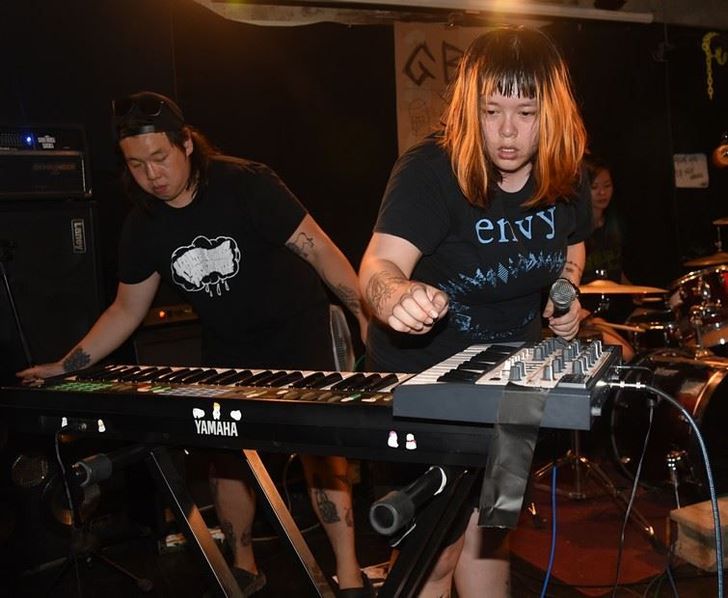
GBN Live House owner Lee Yuying, left, helps the Chinese band Die Chiwawa Die set up in September 2017. / Korea Times photo by Jon Dunbar
Although Yuying cheerfully disagrees that GBN is a community ― “I just want to be the worst part of the scene!” ― many others feel otherwise.
“There's not many venues like GBN, where punks can feel free to play. I've met so many friends I love at this place.” said Songyi, vocalist of Talkbats and Polluter.
“GBN is like my home, where I can truly share what I love,” said Ganghyeon, vocalist of No Shelter.
"GBN is the history of Korean hardcore punk rock and the most precious place in our lives. It is irreplaceable,” said Changeun, singer of Find the Spot and Seoul Dolmangchi.
“A lot of friendships and creativity have come from GBN over the years. It's a good place,” said Troy.
"For us, GBN is a playground and a meeting place,” said Paeng, vocalist of Martyrs and bassist of Crawler.
“Sometimes you don't need explanations. I just take care of what I love without reasons,” said Haru, show promoter and drummer in Korose and The 1234-Dah!
"It was the first time I enjoyed a moment of chaos,” added Han, zine creator and Hwanza vocalist.
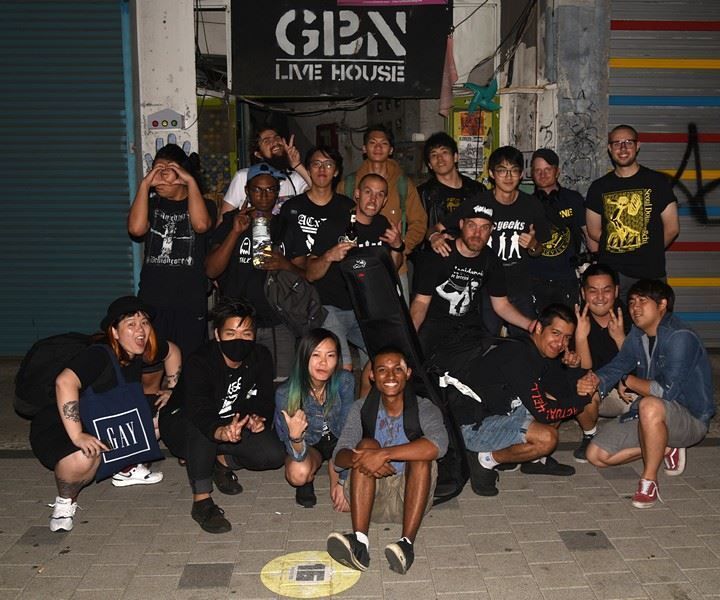
Musicians from at least four countries gather in front of GBN Live House in Seoul's Mullae-dong for a group photo, September 2017. / Korea Times photo by Jon Dunbar
"GBN is water park!" said Dong-woo, Scumraid bassist.
Ian White is a resident of Mullae who has played or watched several hundred shows at GBN. He currently plays guitar for Polluter.