Death on the Imjin

Courtesy of Royal Asiatic Society Korea
By Steven L. Shields
When the weather is clear and the sun shines bright, one can see for several kilometers to the north from the trenches on the slopes of “Hill 235.” In the valley below, the Imjin River flows westerly until it joins the Han River on its journey to the Yellow Sea. When the spring and summer foliage is lush, it's difficult to see that one is standing on the edge of the world.
The Imjin River is a place where death and destruction once rained down on a few thousand heroic defenders of the South. The southern banks of the Imjin run along the DMZ. Closer inspection reveals barbed wire and other warlike construction. One can see across the DMZ into North Korea, and realize that this watery boundary is still a place where the war has only been halted, but not resolved.
The Battle of the Imjin River was then, and is today, the largest Communist offensive in war. It was preceded only by a few years when the Soviet Army launched its attack on Berlin at the end of World War II. On that spring day in April 1951, almost 1 million Chinese troops and thousands of North Korean troops launched a massive attack along a 60-kilometer-long front to retake Seoul ―only 45 kilometers away. The very best of army regiments stood in their way. These regiments were from the United States, Republic of Korea, Belgium and other United Nations forces from more than a dozen countries. The United Kingdom had deployed some of its best units: the Royal Ulster Rifles, the Royal Northumberland Fusiliers, the King's Royal Irish Hussars and the “Glosters” (1st Battalion, Gloucestershire Regiment).
During the winter of 1950-51, United Nations and ROK forces had retreated from the North, where the fall 1950 offensive had pushed the North Koreans back beyond Pyongyang. With the Chinese entering the fray with the massive numbers of volunteers they threw at the U.N. defenders, a retreat was the only course of action. As the combined Chinese and North Korean forces launched their offensive on April 22, 1951, the United Nations tried to hold the line at the Imjin. By the end of the third week of April, a further retreat began. In the face of the huge onslaught, and outnumbered 7:1, the U.N. forces began their retreat. But in the melee, the Glosters, who were entrenched on Hill 235, got cut off from any possible avenue of escape.
The Chinese troops surrounded the hill. The Glosters were squeezed to the summit. Hour-by-hour the Glosters' positions were overrun as the Chinese moved up the hillsides. The fighting was intense, but the Glosters had no means for resupply. They were cut off from the rest of the U.N. forces and supply lines. They fought to literally the last round of ammunition, and then in desperate hand-to-hand combat. At the end of the battle on April 25, more than 600 men lay dead in the trenches and on the hillside. The Glosters had been overrun. This was the only time a U.N. unit was completely wiped out. Today, the ROK military occupies their defensive positions. The Imjin is the secondary line of defense between Seoul and the DMZ.
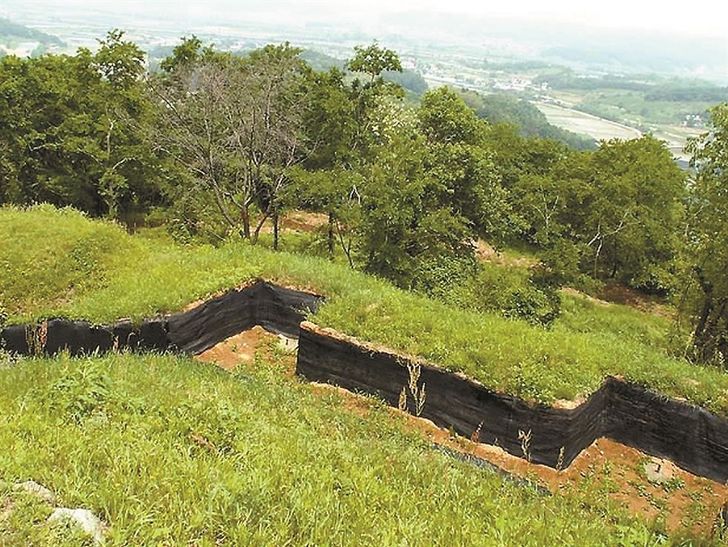
Trenches overlooking the Imjin River. /Courtesy of Royal Asiatic Society Korea
Every April, veterans from the British regiments who survived the Korean War make a pilgrimage to Hill 235 to honor their fallen compatriots. The local British community in Korea hosts them every year.
One 20-year-long British resident, Andrew Salmon, is the leading expert on the Battle of the Imjin River. His seminal work, “To the Last Round: The Epic British Stand on the Imjin River, Korea 1951,” tells the story of that three-day battle in exquisite detail. He accessed thousands of pages of documents and engaged in hundreds of hours of interviews. Salmon is a veteran journalist.
He is a member of the council of the Royal Asiatic Society Korea and conducts cultural excursions for RAS Korea to battlefields where British forces heroically stood against the Communists to preserve the Republic of Korea. Salmon, and others like him, give detailed insight into the many cultural excursions hosted by RAS Korea. More than just tour guides with an outline of the story, RAS Korea docents have detailed knowledge about the places they escort visitors.
During the current time of staying close to home, RAS Korea is doing several events online. Hopefully, in the near future, the excursion and lecture programs will be available as before. Visit raskb.com to take a look at RAS Korea programs.
Steven L. Shields, a retired cleric, serves as a vice president of the Royal Asiatic Society Korea (www.raskb.com) and is a columnist for The Korea Times.