SIWA charity bazaar to support local charities

Seoul International Women's Association (SIWA) members, from left, special events chair Melina Bandeira, welfare committee chair Han Sunghwa and public relations chair Jang Sejung. / Courtesy of Kyung Lee
By Kyung Lee
On Nov. 18, the
Seoul International Women's Association (SIWA)
, a multicultural organization, will host its
57th annual Diplomatic Community Bazaar
, with 43 embassies, 20 vendors of local enterprises, 10 charities and other international clubs scheduled to participate.
Anticipated to outdo last year's bazaar in attendance, activities and funds collected, Monday's event will continue to promote and expand efforts to fundraise on behalf of local charities, according to several SIWA members interviewed, by joining Korean and international newcomers and existing members together through a program introducing multicultural practices, food and entertainment.
Other activities that follow include performances by students attending All Love School (ALS), a Korean charity and educational platform for middle school students from multicultural households, as well as Seoul Foreign School and Dwight School Seoul ― the latter which is one of SIWA's sponsors.
Among the more than 20 local charities it funds and supports, including ALS, SIWA will also select an organization to receive 20 million won as part of its Philanthropy Project, a program launched in 2017.
Based on its core mission to “enhance lives through friendship, enrichment and charity,” SIWA's annual bazaars have pooled more than 3 billion won from fundraising efforts since the organization's inception in 1962. Last year alone it donated nearly 70 million won into more than 20 charities, according to its press release.
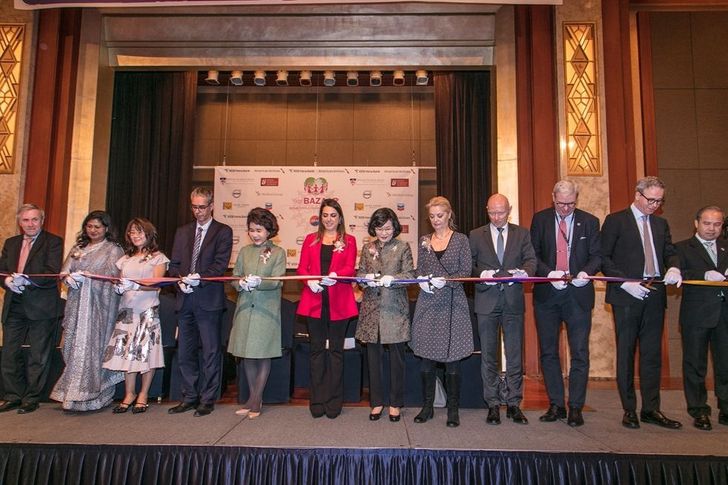
Members of Seoul International Women's Association (SIWA) and other participants cut the ribbon at last year's charity bazaar. / Courtesy of SIWA
Melina Bandeira, who chairs the special events for SIWA after joining the association recently in June, told The Korea Times they would build on last year's bazaar by expanding the diversity of parties that could further cement relationships between Korea and the growing international community that is interested in getting involved.
“If we had 30 embassies participating, let's reach out for more this year,” said Bandeira, who comes from Brazil. “These embassies, they play a major role because not only do they profit, but they can also promote their countries that attract more than 1,000 people to come shop and contribute their ideas.”
Bandeira added that the bazaar presents itself as not merely a venue for international and Korean cultural exchanges among members old and new, but also as a platform for them ― as volunteers ― to give back to the community.
The annual bazaar is considered one of SIWA's largest fundraising engines that local charities can depend on, but it also provides a glimpse of the civic missions it aims to satisfy, based on trends the majority of the group members feel require addressing.
After having conducted evaluations, research and numerous site visits, SIWA has determined this year that it will support the local Korean charity
Korean Unwed Mothers' Families Association (KUMFA)
as part of an effort to reverse negative stereotypes and social discrimination against single mothers.
And for Han Sunghwa, the group's welfare committee chair, adding KUMFA to SIWA's list of charities to support depended on informing Korean and international communities of the stigma that single mothers face through various activities.
“The association (SIWA) felt that they needed to raise awareness on why these people became unwed mothers and how their children have problems in school in order to tackle the wider issue,” she said.
Activities in collaboration between SIWA and KUMFA include vocational training for mothers as well as documenting their struggles through a broadcasting project titled “Talk Concert: Happiness.”
“When you also have volunteers from other countries coming in to support these mothers and their children, they feel much more confident about themselves,” Han said.
Han and Bandeira added that today's SIWA members breathe the same passion as their predecessors. In its early days SIWA worked on improving the lives of women in the then-impoverished country through direct civic engagement, with activities involving the provision of sewing and knitting equipment to Seoul Young Women's Christian Association in the mid-1960s and donations given to the Girl Scouts of Korea.
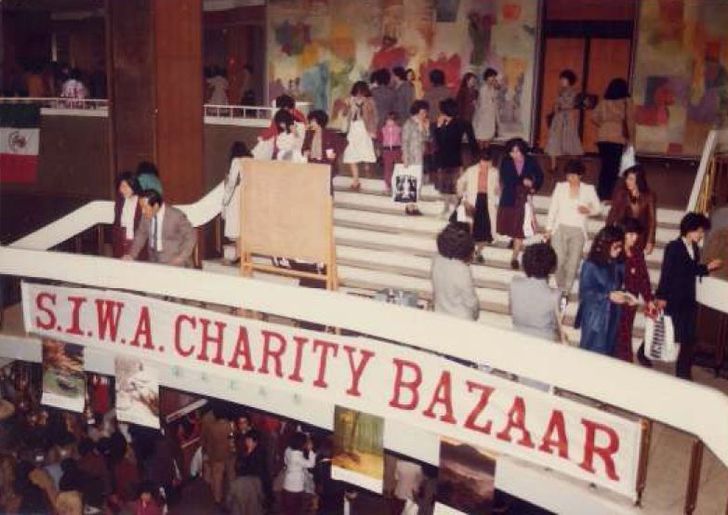
Seoul International Women's Association (SIWA) holds its charity bazaar in 1981. / Courtesy of SIWA
However, they also stressed the need to encourage SIWA's 300-plus members of multiple cultural backgrounds to continue delivering solutions transcending the Korean approach to how it addresses social problems in its own country.
Han cited
, a community-based organization established in 2017 that promotes changemakers involved in social ventures, as a potential source to consider tapping into, as well as NGOs and professionals to lead creative and sustainable ways to tackle issues addressed by SIWA.
They also want to embolden members and related charities to speak up about any idea or topic, regardless of their background or designated department.
“Coming up with ideas in SIWA, it's a democratic process where we listen and respect each other,” Bandeira said.
They also support local charities to come up with new strategies to tackle social issues through SIWA's support and funding. “For us, if they bring up new ideas, we'll discuss and support their cause,” Han said. “I think that's what makes us different from other charities. How can we help you better?”