Schools for integration face cash problems

Foreign and non-Korean-speaking students sit a level test for the Korea Immigration and Integration Program, at Hope Village Community Center in Jangan-dong, Dongdaemun-gu, Seoul, May 17. Korea Times photo by Ko Dong-hwan
By Ko Dong-hwan
Jung Noh-wha, director of the Gunpo Migration and Multicultural Center ― where foreigners learn the Korean language and culture ― knows that the Ministry of Justice-sponsored education program is under a relentlessly tight budget.
The school, in Gyeonggi Province, offered level 2 to 5 classes in the first semester from February to May that five outside instructors taught. Except for paying the teachers' salaries, the ministry has given the facility less than 150,000 won ($126) a month to cover maintenance and other costs such as utilities.
Operated by the Korea Immigration and Integration Program (KIIP) for the past nine years, Jung refrained from finger-pointing at the government over the budget issue, saying “better management” could be a solution. But he said the school has been underfunded compared with a similar language program offered by the Ministry of Gender Equality and Family.
“That is the reason we and other schools appointed to run KIIP feel cash-strapped,” Jung told The Korea Times.
But KIIP has produced better results in students' competency than the family ministry despite its disadvantages, Jung said.
“It seems like the justice ministry will sweep all the other government-sponsored Korean classes within this year.”
Students enrolled in KIIP must complete classes from level 0 to 5 in language, culture and social regulation, for a total of 485 hours. Graduates of this non-mandatory program are given various incentives when applying for permanent residency, naturalization or the points-based skilled worker's visa. They can skip writing Korean proficiency tests and interview assessments, earn extra points, or have a reduced wait for interviews.
The tri-semester annual program is offered at 334 locations nationwide ― churches, schools, and community and social welfare centers. Jung's budget issue is shared by many of them.
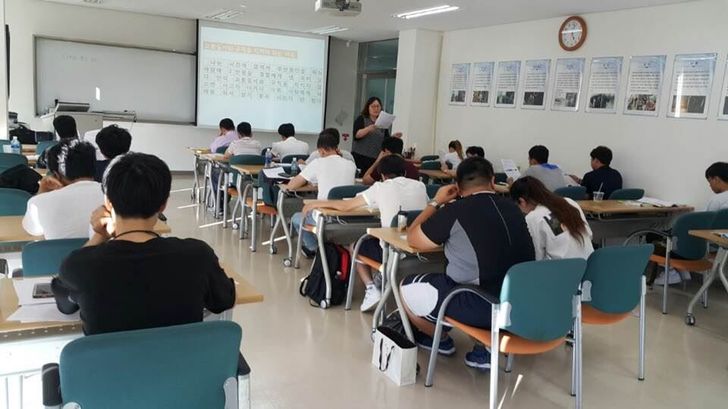
Foreign and non-Korean-speaking students learn at a class for the Korea Immigration and Integration Program in Siheung, Gyeonggi Province, July 2018. Courtesy of the Ministry of Justice
The director of the International Foreigner Center in Hanam's Deokpoong area, Baek Jung-sook, said the school has not received a penny from the government and was “eventually left with nothing.” She teaches the students herself without the help of outside instructors.
Now in her eighth year of operating KIIP, she had hired instructors the first year. When she asked them to support the center by donating part of their salaries, they refused. She stopped hiring outside teachers the following year.
“You turn on air-conditioning and electricity bills crank up, and our students numbering about 30 make a mess out of the bathroom,” said Baek, who said she also cleans it. “But someone has to do this, a necessary sacrifice for those foreigners wishing to change visas. What's the use of the needy screaming for help when it ends up as an echo? Those who can help should offer their hands first.”
Kim Myung-sun, director of the Bisan Social Welfare Center in Gyeonggi Province's Anyang, cannot run classes of more than two levels each semester because of limited classroom space. She also holds classes at weekends because some students, many of whom are migrant workers, cannot attend on weekdays. Kim also has not received government funding for administrative costs.
“We could definitely use government funds for things like electricity bills,” said Kim, whose facility has been operating KIIP for more than 10 years.
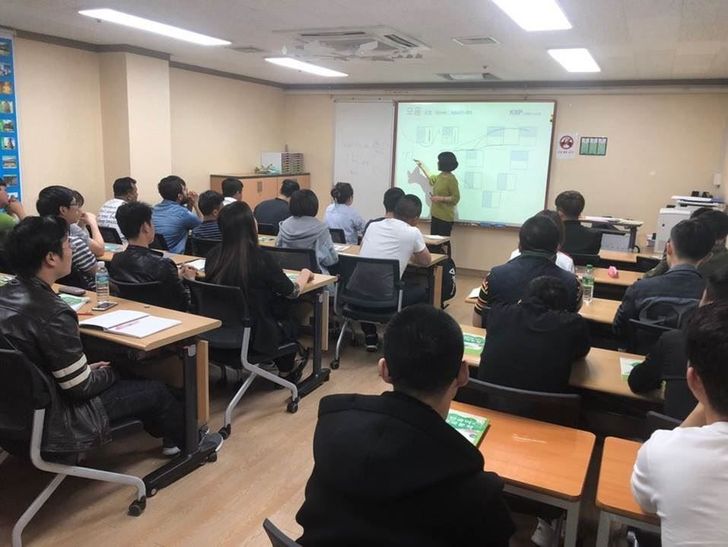
Foreign and non-Korean-speaking students learn at a class for the Korea Immigration and Integration Program in Ansan, Gyeonggi Province, May 2019. Courtesy of the Ministry of Justice
The Hwawon Community Welfare Center in Seoul's Guro District and the Icheon Multicultural Center in Gyeonggi Province also have financial difficulties. The problem is “the biggest of all” for the Hwawon School, for which the Icheon center has been receiving annual administration funding of 400,000 won that barely covers copy paper.
“There were times when we couldn't open classes because of our shortage of money,” center director Lee Jung-sik said. His facility, having run KIIP for eight years, offers all class levels with two instructors.
“The government has always waited until the last month to discuss the critical yearly budget for KIIP,” Lee said. “They could get it done earlier so they could inform each school which levels of classes they can open for the students.”
The justice ministry gave 6.1 billion won last year and 6.9 billion won this year for the state program. Each KIIP school, according to the Immigration Act, is selected by the minister, Park Sang-ki.
The ministry allocates administrative funding for the schools ― the amount varies depending on which classes they offer and how many students are enrolled.
The ministry told The Korea Times: “We have been consistently urging the Ministry of Economy and Finance to increase the budget for KIIP schools' administrative funds, and as soon as the budget bill passes, we will expand our support to the schools.”

Students speak to each other at a Korean language class in Hapjeong Community Center in Seoul's Mapo District, October 2010. Korea Times photo by Shim Hyun-chul
KIIP schools also face a shortage of classes and instructors, as many program operators said supply cannot keep up with rising demand.
The Gunpo school began online registrations for its second semester on May 19. Competition was fierce, with applicants ready to click on the school's website when registrations opened at midnight. This has been going on for years, sometimes shutting down the school's server.
“Some students I have seen came from Osan and Gwangju whose roundtrips to home take almost four hours,” Jung said. “They came here because KIIP schools near their homes didn't offer weekend classes.”
Most of the students at the school come from cities outside Gunpo, including Suwon, Uiwang, Pyeongtaek and Hwaseong, because of poor access to geographically more convenient locations, Jung said.
Many interested in KIIP are migrant workers wishing to get the E-7-4 points-based skilled worker visa. They must somehow spare time at weekends to attend the program, even if available classes are far from their homes.
Nasom Community, a foreigner-friendly humanitarian agency in Seoul's Gwangjin District, raised the same issue. Director Park Hyun-ok, who runs the program with one outside teacher and without government support for administration, said KIIP schools are “insufficient in number nationwide compared to those wishing to take the program.”
The justice ministry has been aware of the increasing number of people enrolling in KIIP.
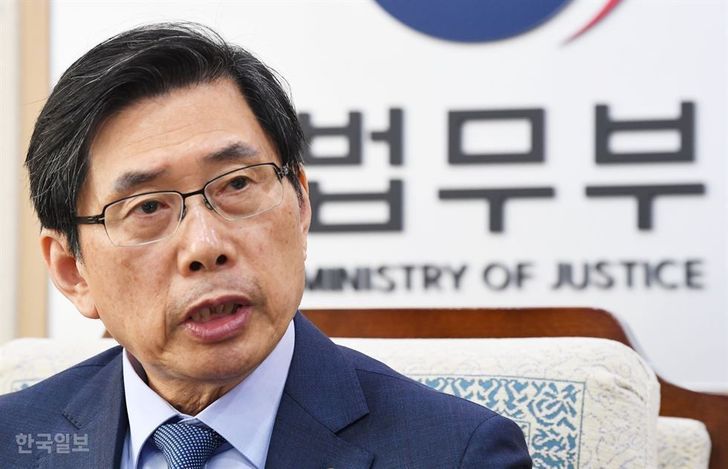
Park Sang-ki, the justice minister, speaks during an interview with Hankook Ilbo at his office in Government Complex Gwacheon in Gyeonggi Province, May 9, 2019. Korea Times file
“Our top priority concerning the program is that we secure more funds that will pay for more instructors so they can teach in more classes,” the ministry said.
“We are also considering the introduction of self-reliant KIIP schools that can operate without government support or having existing schools share certified instructors from different government bureaus. The measures could expand the classes while saving money.”
Another issue is the KIIP website, which is in Korean.
The site is text-heavy and at first glance considered almost impossible to recognize as intended for those interested in KIIP. And some menu bars do not work properly.
“KIIP needs to be better promoted since there are still many foreigners who don't know about it,” Kim from the Bisan school said. “And yet, the site, all in Korean, makes it hard for foreign visitors to understand.”
The Hwawon school director also said some people who wanted to enroll in the program could not sign up on the site because it did not offer any other languages.