DMZ music fest dances for 'borderless world'

DJ Jigue, founder of Cuba's Guampara Music / Courtesy of Guampara Music
By Jon Dunbar
This weekend's
is unlike other summer music festivals in Korea, partly because of its message of peace and partly due to its location in Cheorwon County, Gangwon Province, a stone's throw away from North Korea.
“The DMZ Peace Train Music Festival brings together an outstanding line-up of South Korean and international artists to sing songs of peace and transcend politics, economy, and ideology to experience freedom and peace,” the festival organizers said in a press statement.
The headliners of the festival this year, its second edition, are former Velvet Underground founding member John Cale performing with
, as well as half-Korean Chinese rock legend Cui Jian and Korean folk duo Chung Tae-chun and Park Eun-ok who celebrate their 40th anniversary this year.
The festival's acts come from far and wide, representing countries as distant as Nigeria, South Africa and Cuba. Two acts even have roots in North Korea. DJ Little Big Bee, a Korean-Japanese producer, used to carry a North Korean passport and was banned from South Korea until recently.
escaped North Korea in 2001 and after many struggles reached South Korea in December 2002.
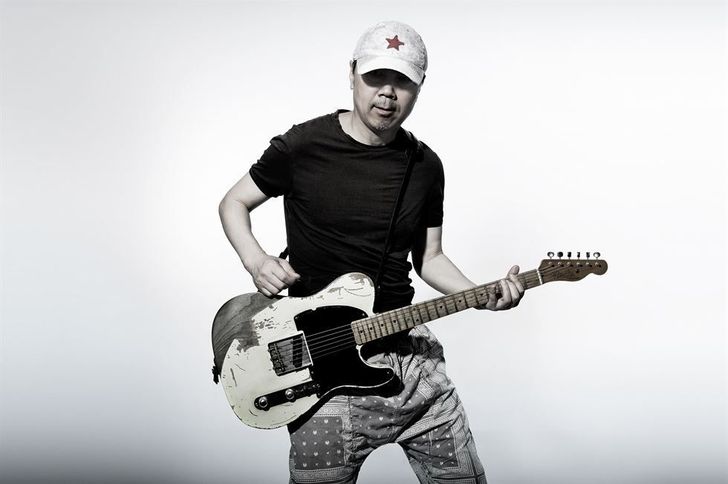
Chinese rock legend Cui Jian, often credited as the "godfather of Chinese rock music" / Courtesy of Cui Jian
The three-day festival also provides a great deal of diversity, going beyond the usual rock and folk in its Friday “Worldwide Beat” lineup. This includes ska acts such as
from Korea and
from Spain, South African singer-songwriter
, and
― son of Fela Kuti ― fronting his father's former band Egypt 80.
Also, Korean-American hip-hop label
and Cuban music collective
are both sending several of their performers.
MKIT RAIN's five acts include Nafla, who was winner of Mnet's hip-hop audition show “Show Me the Money 777” and runner-up Loopy, as well as Owen Ovadoz, Bloo and Young West.
Guampara Music will be sending five musicians DJ Jigue, El Menor, Nino Fony, Sigrid and trumpet player Yasek Manzano. They represent “hip-hop, R&B, electronic music and jazz all mixed with Afro-Cuban music and traditional music,” according to DJ Jigue, leader and founder of Guampara Music.
A Cuban act is an interesting choice for the festival, as Cuba has had diplomatic relations with North Korea since 1960. Unlike the culturally isolated North Korea, Cuba has been a melting pot of foreign music influences, blending music genres and creating its own unique styles.
“Music for Cuba means the historical influence of foreign musical genres and styles, which shows contemporaneity and globalization and manifests itself differently in Cuba, because Cuba assimilates these phenomena but always modifies and has generated its own version of these phenomena,” DJ Jigue explained.
“The cornerstone of our productive and creative work is based on generating a new sound using the identity and/or representative elements of Cuban popular culture, so the result obtained during this creative process makes our music different and from a certain authentic point. It is the perfect mix between the traditional, the folkloric and the foreign.”
The festival starts Wednesday with a two-day conference and showcase at Seoul's
, before moving to Cheorwon. The main stages are at Goseokjeong Pavilion, and smaller events are planned within the DMZ including the ruins of the Communist Party Headquarters, Woljeong-ri Station and Soi Mountain.
The festival is hosted by the governments of Gangwon Province, Cheorwon County and Seoul City, along with the official organizer Peace Train Inc. It also is sponsored by the Korea Tourism Organization.
Tickets cost only 10,000 won and are redeemed with vouchers for making purchases in Cheorwon. Shuttle buses are available from Seoul, Busan, Daegu, Gwangju, Jeonju and Daejeon. Visit
or
for more information.
DMZ Peace Train Music Festival