Seoul hospital welfare helps Yemeni refugee couple with premature baby

Alsa, right, and Mahmood, second from right, listen to Cheung Youn-joo, left, interpreting as a nurse explains signs to watch for that might show the baby is getting sick. Korea Times photo by Ko Dong-hwan
By Ko Dong-hwan
On May 28, two days after the birth of Alsa and Mahmood's daughter at Seoul Medical Center, the parents learn from a maternity nurse how to care for the infant after they leave the hospital the following day. Born weighing 2.48 kilograms in the 37th week of Alsa's pregnancy through a natural delivery, the baby is in a postpartum care unit while the Yemeni refugees' eyes are riveted on a Korean interpreter speaking Arabic in a small room next to the delivery unit.
The baby was not quite normal ― her brain seemed to have stopped developing five weeks prior to the delivery, making her head smaller than the medical norm and its shape a little out of proportion.
When Alsa's labor pains began, Mahmood did not realize she was about to give birth. This delayed the couple's arrival at the hospital, causing the baby's head to become stuck in the birth canal. The parents are worried about whether the baby's head shape will return to normal, while the doctor is more concerned about the brain and plans to examine it using ultrasound.
The infant's tongue was also slightly stuck to the bottom of the mouth, but the doctor separated it in a simple procedure.
The nurse explained to the couple the signs of possible jaundice, diarrhea and hematuria. Knowing that Alsa's breast milk was not ready yet, the nurse gave her a free container of baby food powder. The parenting session for the new father, 30, and mother, 27, ended.
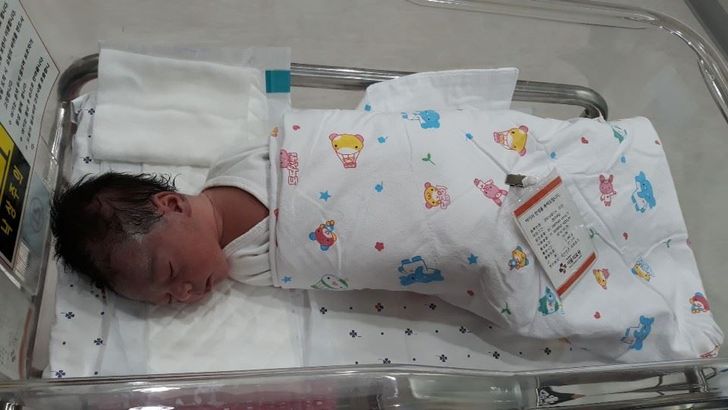
Mahmood and Alsa's daughter at a postpartum care unit in Seoul Medical Center. Photo provided by Cheung Youn-joo
The hospital in the city's northeastern Jungnang District decided to cover 90 percent of the couple's medical bills. This was a relief for the cash-strapped refugees who moved to Seoul from Gumi, North Gyeongsang Province, in early May to receive the benefit. They had moved into a temporary residence in the city ― a living room in the home of Mahmood's brother, Aziz, in the Itaewon area.
The father, who was a butcher in the Yemeni city of Ibb, started helping with his brother's Arabic/Indian restaurant near a mosque in the popular entertainment neighborhood.
“Our hospital has a limited financial resources reserved for refugees so we can only cover so much of their prenatal and postpartum examination costs,” a social welfare bureau employee of the hospital told The Korea Times. “But we have decided to support Alsa and her daughter, partially covering medical costs for a maximum of three visits.”
Alsa became pregnant after arriving on Jeju Island in 2018 to meet Mahmood who was already in Korea. She was with about 500 other Yemeni asylum seekers. Two years after the civil war broke out in Yemen in 2011, the university in Ibb that Mahmood was attending closed. He and other young students were forced to join forces of either the Yemeni government or the Houthi rebels. He chose the government and lived in a camp for recruits for five months. The Houthi rebels then began threatening to kill the families of the pro-government recruits. Mahmood told The Korea Times the threats were “real and very dangerous.”
Six months after Aziz fled the country, Mahmood followed, departing for Malaysia before the war intensified in 2015.
Mahmood lived in the Southeast Asian country for almost 20 months, but when he sought asylum there the government did not accept his U.N letter of recommendation. In search of a second chance of settlement, he moved to Korea in 2013.
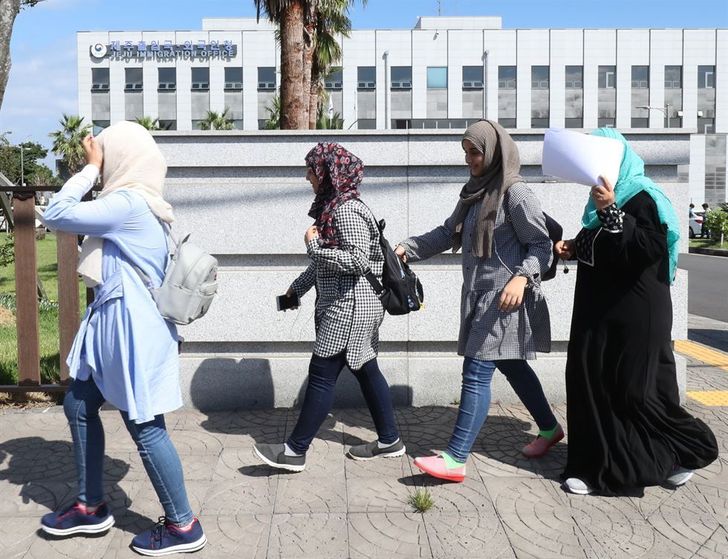
Yemeni asylum seekers in Korea ― granted humanitarian status by the Jeju Immigration Office ― leave the authority's offices in September, 2018. Korea Times file
Before he moved to Seoul, Mahmood lived in the South Chungcheong city of Asan. Moving to Gumi, he met two Yemeni families there and together they rented an apartment.
Alsa is one of 412 Yemenis from Jeju who were granted humanitarian status from the island's immigration authority. Mahmood, who has long sought asylum in Korea, is one document short of being granted the status ― proof of a valid address.
“We are one of the government-appointed hospitals to offer the Ministry of Health and Welfare's subsidy program for asylum seekers, migrant workers and other foreigners in the so-called medical blind spots,” an employee of Seoul Medical Center's public relations bureau told The Korea Times.
The ministry's program, excluding specialized hospitals, selects general hospitals overseen by city or municipal governments nationwide and allocates annual subsidies. Seoul Medical Center last year treated about 270 patients using a 500 million won ($420,000) subsidy.
However, the hospital wants to keep the program low profile for fear of a public backlash. In a country where the mass arrival of Yemeni asylum seekers in Jeju quickly became a national controversy over whether to accept them, such services can provoke the anti-refugee sentiment still evident throughout the country.
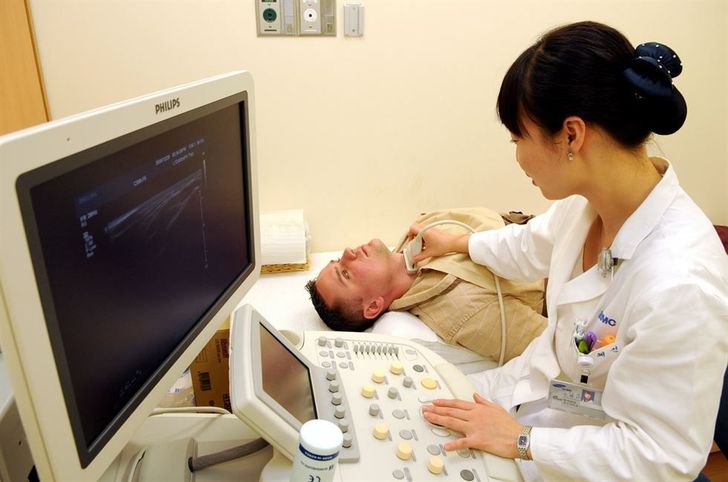
A foreign patient receives an ultrasound examination at Samsung Medical Center in Gangnam-gu, Seoul. Korea Times file
“Some Koreans might ask why we should help foreigners using their insurance fees,” the officer said.
Publicizing the service could also cause a demand beyond its capacity. The officer fears this could shut the program down.
Cheung Youn-joo, director of the humanitarian Hope Village Community Center in Seoul's Dongdaemun District, who has been interpreting for the couple at the hospital, has been helping Arabic nationals in Korea with various problems. She believes the program is a national asset that Mahmood and Alsa can use, but is concerned that not everyone at the hospital agrees.
“Some employees at other hospitals with the program didn't even understand the service's necessity,” she said.
In January, the ministry also began allowing foreigners with humanitarian status in Korea ― those with a G1 visa issued by the justice ministry ― to apply for national health insurance. The service, which can drastically slash medical bills, will broaden its coverage from July to cover everyone with such status automatically.