Korea lowers bar for 85 professions in E-7 work visa revamp

The updated visa policies provide more opportunities for foreign chefs. Newsis
By Ko Dong-hwan
The Korean government has lowered the bar for migrants interested in “specially designated profession” work visas to boost the nation's foreign workforce.
The Ministry of Justice announced the revised conditions on Feb. 22 for visas under the E-7 classification that authorizes work in 85 professions. The new policies become effective Mar. 1.
The latest revision eases “rigidity in Korean visa policies” that domestic startups claimed made hiring foreigners difficult. Small and medium companies have also demanded expanding the quota for migrant workers in the sectors of casting, plastic working, metal molding, welding, surface treatment and heat treatment ― the country's “root industries.”
“We have thoroughly taken into account opinions and demands from those in the industries and related government bureaus like the Ministry of Employment and Labor,” the justice ministry said.
The authority said the latest revision will support the domestic economy by helping local startups and small and medium enterprises hire migrants more easily and protect jobs for Koreans by preventing the companies from abusing foreigners with wages equivalent to or below the country's legal minimum of 8,350 won ($7.42) an hour.
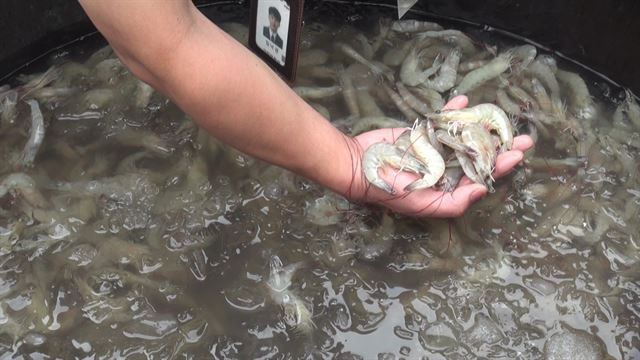
Shrimp farming is one of the industries the Korean justice ministry's latest E-7 work visa policy revision targets to increase the national pool of migrant workers. Photo from Hankook Ilbo
The revision includes reducing the required contract salary for government-recommended workers with outstanding skills from three times or more the Korean gross national income (GNI) per person to 1.5 times or more. The new laws now allow those with salaries three times or more to be exempt from the academic, work experience screening and reference requirements at visa issuance.
For startups, the evaluation period of each firm's prospective sales record to allow them to hire migrants has been raised from two years to five, as the former was considered too short. The move, according to the ministry, particularly respects the country's Support for Small and Medium Enterprise Establishment Act.
The annual quota of 600 for points-based skilled workers (E-7-4 visa) and 100 for foreign trainees for root industry skills have been expanded to 1,000 and 300, respectively. This will allow firms to hire one foreigner for every nine Koreans instead of 49, and five foreigners for every 100 Koreans instead of 500. The ministry said it will hopefully resolve the “chronic workforce shortage” among small and medium firms.
The updated policies provide more opportunities for foreign chefs with training certificates or licenses in domestic entities. Beneficiaries also include migrant children with high school diplomas who were naturalized and have state-certified licenses.
The ministry is also testing hiring shrimp farming experts ― set to three workers for now ― as the country eyes helping the industry reduce imports.
The revamped wage system for 67 professional classifications has set 80 percent of GNI per person from 2018 as the new standard instead of the legal minimum wage.