Cityscapes Saying farewell to Yongsan Pochachon…again

Children play in the alley of Yongsan Pochachon, a food tent village built on unused land in front of Yongsan Station, in April 13, 2013. / Courtesy of Ron Bandun
By Ron Bandun
The Yongsan area has been home to some large-scale changes over the years, but between the construction fences and excavation pits there have been spots where human-scale communities have taken root, at least temporarily.
The area east of Yongsan Station used to house a red-light district. Around 2009, demolition started on the low-rise buildings there. The area was razed, and sat in limbo for years while the mega project for the area was stalled and eventually canceled. In 2013 when the Yongsan International Business District project on the other side of the station collapsed, so did this one, apparently.
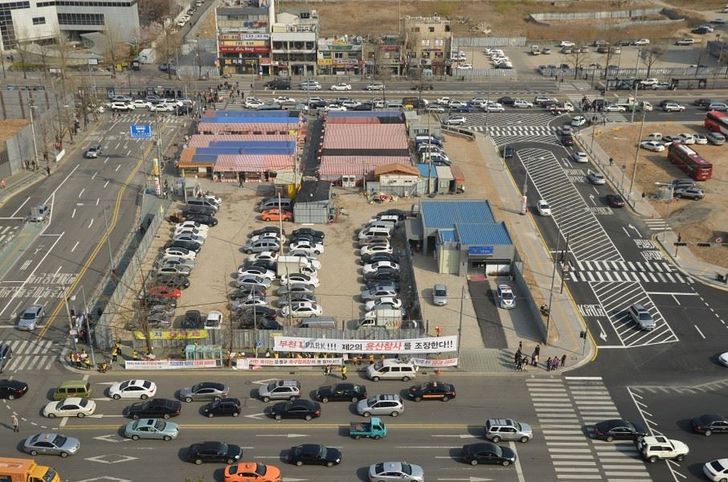
A cluster of colorful tents, old Yongsan Pochachon, occupy unused land in front of Yongsan Station, seen from above on April 13, 2013. / Courtesy of Ron Bandun
As the land sat empty and unused, merchants started moving back in, setting up red-striped tents and serving a variety of foods. There were street food stalls offering fish cakes on a stick, and if you wandered further in you could find “makgeolli” bars, chicken hofs and more. I used to come here with friends to give them an authentic Korean street food experience. It was cheap and low-quality, but I don't hang out with people who look down on that.
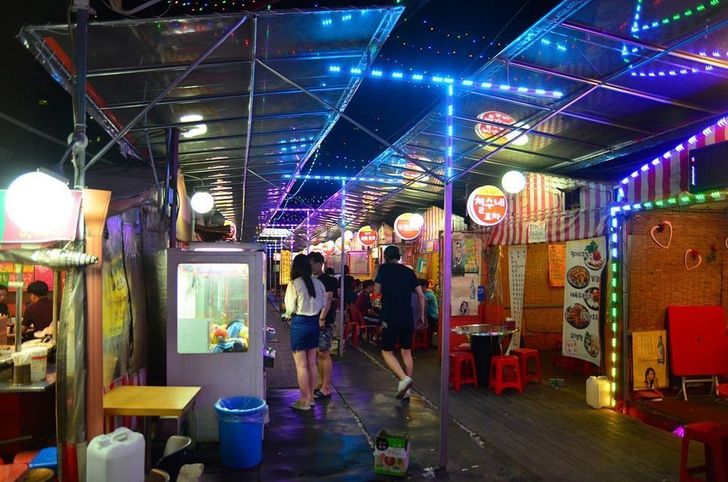
Yongsan Pochachon receives several upgrades, including a canopy and boardwalk, as seen July 18, 2015, several months prior to its closing. / Courtesy of Ron Bandun
The area was called Yongsan Pochachon, and over the next few years it developed a positive reputation. It started out pretty primitive, but over time they built it up, placing a canopy overhead to protect from rain, adding Christmas lights to keep the alleyways illuminated at night, and upgrading washroom facilities from chemical toilets to actual plumbing. It was neat to see it develop, as it exemplified that improvisational genius that helped Korea's working class pull the nation out of extreme poverty last century.
Then in March 2016, I got word that a construction fence was going up around Yongsan Pochachon. Worried, I stopped by to confirm it for myself. The metal gate was open and workers were inside. I crept in and disappeared from view so I could look around the food tents, now closed for business but still displaying all their garish but friendly decorations. I returned to one tent, its sides hung with empty makgeolli bottles, where I especially used to hang out.
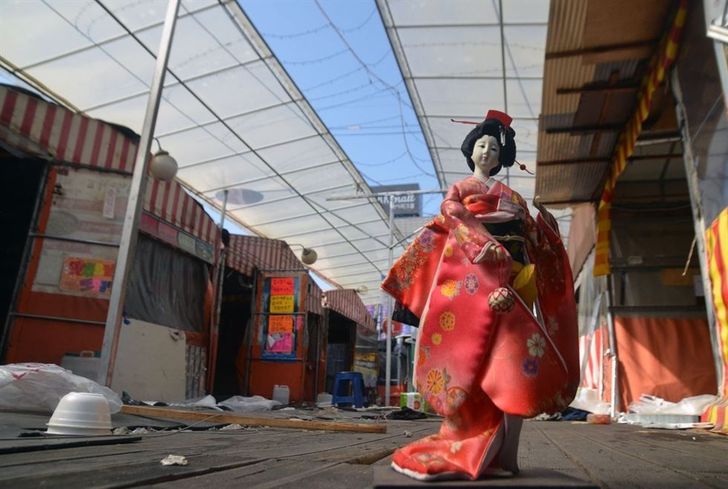
A final visit to Yongsan Pochachon on March 3, 2016. / Courtesy of Ron Bandun
When I was ready to leave, I discovered the workers had left and closed the metal gate behind them, locking me in. Rather than panic, I determined that nobody would be sneaking up on me, so I walked through the area one last time, soaking it all in.
Fences like this are made to keep people in, not out. I was able to rely on objects within the fence, as well as the ribbed structure of the fence interior, to climb out easily, jumping down onto a public sidewalk among unaware pedestrians.
The fence displayed a big sign showing our Pochachon had moved into the basement of a highrise nearby, which if I'm reading right is called Yongsan Totu Belly (not Valley; why would that make more sense?) Officetel. I visited, finding a sterile high-rise basement with plain white walls and lit by fluorescent lighting.
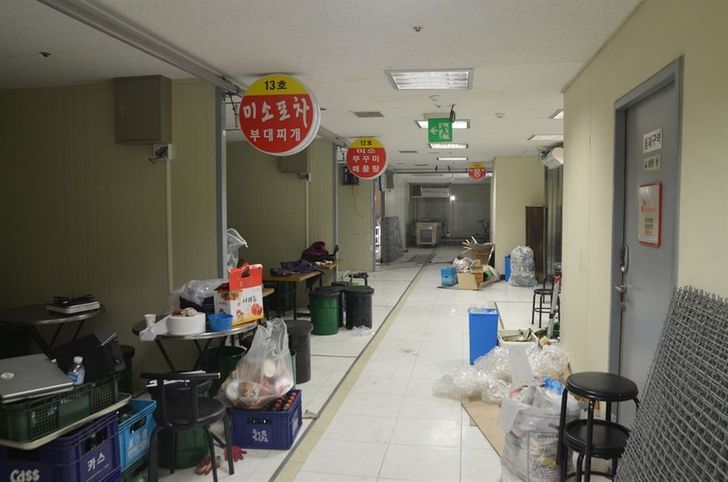
The basement of a nearby building is prepared for the new location of Yongsan Pochachon on March 3, 2016. / Courtesy of Ron Bandun
When I returned a few months later, the new basement Pochachon was actually dressed up well and even had a few businesses we remembered from the previous location, including the chicken hof that sprinkled parmesan cheese on its fried chicken. It was like a Disneyfied version of its former self, but the permanent state of the place gave us hope this would last longer. Just like the previous place, it was always open on major holidays, and it remained my go-to food destination in the area.
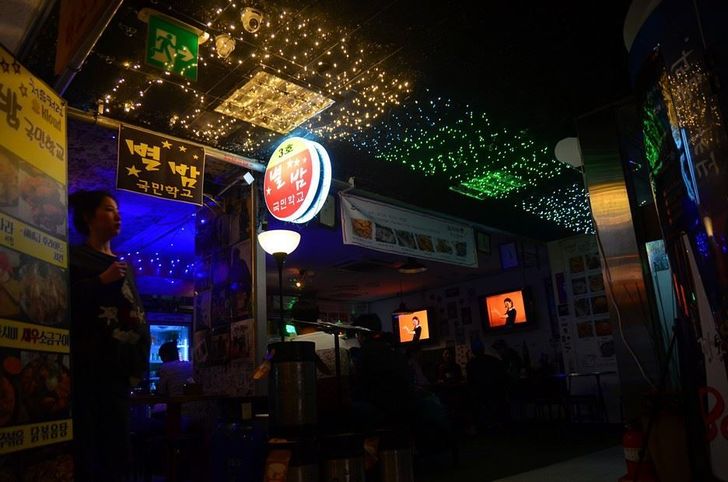
The underground Yongsan Pochachon, seen on Christmas Eve 2016. / Courtesy of Ron Bandun
Then during Lunar New Year this year, after a long walk, we arrived at Yongsan Pochachon with our appetites in tow, only to find darkness at the bottom of the escalator. I entered and found the walls still decorated, but everything else ― food preparation equipment, chairs and tables, foodstuffs ― gone.
The loss of this second Yongsan Pochachon seems permanent this time. Even if it reappears in a new location, what would be the point?
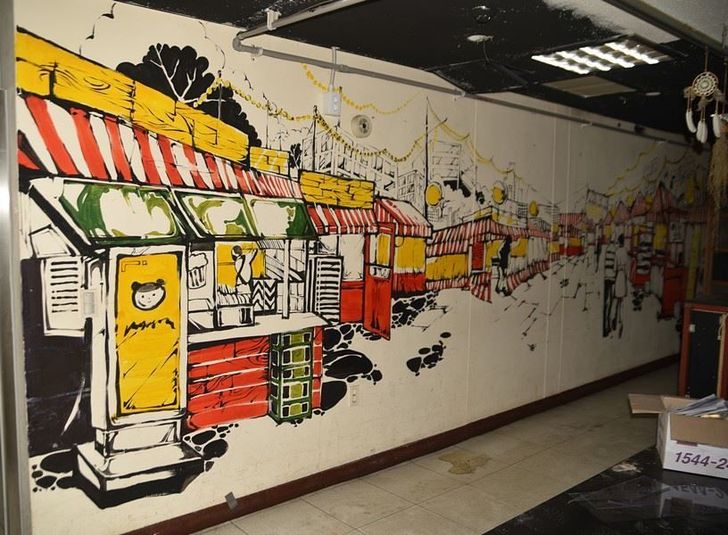
The second location of Yongsan Pochachon, now closed, contains murals showing the first location, seen Feb. 3. / Courtesy of Ron Bandun
Yongsan Pochachon was for a time an oasis built by people, amid an urban desert built by large-scale capitalism. And when it was boxed into a basement space, it found the ability to survive another couple of years. And now, Seoul is moving toward concentration of business in large, conglomerate-owned stores and franchise chains, with less and less room for the little guy, or even the medium-little guy, who once thrived in the city's dark corners.
Ron Bandun is a self-described anarchaeologist.