Documentary shows Korean indie rock's uphill battle

Wasted Johnnys play in the rain at Washington Square Park at a 2014 concert in support of North Korean refugees, as seen in the 2017 documentary film "Life Is a Dream We'll Wake Up & Scream." / Courtesy of Joe Je-hwan
By Jon Dunbar
When Korean
blues-rock band Wasted Johnnys
toured the U.S. in 2013, documentary film director Joe Je-hwan followed them everywhere they went, but so did the rain.
“Sadly every time they performed outdoors in the U.S., it rained,” Joe told The Korea Times. “The rain made the sound terrible, so they felt really sad because they thought they couldn't show their good sound. But anyway U.S. audiences still enjoyed them a lot.”
Joe was filming his Korean indie rock documentary, titled in English “Life Is a Dream We'll Wake Up & Scream,” named after a mini-album from
Seoul indie band Rock 'N' Roll Radio
. The Korean title translates to English simply as “Under the Light.”
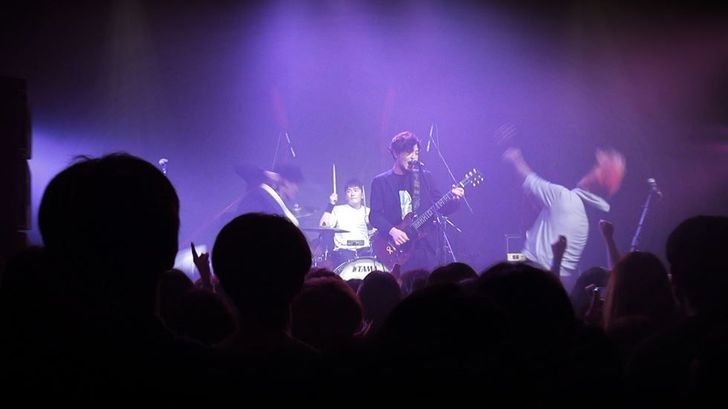
Rock 'N' Roll Radio play their first headlining concert in Veloso. / Courtesy of Joe Je-hwan
Wasted Johnnys and Rock 'N' Roll Radio will appear both on the screen and the stage, this Friday at Club Goinmool, where a new cut of the documentary will get a private preview screening.
“In wide release, I thought it should be punctuated to communicate with wide audiences rather than to express myself, so I re-edited it,” Joe said. “As the release is still a little bit far off, through previews, the possibility of more editing is open.”
In making the movie, Joe followed around six bands starting in 2012, eventually settling on three of them that best exemplified the film's themes and had the highest commercial potential. The third band, The Roosters, is no longer with us, but its members still pursue music careers.
“The film features musicians similar to many modern people who wish for greater achievement and success. The film portrays musicians who are still in a situation where life isn't stable and isn't improving at all, yet still strive to achieve their goals,” Joe explained.
He said the movie is a metaphor for modern Korean society, in which musicians “have to live a life that's not appreciated and live in poverty.”
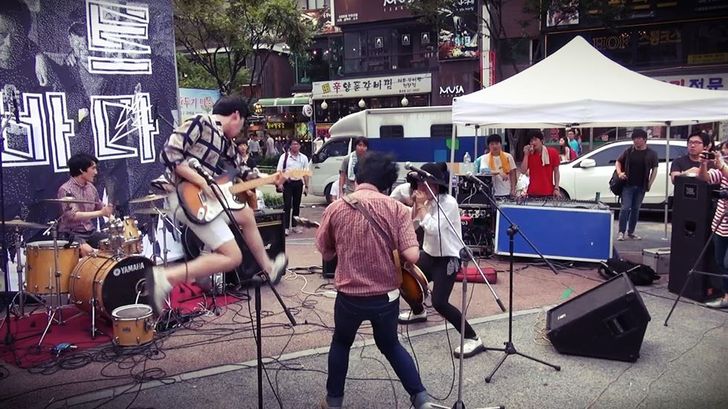
The Roosters play an outdoor concert to support striking Cort workers in summer 2014. / Courtesy of Joe Je-hwan
In the years since Joe wrapped filming, in December 2016, the Korean music scene has seen many changes, some good and some bad. K-pop has found worldwide fame, while the stronghold of Korean indie music, the Hongdae area, has virtually ceased to exist due to gentrification.
“As many people know, K-pop has been a worldwide hit, but on other hand, the Hongdae indie scene that I encountered while filming has receded. The scene has been in a slump since 2013 and 2014 when I did most of the filming. I don't think this was just a unique situation for the cast, but for the whole scene. Many clubs have disappeared, many big festivals have disappeared, and the audition shows are not as responsive as they used to be, and there's not a lot of new blood. In the K-pop scene or in the hip-hop scene, maybe they would say differently, but in Hongdae, some say it's hopeless these days.”
The screening begins this Friday at 7:30 p.m., followed by the band performances. The 94-minute movie will likely be screened without any foreign subtitles, but the film's action and the audience experience should be entertaining enough on its own for audiences who can't understand Korean. Wasted Johnnys shared
more information about the event on their Facebook page
.
Wasted Johnnys has been quiet for a long while, as seen in their Facebook page profile picture which still advertises their May-June 2017 tour of the U.K. The band has been laying low while recording its next album, and its stirring from over a year of hibernation can only be a good sign.