Royal Asiatic Society Amazing aftermath of 1988 Seoul Olympics
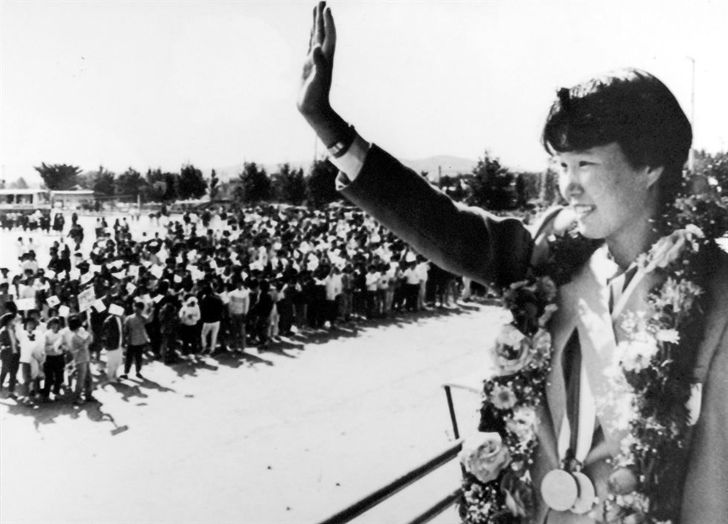
Korea Times file
By Kathryn Weathersby
From the beginning, the plan to host the 1988 Summer Olympics had two purposes. South Korea could show the world its impressive economic success and, at the same time, improve its position vis-a-vis North Korea by establishing diplomatic relations with the North's allies.
The second goal was given the name Nordpolitik, after West Germany's successful Ostpolitik (East Policy), which had placed pressure on East Germany by increasing its economic interactions with the communist countries of Eastern Europe. South Korea sought to accomplish a similar result regarding North Korea but as they pursued their Olympic dreams they could hardly have imagined just how profoundly the games would alter Korea's strategic environment.
The first success of Nordpolitik was with Hungary. Four days before the opening ceremony, Seoul announced it had reached an agreement with Budapest to establish full diplomatic relations. Korean spectators cheered the Hungarian athletes and also warmly welcomed a huge delegation of Soviet athletes and journalists, all of whom were seeing South Korea for the first time. Soviet journalists were shocked by the prosperity and technological level of South Korea and broadcast endless hours of flattering coverage.
This media blitz, accompanied by strong overtures by Korean businessmen, persuaded Moscow that South Korea would be the best partner to help it revitalize its moribund economy. The painful fact was that the formerly mighty Soviet superpower was now economically weak and desperately short of money. In 1945 it had been one of the two most powerful countries in the world when it occupied the northern half of Korea and solidified its division, together with the United States. For the next three decades, Moscow refused to acknowledge South Korea as a legitimate government while providing the North with essential economic, military and diplomatic support. By the late 1980s, however, the Soviet Union could no longer afford to prop up North Korea, which was paying for less than half of the $1.9 billion in Soviet goods it was importing.
Soviet General Secretary Mikhail Gorbachev believed his perestroika reforms would revive the Soviet economy. However, in the short term he needed consumer goods to pacify his people and cash to cover his deficits. Nordpolitik was designed for just such a situation. President Roh Tae-woo communicated his willingness to offer such aid, if the Soviet Union would extend full diplomatic recognition to South Korea.
Moscow initially asked Korean negotiators for $5 billion _ a shocking sum. In the end, Seoul agreed to provide $1 billion in cash, $1.5 billion in credit for purchasing Korean products, and $500 million in financing for other projects. Just under half of this aid was delivered before the Soviet Union collapsed in December 1991.
As they reached this agreement, South Korean negotiators informed the Soviets they would find it difficult to extend such loans if Moscow continued to provide military assistance to North Korea. At the same time, Pyongyang threatened and insulted the Soviet Union when it learned Moscow would recognize Seoul. Consequently, the Soviets abandoned their troublesome and costly dependent. They sharply reduced their weapons deliveries to the North, some of which Pyongyang had been selling abroad to earn hard currency. They also demanded North Korea pay for Soviet oil in hard currency at world market prices. Since the North could do neither, its imports of oil and other essential goods declined sharply and its economy began to implode.
Kathryn Weathersby, Ph.D., is a professor and researcher of modern East Asian history at Korea University. She will give a lecture for the Royal Asiatic Society Korea Branch on April 24 at 7:30 p.m. in the second-floor lounge of Somerset Palace in downtown Seoul. All are welcome. Non-members pay 10,000 won and students pay 5,000 won. Visit raskb.com for more information.