One second of dopamine, a lifetime of waste: The environmental cost of viral sensory toys

Various YouTube Shorts featuring Wakppuballs attract millions of views as the sensory toy trend continues to gain popularity. Captured from YouTube
A wax-coated clay toy known as the "Wakppuball" has become a viral sensation among young people in South Korea, driven by videos capturing the satisfying moment its hard wax shell cracks apart. But experts say the trend also highlights the environmental costs of disposable products designed for brief moments of entertainment.
The appeal of the toy peaks when users press down on its hardened wax coating, producing a crisp cracking sound before revealing the soft clay inside. Once broken, however, the wax fragments scatter in different directions, and the sharp pieces that remain attached to the clay make it difficult to continue playing.
Rather than serving as a toy for extended use, the Wakppuball has become content centered on "the moment it breaks." Users film and share videos of the cracking process, with clips featuring the clearest and most satisfying sounds often attracting the highest view counts. The trend has turned a fleeting experience into a form of viral online challenge.
Lee Hong-joo, a professor of consumer economics at Sookmyung Women's University, said users relieve stress by enjoying the toy's tactile sensation and distinctive sound.
"The intention is to share the moment of breaking the Wakppuball after purchasing it," Lee said. "It is also a way of showing that they are participating in a popular trend."
Lee added that repeated exposure to such videos has fueled public interest and helped the toy gain widespread popularity.
Environmental experts, however, say the trend reflects a growing problem associated with products designed for one-time consumption.
Neither the paraffin wax used for the outer shell nor the clay inside has a separate recycling category in South Korea. Both materials must be discarded as general waste because they cannot be recycled.
Hong Soo-yul, director of the Resource Circulation Society and Economy Institute, said small quantities of waste generated in households are difficult to collect and recycle.
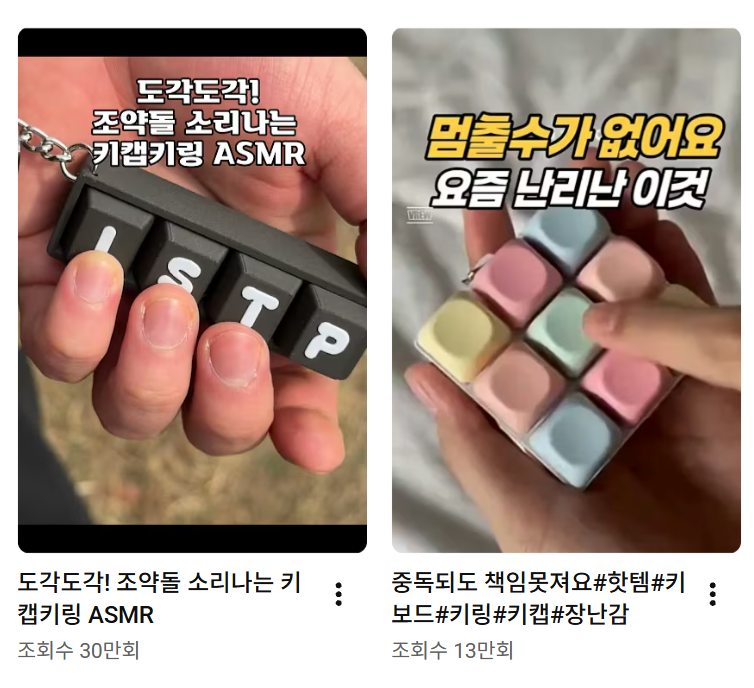
YouTubers demonstrate how to make a keychain using keyboard keycaps in a video. Captured from YouTube
Hong Soo-yul, director of the Resource Circulation Society and Economy Institute, said small quantities of waste generated in households are difficult to collect and recycle.
"Small items are hard to sort through conventional recycling systems," Hong said.
He added that recycling has become increasingly complicated as consumer products are made from a wider variety of materials.
The problem extends beyond Wakppuballs. Many trendy sensory toys, including decorative keyboard keycaps prized for their typing feel and soft squishy toys, are also difficult to recycle because they are small and often made from mixed materials that existing sorting systems cannot easily process.
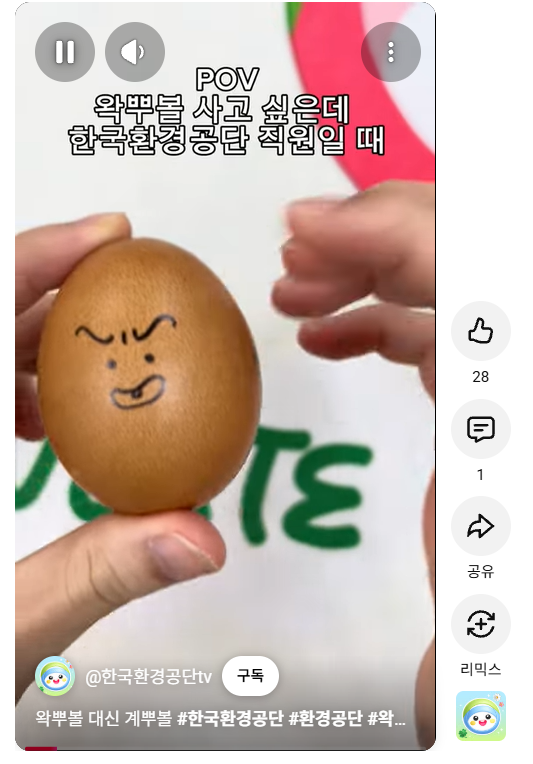
A short-form video titled "Eggppuball Instead of Wakppuball," planned by Korea Environment Corp., promotes an eco-friendly alternative to the viral sensory toy trend. Captured from the Korea Environment Corp.'s official YouTube channel
In response to the trend, the Korea Environment Corp. uploaded a short-form video titled "Eggppuball Instead of Wakppuball" to its official YouTube channel on July 2. Instead of featuring the sound of cracking wax, the video highlights the sound of breaking the shell of a boiled egg.
Lee Seul-gi, a manager at the corporation's public relations office who planned the campaign, said the goal was to encourage greater interest in environmentally friendly consumption by tapping into the viral trend.
"I felt a strange sense of guilt when throwing away a Wakppuball that I had bought just for fun," Lee said. "I hoped people who felt the same way would enjoy participating in the eco-friendly 'Eggppuball' trend instead."
Experts also said South Korea's recycling policies need to adapt to products that rapidly emerge and disappear with changing consumer trends.
The Korea Environment Corp. currently operates the Extended Producer Responsibility (EPR) system, which requires manufacturers of products with high recycling value to take responsibility for recycling them. However, most sensory toys, including Wakppuballs, are not covered by the system and therefore lack dedicated recycling programs.
Hong said regulations should require manufacturers to design products with recycling in mind from the development stage.
This article from the Hankook Ilbo, the sister publication of The Korea Times, is translated by a generative AI system and edited by The Korea Times.