Baseball waste surges faster than attendance despite KBO's green pledge

Trash discarded by spectators accumulates at Jamsil Baseball Stadium in Seoul, May 16, during a 2026 Korea Baseball Organization League game between the Lotte Giants and LG Twins. Korea Times photo by Kim Hyung-jun
Behind the Korean baseball league's record-breaking popularity, another statistic has been climbing even faster: waste. While the Korea Baseball Organization (KBO) League drew more than 12 million spectators last season, the amount of trash generated at stadiums has increased at an even steeper rate, raising concerns that the league has failed to follow through on its environmental commitments.
Ahead of Environment Day, June 5, The Hankook Ilbo analyzed data on annual general waste generation submitted by the KBO to the office of Rep. Lee Hack-young of the National Assembly Environment and Labor Committee. The analysis found that waste production at baseball stadiums has been growing significantly faster than attendance, prompting criticism that the country's most successful professional sports league has made little progress on environmental issues.
Waste up 66 percent nationwide in three years
Jamsil Baseball Stadium in Seoul, home to the LG Twins and Doosan Bears, recorded the most striking increase.
General waste generated at the stadium rose 132.2 percent, from 214.44 tons in 2023 to 497.94 tons last year. During the same period, regular-season attendance increased by about 36.9 percent, from 2.17 million to 2.97 million spectators. The growth rate of waste generation was nearly four times higher than the increase in attendance.
The nationwide trend was similar. Across nine KBO stadiums, total regular-season attendance increased 52.3 percent, from 8.03 million to 12.23 million over the same period. General waste, however, rose 66.2 percent, from 2,070.47 tons to 3,441.19 tons.
Among the stadiums surveyed, only Gocheok Sky Dome in Seoul and Gwangju-KIA Champions Field recorded decreases in waste generation over the past three years.
In contrast, waste generation at Daegu Samsung Lions Park surged 94.9 percent, from 578.54 tons to 1,127.82 tons, while Busan Sajik Baseball Stadium saw a 61.2 percent increase, from 254.87 tons to 410.94 tons. The sharpest increases were generally seen at the league's most popular venues, where daily attendance often exceeds 20,000 spectators.
The trend had been anticipated. In 2023, the KBO and its 10 clubs signed a voluntary agreement with the Ministry of Climate and Environment, then known as the Ministry of Environment, pledging to reduce disposable products and expand the use of reusable containers.
However, observers say little has changed in practice aside from fan-led efforts to eliminate cheering with inflatable sticks and limited reusable-container programs run by local governments.
Disposable beer cups remain the norm
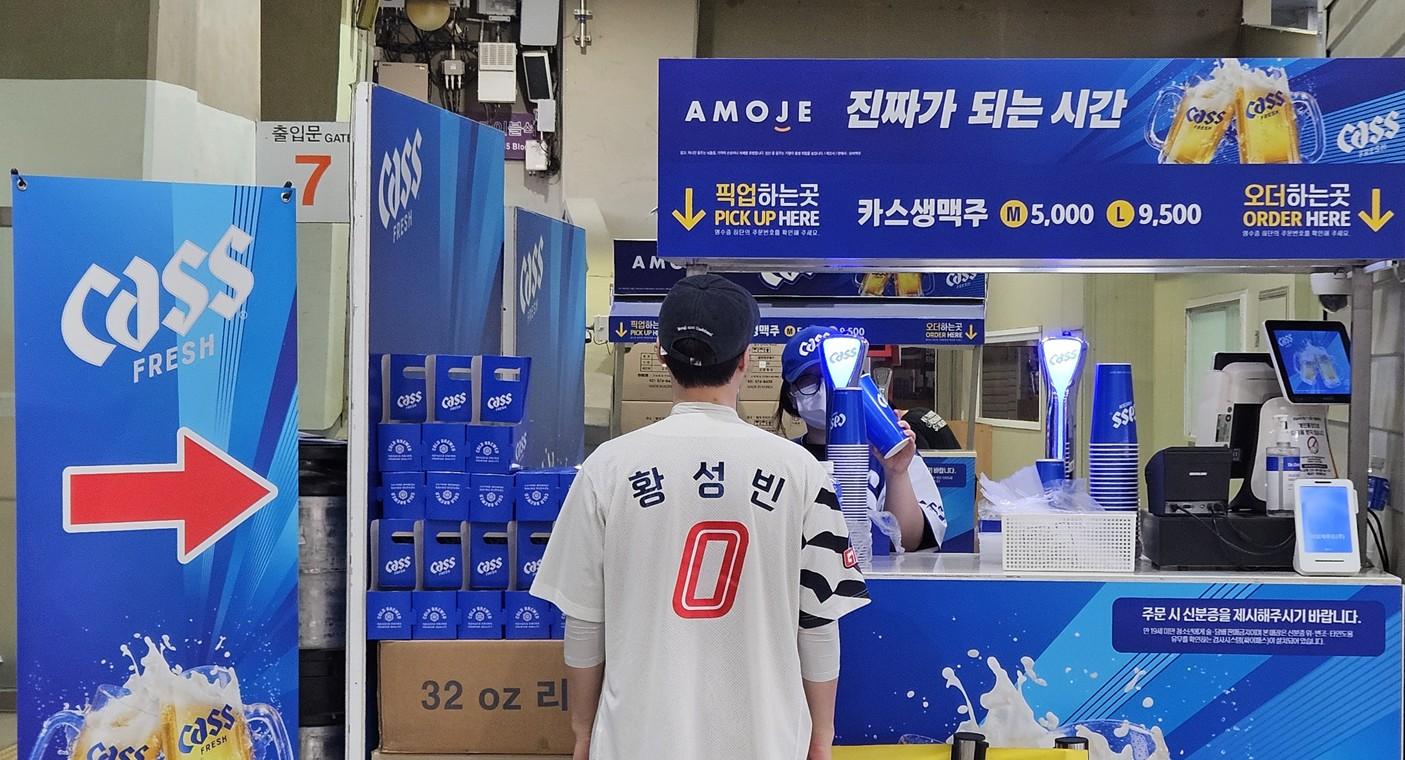
Draft beer is served in disposable cups at Jamsil Baseball Stadium in Seoul, May 16, during a 2026 Korea Baseball Organization League game between the Lotte Giants and LG Twins. Korea Times photo by Kim Hyung-jun
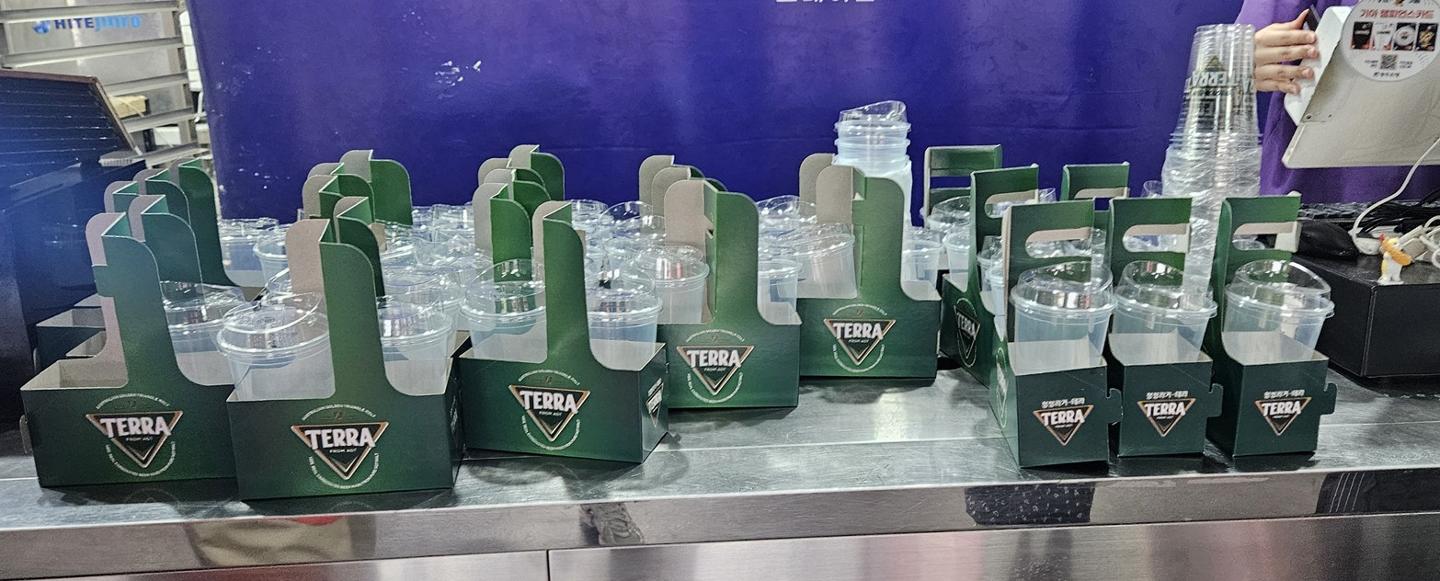
Draft beer is served in disposable cups at Gwangju-KIA Champions Field, May 19. Korea Times photo by Kim Hyung-jun
A visit to Jamsil Baseball Stadium, May 16, illustrated the gap between the agreement and reality.
Some concession stands sold food and beverages in reusable containers supplied by the Seoul Metropolitan Government in 2024. Yet draft beer, one of the stadium's most popular products, was still served in coated paper cups that are difficult to recycle. Disposable containers remained widely used throughout most stores inside and outside the stadium.
A club official said, "Beer cups require brand logos to be displayed under existing contracts, so disposable cups are being used. As far as I know, most other stadiums are in a similar situation."
While reusable beer cups have become common at sports venues in countries such as the United States, advertising requirements in Korea continue to favor disposable alternatives.
Operating practices also varied. Some vendors used reusable containers during the early innings but switched to disposable ones after the seventh inning, apparently because collecting reusable containers becomes more difficult late in games.
Conditions at other stadiums were similar.
In Gwangju, May 19, various types of waste were mixed together around recycling areas after the game, including discarded bottled beer containers that were not permitted inside the stadium. In Incheon, reusable containers were repeatedly found in ordinary plastic recycling bins. At Gocheok Sky Dome, packaging materials from outside food purchases, including insulated bags, were left throughout the venue.
A club official said, "With the recent increase in younger spectators, food and beverage consumption during games has risen significantly. We believe waste generation has also increased as more people bring food from outside."
Lack of oversight draws criticism
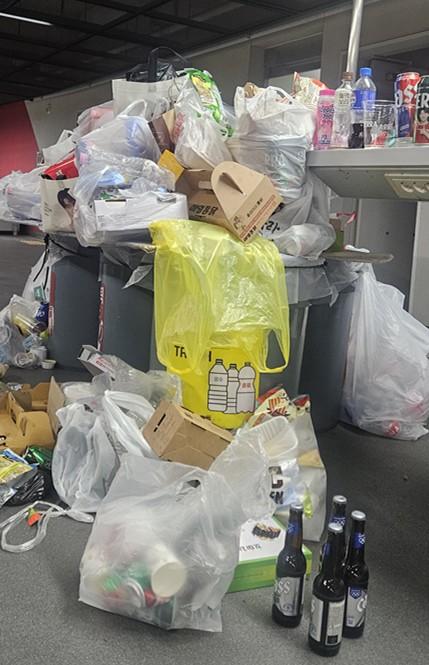
Discarded beer bottles are seen at Gwangju-KIA Champions Field, May 19, during a 2026 Korea Baseball Organization League game between the LG Twins and KIA Tigers. Korea Times photo by Kim Hyung-jun
Critics also pointed to the lack of a centralized waste management system at the league level.
A KBO official said, "We do not separately compile total annual waste generation figures," adding that the organization has no dedicated budget for waste reduction efforts.
Under the 2023 agreement, clubs are required to submit annual reports detailing their use of disposable products and the adoption of reusable containers. However, those reports are not publicly disclosed.
The data itself also appeared inconsistent. According to figures submitted by clubs, waste generation at Daegu's stadium was reported to be roughly 50 times higher than at Gwangju's, suggesting significant differences in measurement methods.
Rep. Lee said, "As more people gather, waste generation is bound to increase. The fact that the KBO and clubs still do not have clear waste-management guidelines is a serious problem. It is fair to ask what has actually changed since the voluntary agreement signed three years ago. Clubs should now begin fulfilling their environmental responsibilities."
Lee Dong-yi, secretary-general of the Seoul Korea Federation for Environmental Movements, said, "Many professional baseball clubs are operated by large corporations and generate considerable revenue from large crowds and frequent games, yet they remain overly passive about waste management. Stadium-wide efforts are needed to reduce waste, including encouraging spectators to use reusable containers when bringing food from outside."
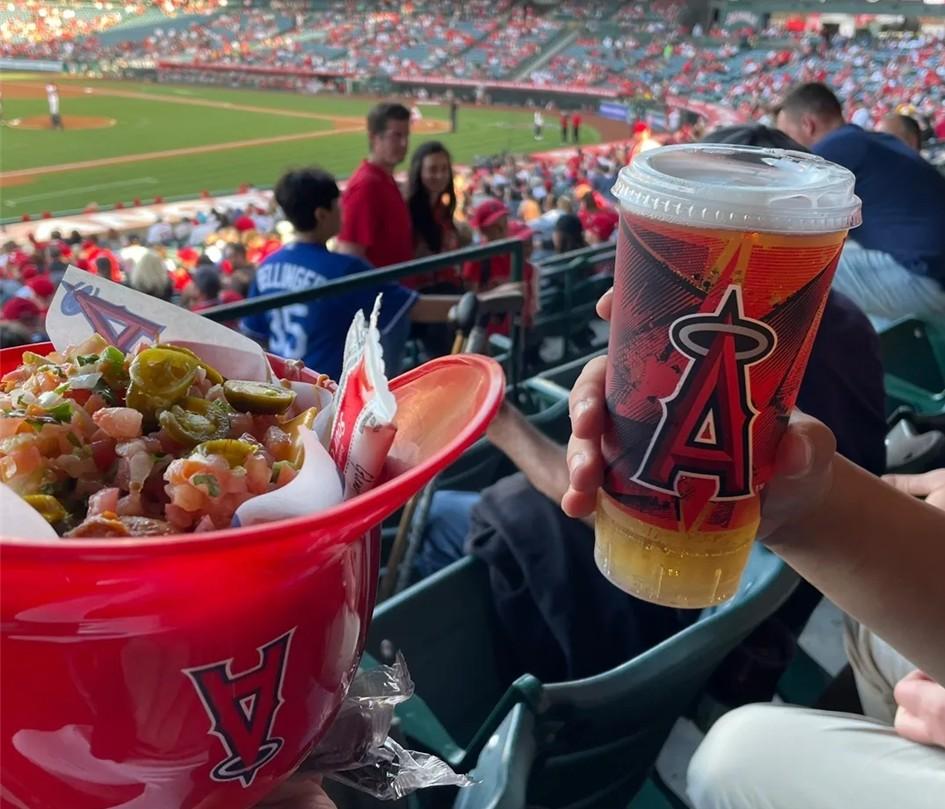
Reusable beer cups and food containers are used at Angel Stadium, home of Major League Baseball's Los Angeles Angels, in Anaheim, California. Korea Times photo by Kim Hyung-jun
This article from the Hankook Ilbo, the sister publication of The Korea Times, is translated by a generative AI system and edited by The Korea Times.