Nutria capture programs highlight mixed treatment of wild animals
Nutria, a rodent species from South America, faces mass extermination under loose animal welfare rules
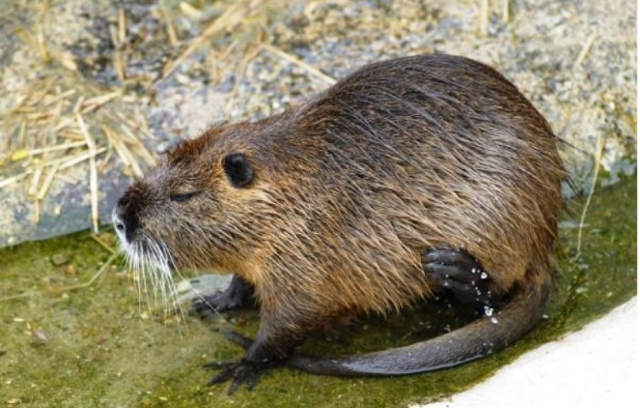
A nutria crouches just before being captured. Courtesy of Daegu Environmental Office
The hunter who appears in a documentary shown at a recent forum says he made 100 million won (about $69,471) from bounties, and that many nutria are still killed by drowning or starvation because “the government cares only about capture numbers, not how animals are killed.”
The comment came during “Crossing the Boundary: Animals between Protection and Removal,” an event hosted last weekend by the civic group Green Korea United that examined contradictions in how society treats wild animals — protecting endangered species while labeling others as invasive and removing them. The forum included a screening of Rahm Kim’s 2023 documentary “The Coexistence of Eradication,” which renewed attention to the nutria population problem around Korea’s rivers.
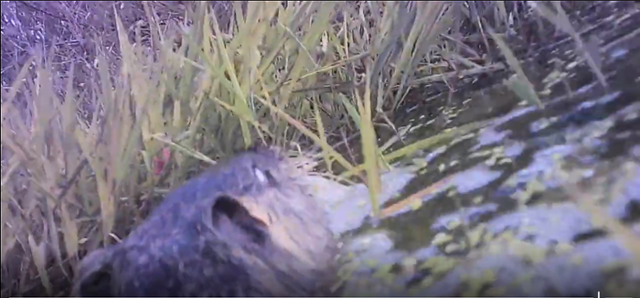
A scene filmed by a miniature camera attached to a nutria’s body / Captured from “The Coexistence of Eradication”
Native to South America, nutria were imported to South Korea in the mid-to-late 1980s for fur and meat, but were later abandoned when demand fell. With a high reproductive rate, they multiplied along the lower Nakdong River and began damaging crops, prompting the government to designate nutria as an ecosystem-disturbing species in 2009.
Although nutria dig burrows that can undermine riverbanks, documented cases of severe damage are relatively rare, environmental observers say. Still, crop damage appears to have been the decisive factor in the species’ designation as invasive.
The documentary features a capture contractor who says modern methods have replaced blunt-force killing but that large numbers make humane mass euthanasia by gas impractical. “Because there are so many, we mostly let them starve or drown them in the water,” he said.
The Ministry of Climate, Energy and Environment told this reporter that the legal framework focuses on “removal” as the goal and does not specify approved methods for killing, meaning prosecution is difficult regardless of how animals die during capture operations.
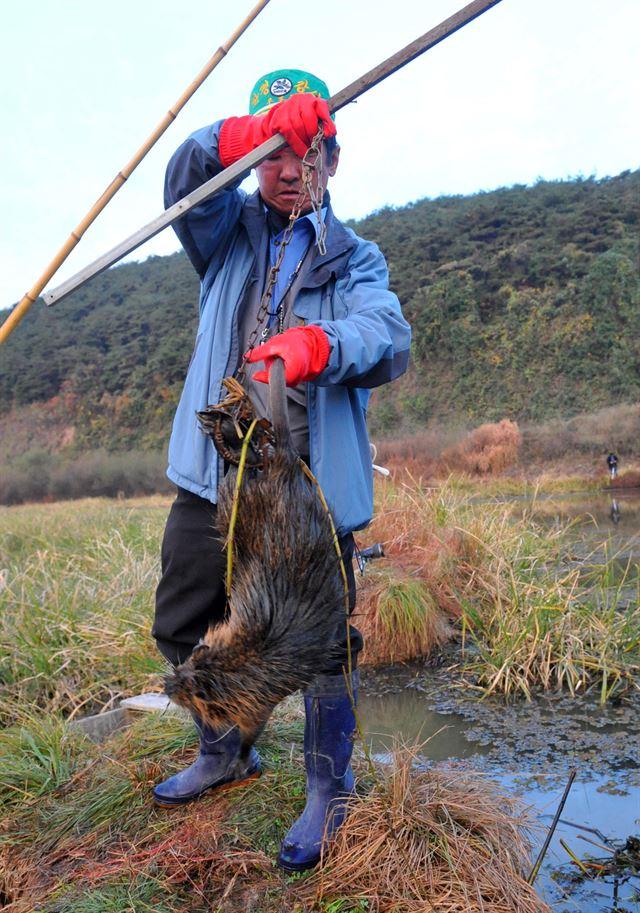
Nutria, once imported to South Korea for fur and meat, were designated as an invasive species after being released into the wild. In this photo, a removal team lifts a captured nutria. Hankook Ilbo file
According to the Nakdong River Basin Environmental Office, around 2,137 nutria were captured last year. The number has fallen from earlier peaks — in some years authorities captured as many as 7,000 — and remains in the 2,000-3,000 range in recent years, undermining earlier hopes of complete eradication by 2023.
Officials say capture programs are carried out either by contracting specialized removal teams or by offering bounty payments to private citizens, a mixed system that critics say lacks minimum welfare standards for how captured animals are handled and disposed of. Animal welfare advocates argue that, at minimum, standards should govern capture and euthanasia methods in the same way they do for stray wildlife.
The nutria issue is part of a larger problem: At least 40 species, from bluegill and largemouth bass to the American bullfrog and red-eared slider, are currently listed as ecosystem-disturbing species in Korea after being introduced for income or as pets and later abandoned. Activists say it is inconsistent to punish animals by killing them en masse when humans are responsible for introducing and then discarding them.
This article from the Hankook Ilbo, the sister publication of The Korea Times, is translated by a generative AI system and edited by The Korea Times.