Urban Korea’s new headache: giant crows attacking people
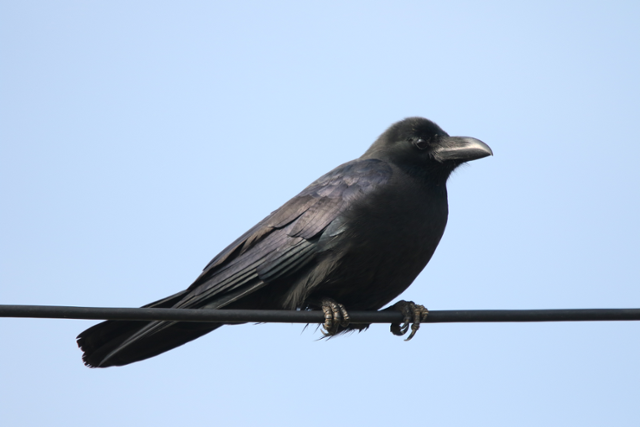
Large-billed crow / Courtesy of the Environment Ministry
The Environment Ministry on Wednesday issued public safety guidelines as reports increase of large-billed crows attacking people during their breeding season, which typically peaks between May and July when fledglings leave the nest.
Measuring up to 57 centimeters in body length, the large-billed crow is the biggest among the crow species found in Korea. Recognized by its glossy black feathers and distinctively curved upper beak, the bird has increasingly been seen nesting in urban green spaces near residential areas, sometimes rummaging through trash or attacking people who get too close to their nests.
Crow attacks are concentrated during the breeding season from March to July, especially between May and July when the young begin to fledge. These incidents are typically a result of defensive behavior by parent birds trying to protect their eggs or fledglings. People approaching nests or fledglings often trigger such reactions.
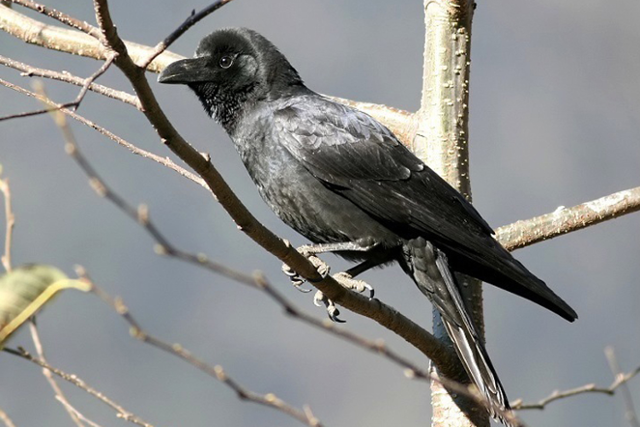
Large-billed crow / Courtesy of the Environment Ministry
To stay safe, the ministry advises avoiding areas where nests or young crows have been spotted. If passing through such areas is unavoidable, people should move quickly and protect their heads — the birds’ main target — using umbrellas or hats. It is also important not to wave sticks, throw objects or otherwise provoke the birds, as such actions may escalate aggression.
In the event of an attack or injury, victims are encouraged to report the incident to the local fire station by dialing 119 or contacting their municipal environmental office. Accurate information on the location of nests, fledglings or the site of the incident will help authorities take appropriate measures to prevent further harm.
While large-billed crows are typically found alone or in small flocks in forested areas, they also inhabit residential neighborhoods and farmland. As omnivores, they feed on grains, fruits, animal carcasses, insects and even the eggs or young of other birds.
Since December 2023, large-billed crows have been designated as harmful wild animals only in cases where they form large groups and damage crops, orchards or infrastructure such as utility poles. This designation allows for targeted population control under specific conditions.
The Environment Ministry said it plans to investigate nesting conditions and damage reports in urban areas and install warning signs to minimize public risk. It also plans to distribute updated safety guidelines to local governments and relevant agencies.
This article from the Hankook Ilbo, the sister publication of The Korea Times, is translated by a generative AI system and edited by The Korea Times.