Serving as bridge between Korea and the world

The Korea Times — first English daily amid war
By Choi Yearn-hong
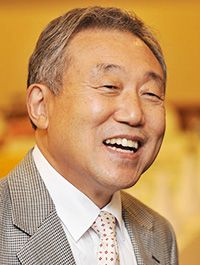
I am honored to celebrate The Korea Times on its 20,000th edition. The Korea Times has been a window on Korea for the outside world and also one for Korea to view the outside world.
It is particularly special to me since it has become a part of my life since 1966, when I first contributed to The Korea Times as a Yonsei University graduate student. My first visit to The Korea Times editorial office was to have a casual meeting with an undergraduate classmate who was working there as a young reporter.
She introduced me to the then-editor Lee Kyu-hyun, who loved poetry and literature during his younger years. He greeted me warmly and invited me to contribute my poems and essays to The Korea Times. I still remember his words, “Mr. Choi, I loved poetry as a young man, but now I am far away from poetry, living in prose. Life without poetry is not that meaningful!” He seemed nostalgic for those days.
I am forever grateful to my classmate for introducing me to Lee.
After my master’s degree at Yonsei, I left for advanced studies in the United States. During the last stage of my doctoral work at Indiana University, I resumed my contributions to the “Thoughts of the Times,” an open space for poems and essays, and continued to do so during my college teaching years in the United States.
In the fall of 1996, I returned to Korea to be with my aging mother, and taught at the University of Seoul. My relationship with The Korea Times was in a way reactivated. Park Chang-seok was the editor at the time with whom I organized The Korea Times Writers Group, an entity similar to the Washington Post Writers Group, but unfortunately did not have the same staying power as the latter.
“Arrowhead,” my new weekly column, was in place for a couple of years and was in place for the transition to the new editor, Lee Chang-sup, now Korea Times president and publisher. He encouraged and welcomed my contribution. After I retired from teaching and was no longer a dedicated columnist, Lee saw me as a valuable “old fellow” of The Korea Times and introduced me to his staff. I am now the longest outside contributor to The Korea Times.
The most memorable contribution to The Korea Times was my column on Captain Leonard LaRue of the Miracle Ship, SS Meredith Victory, who transported 14,000 North Korean refugees from Heungnam Port in December 1950 to Goje Island on the eve of Christmas safely. He and his ship were an important prelude to a recent Korean film, “Ode to My Father.”
Captain LaRue listened to God’s voice to save the freedom seeking refugees. After his Korean mission was done, he went to a New Jersey monastery and became a Catholic monk. He died in the same monastery he entered. I am still proud of my discovery of Captain LaRue and his Miracle Ship. My article appeared on January 13, 2009.
Separately, another memorable moment for me was when Lee Chang-sup, the then vice president, asked me to find the first edition of The Korea Times. I requested the Library of Congress to search for copies of The Korea Times in its first year, November 1, 1950, to December 31, 1951.
After a month-long wait, I received another miracle message, “Dr. Choi, we have found The Korea Times you are looking for!” I could not believe it. The librarian told me, “It may take one or two weeks to deliver it from the Army installation to the library.”
I was excited when I went to the Library of Congress periodical section, in the Madison Building on the second floor, with my neighbor and good friend, Ro Se-woong. We scanned the first edition of The Korea Times that was printed on November 1, 1950. This was the first published Korean daily newspaper in English amid the Korean War.
The quality of the paper was the lowest grade by today’s standard. When I opened the newspaper, the yellowed paper was covered in dust. We carefully scanned each page. Over the course of the day, we scanned the first two months of publication, from November to December in 1950.
Lee told me in despair that the first edition was unavailable inside Korea. I am grateful to the Library of Congress for searching for the first edition and making it available to me. I was grateful to the library employee, Robin, who found The Korea Times first edition.
In the front page of the inaugural edition, I found Helen Kim’s article titled “Welcoming, The Korea Times!” a bridge between Korea and the world. Also on the front page, Syngman Rhee’s declaration of cooperation with the U.N. Commission for Unification and Rehabilitation, an upbeat mood for the national unification when U.N. soldiers made a long march toward the Yalu River.
The most touching article to me was Poet Mo Yun-sook’s tearful memo, “Three Months under Red Seoul” in the first edition. Her story was real and touching, because my father was hiding somewhere in Seoul under the North Korean occupation.
I read Mo’s and Cho Chi-hoon’s poems on page 4 of The Korea Times for its first two months. As a poet and writer, I re-discovered the value of poetry in The Korea Times. “Korea is a land of poetry,” I exclaimed when I first spotted poet Mo and later Cho’s poems in the first month of issues of The Korea Times.
The writer is a poet and writer based in the Washington area.