AI-built virtual Buddhist temple draws 1 mil. visitors in less than a week
Summary
Sansa, an AI-created virtual Buddhist temple launched online on Oct. 26, drew more than 1 million visits in less than a week. Park Jin-won, a 26-year-old job seeker, created the space so people could visit a temple through their phones. Users can control a child-monk avatar, pray, perform Buddhist bows, roll prayer beads and strike a moktak. Its rapid growth strained the server and inspired suggestions for new features and similar virtual spaces.
Key Facts
- Park graduated from university with a degree in English literature and said the effort required to visit a physical temple inspired the project.
- More than 10,000 people visited Sansa on its first day, and Park raised its simultaneous-user capacity from 20 to 10,000.
- By Oct. 31, five days after launch, Sansa had recorded more than 900,000 cumulative visits.
- A new feature lets users support the project by offering rice, drawing on the Buddhist practice of donating rice to temples.
- Users suggested adding virtual tapdori, walking around a pagoda, and an option for a monk avatar to strike users with a jukbi used in Zen meditation.

The main prayer hall of the digital Buddhist temple Sansa, launched Oct. 26, features a child-monk avatar that can put its palms together in prayer or perform bows. Captured from Sansa website
"I don't have the energy to actually go to a temple. So I just sit here for a little while before leaving."
A virtual Buddhist temple created with artificial intelligence (AI) by a 26-year-old Korean job seeker has become an unexpected online hit, drawing more than 1 million visitors less than a week after its launch.
Called "Sansa," the digital space lets users control a child-monk avatar that can put its palms together in prayer or perform Buddhist bows. Visitors can also use their mouse to roll prayer beads or strike a moktak, a wooden percussion instrument used in Korean Buddhist rituals.
Sansa was launched on Oct. 26 by Park Jin-won, 26, who is looking for a job after graduating from university with a degree in English literature.
"There are days when I feel like it would be nice to go to a temple, but actually going requires you to make an effort," Park said.
That thought inspired the creation of an AI-powered Buddhist temple that people could enter through their phones.
Since the launch, Park has been sharing Sansa's visitor numbers and updates to the virtual temple on social media. A feature has also been introduced allowing users to support the project through an offering of rice, drawing on the traditional Buddhist practice of donating rice to temples.
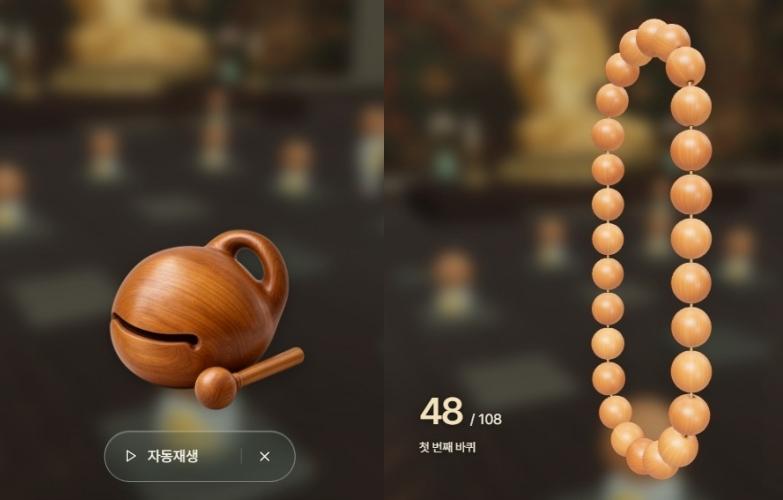
Visitors to the digital Buddhist temple Sansa can strike a moktak, a wooden percussion instrument used in Buddhist rituals, or count prayer beads. Captured from Sansa website
The response was immediate.
More than 10,000 people visited Sansa on its first day, quickly putting its server under strain. Park increased its simultaneous user capacity from just 20 people to 10,000 and has since been working intensively to stabilize the service.
By Oct. 31, just five days after its launch, Sansa had recorded more than 900,000 cumulative visits. It subsequently passed the 1 million mark.
Users have also flooded Park with suggestions for new features, including a virtual version of "tapdori," the Buddhist practice of walking around a pagoda, and an option for a monk to strike users with a jukbi, a bamboo stick traditionally used in Zen meditation.
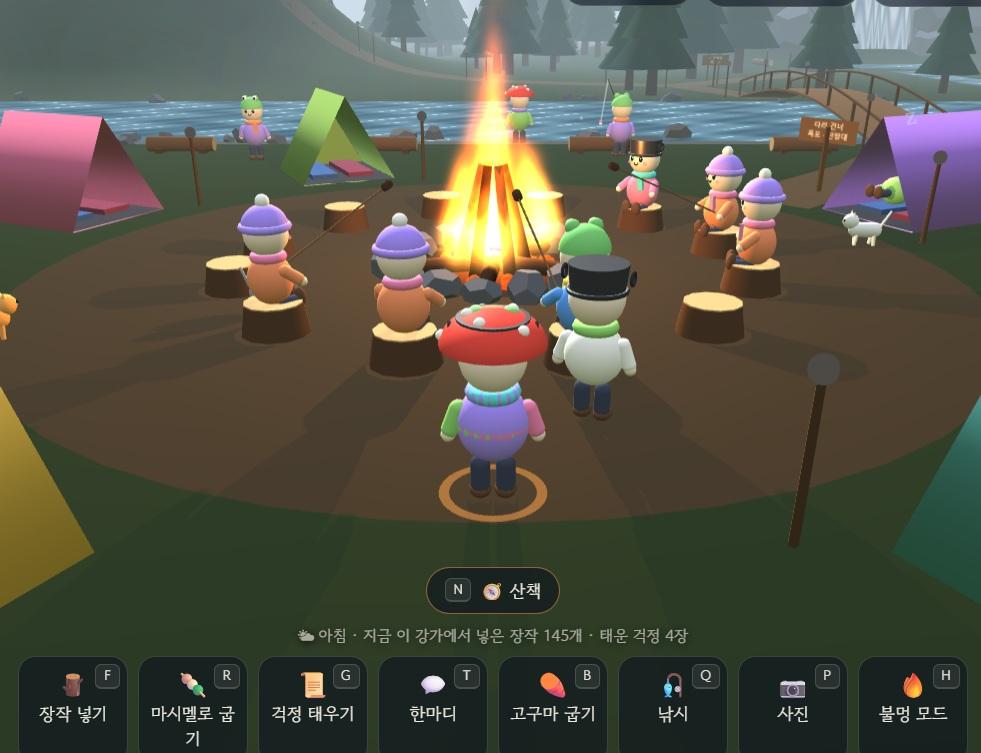
The online experience "Riverside Camp" lets users enjoy the feeling of sitting by a river, tending a campfire and roasting sweet potatoes. Captured from the Riverside Camp website
Sansa's viral success has already inspired a wave of similar virtual spaces.
Online-only Catholic churches and Protestant churches have appeared, along with less spiritual destinations where users can virtually board a plane and eat an in-flight meal, visit a sauna or hot spring, camp outdoors or even explore a coal mine.
The trend has drawn attention to how generative AI is allowing individuals to rapidly turn simple but imaginative ideas into interactive online experiences.
"All they did was take the act of visiting a temple, something people normally do offline, and move it online, but that captured people's interest," one social media user said. "It seems you don't have to create some grand service to attract people."
Another said, "We've entered an era where you can sit in your room and experience all kinds of healing through a single web browser."
This article from the Hankook Ilbo, the sister publication of The Korea Times, was translated by a generative AI system and edited by The Korea Times.
Explore More
- Q.
- Q.
- Q.