Central America optismistic on trade deal
.jpg?w=728)
Trade, Industry and Energy Minister Joo Hyung-hwan, third from left, poses with the trade ministers of six Central American countries after concluding negotiations over the Korea-Central America free trade agreement at the Hilton Princess Managua Hotel in Managua, Nicaragua, on Nov. 17. The six countries are Costa Rica, El Salvador, Guatemala, Nicaragua, Panama and Honduras. Korea is the first Asian country to sign an FTA with all six Central American countries. / Courtesy of the Ministry of Trade, Industry and Energy
By Rachel Lee
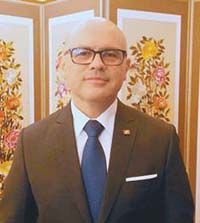
Ambassador of Costa Rica to Korea Rodolfo Solano Quiros / Courtesy of the Embassy of Costa Rica
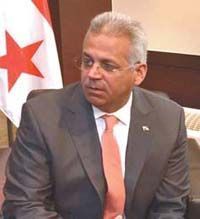
Ambassador of Panama to Korea Ruben Eloy Arosemena Valdes / Courtesy of the Embassy of Panama
Amid a spreading global trend toward trade protectionism, Korea recently managed to reach a free trade deal (FTA) with six Central American countries, which is expected to bring more than 70 percent growth in trade balance from the 3 percent now, the region’s top envoys say.
In November last year, Korea became the first Asian country to sign a FTA with all six Central American countries — Costa Rica, El Salvador, Guatemala, Nicaragua, Panama and Honduras — after 17 months of negotiations.
“Certainly, it was a very complex negotiation taking into account that the Central American countries needed to find regional consensus and then be able to present the positions and negotiation stances to Korea,” Panamanian Ambassador to Korea Ruben Eloy Arosemena Valdes told The Korea Times.
The agreement, which will take effect as soon as the National Assembly approves it, will cut tariffs on more than 95 percent of goods.
Korea promised to scrap tariffs on major export items from the region, including coffee, sugar, bananas, pineapples and mangos.
Central America agreed to cut tariffs on cars and home electronics. The deal also paves the way for Korean companies to advance into the region’s government procurement market, including the energy, infrastructure and construction sectors.
With each negotiation different as per interests, Costa Rican Ambassador to Korea Rodolfo Solano Quiros said his country focused on cooperating in developing small and medium enterprises (SMEs) and audiovisual services in particular.
“In relation to commerce, fresh fruits, processed fruits, concentrate and fruit juices, as well as coffee and cocoa, are the main Costa Rican agricultural products that have potential for export to Korea; a developed country with sophisticated and demanding consumers, requesting the highest standards of quality and security,” Quiros said.
Korea was the third country to sign a FTA with Costa Rica after China and Singapore.
With Seoul granted an immediate opening for 80 percent of tariff lines, which represents 85.5 percent of Panama’s exports to here, Panama gained immediate access to rum, palm oil, and tomato paste.
“Korea is one of the top 10 users of the Panama Canal by cargo flow and the agreement set the basis for using Panama as a hub for Korea’s trade with Latin America,” Valdes said.
According to the Panamanian Embassy, its exports to Korea do not exceed $7 million just yet, but there is potential to grow from its Colon Free Zone.
“It is a commercial instrument of great importance for our country,” Valdes said.
“The Certificate of Re-export was negotiated in this agreement, with which we seek to continue to consolidate Panama as a logistics center to store and distribute goods at the service of international trade, through the recognition of this certificate issued by the Panamanian customs authorities.”
The re-export certificate “ensures that the logistics operations carried out in the Colon Free Zone do not make it lose its tariff preference for Korean goods with non-party trading partners,” Valdes added.
According to the Secretariat for Economic Integration (SIECA), trade between Central America and Korea maintained an average growth of 5 percent between 2005 and 2009. The figure increased to 11.7 percent between 2010 and 2014.
SIECA is the regional body that facilitates the economic integration of Costa Rica, El Salvador, Guatemala, Honduras, Nicaragua and Panama, members of the Central American Integration System.
“During the last few years, the commercial balance between Central American countries and Korea has increased at 3.8 percent annually, the Costa Rican ambassador said. “After the FTA signing, we expect this to increase by about 70 percent.”
With Korean textile and automobile companies already strongly present in Costa Rica, the country is looking forward to attract more investment in other promising sectors including technology, green energy and education.
“Costa Rica firmly believes that this new FTA signing will become an important economic bridge to create more business opportunities for trade between our countries and regions,” Quiros said.
Quiros added that the results were of “great satisfaction because the FTA not only creates more business, investment and cooperation possibilities with Korea, but it also provides an opportunity to develop stronger integration mechanisms between the Central American countries.”
The Panamanian ambassador said: “Panama is a small, service-oriented economy, and the Republic of Korea represents a strategic partner for our service platform, mainly in sectors such as, logistics, shipping, tourism, distribution and redistribution of goods, and our international air transport platform for cargo and passengers, what we call the ‘Hub’ of the Americas.”
According to the Korea International Trade Association, Korea takes up 2.3 percent of exports from the six Central American countries.
Trade between Korea and region has decreased during the past few years, mostly due to fewer exports of Korean ships.