Tough diplomatic challenges await Seoul
.jpg?w=728)
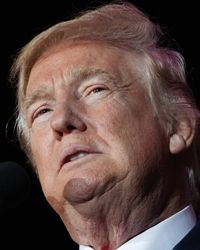
U.S. President-elect Donald Trump
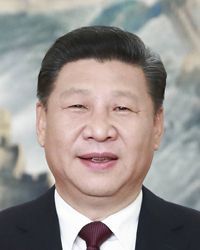
Chinese President Xi Jinping
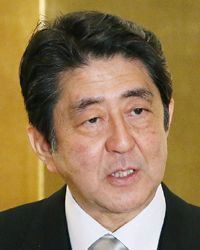
Japanese Prime Minister Shinzo Abe
By Kang Seung-woo
South Korea’s diplomacy is facing uncertain prospects in 2017 amid a rapidly growing geopolitical rivalry in Northeast Asia.
Since late last year, China has launched retaliatory options against Seoul in response to the decision to allow the deployment of a Terminal High Altitude Area Defense (THAAD) system on the Korean Peninsula, while South Korea and Japan are back at loggerheads over a new “comfort women” statue.
In addition, Donald Trump, an utter stranger to South Korea, will lead its biggest ally, the United States, which is another diplomatic challenge to the nation suffering a leadership crisis since President Park Geun-hye was impeached, Dec. 9.
Diplomatic analysts say that a possible upholding of Park’s impeachment and an ensuing early presidential election may fuel uncertainties in the nation’s diplomacy.
China is ramping up its retaliatory actions against the THAAD decision that Beijing believes can be used to spy on its military installations deep inside the country ― despite repeated assurance from the United States and South Korea that the anti-missile shield will only be used against North Korea’s ballistic missiles.
Chen Hai, deputy director general in the Chinese Foreign Ministry’s Asia affairs department, paid an uninvited visit to Korea late last year to oppose the planned deployment during a meeting with opposition lawmakers and representatives of companies working in China.
Since his visit, the Chinese government has banned South Korean airlines' chartered flights to China ahead of the busy Lunar New Year holiday season.
In addition, Chinese Foreign Minister Wang Yi admitted to a boycott of all K-Pop and other Korean entertainers in retaliation to the THAAD deployment in his meeting with seven Korean opposition lawmakers Wednesday.
“The bilateral relations between China and South Korea may get worse (due to the THAAD issue). We need a careful decision making on China policies,” said Kim Heung-kyu, director of the China Policy Institute at Ajou University, in a media interview.
The improving bilateral ties between Seoul and Tokyo are about to backpedal after Japan’s protest against another comfort woman statue, erected in front of the Japanese consulate in Busan last month.
The statue, the second of its kind here after the first installed in front of the Japanese Embassy in Seoul, symbolizes victims of Japan’s wartime sexual slavery. In December 2015, the two nations verbally agreed to end their dispute over the decades-long thorny issue with Japan offering a 1 billion yen payment to the victims, and in response, the South Korean government said at the time that it will try to resolve the issue by removing the statue in Seoul “in an appropriate manner.”
To protest the statue in Busan, Japan recalled Yasumasa Nagamine, its ambassador to South Korea, Friday, while announcing a halt to ongoing negotiations on a currency swap agreement between the two countries, and the postponement of a high-level economic cooperation meeting, throwing cold water on their ties that have shown signs of a thaw since the comfort women agreement, including a signing of the General Security of Military Information Agreement (GSOMIA) in November.
“The erection of a statue in Busan will be a new thorn in the Japanese-South Korean relationship,” a Japanese government official told Japan’s Yomiuri Shimbun.
Jin Chang-soo, president of the Sejong Institute, also told a media interview, “The relations between South Korea and Japan may not see reconciliation soon. In addition, the envisaged trilateral summit between Seoul, Tokyo and Beijing, under discussions now, may not take place.”
The South Korean government is also required to brace for the incoming Donald Trump administration that is anticipated to demand more money for the upkeep of the U.S. Forces Korea (USFK) as he frequently hinted at on the campaign trail. On Jan. 20, Trump is scheduled to take the oath of office as the 45th president of the United States.
Seoul has paid half the stationing cost for the American troops ― 944.1 billion won ($782 million) in 2016 and 932 billion won in 2015, but the new U.S. president may want full payment, criticizing South Korea’s “free-riding” on the U.S. defense budget.
In addition, his possible call for revising or renegotiating a U.S. free trade agreement with South Korea will be another tough nut to crack as he often blasted the trade pact as a “job-killing” deal.
Amid growing concerns, Foreign Minister Yun Byung-se told the Washington Times, Wednesday, that South Korea will cooperate with the new U.S. administration to maintain the ROK-U.S. alliance and their capability to curb North Korea’s provocations, hoping that he will hold talks with Secretary of State-designate Rex Tillerson as soon as possible to discuss key security issues including the North Korean nuclear matter.
The unpredictable North Korea is another variable to watch.
In his New Year’s message, its leader Kim Jong-un said that his reclusive state is in the final stages of preparing to test-fire an intercontinental ballistic missile and if he carries out the provocative action, tension surrounding the peninsula may seriously escalate, given that the new U.S. government may opt for a surgical strike against North Korea's nuclear facilities.
“This year, the government needs to strengthen its efforts to effectively brace for more diplomatic uncertainties than ever before,” the foreign minister said in a year-end press meeting, Dec. 29.