Constitutional revision bringing rivals together ahead of 2017 presidential race
By Jun Ji-hye
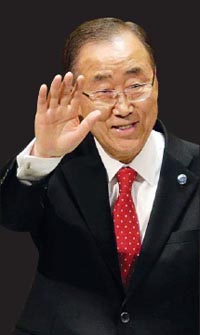
Ban Ki-moon outgoing U.N. secretary-general
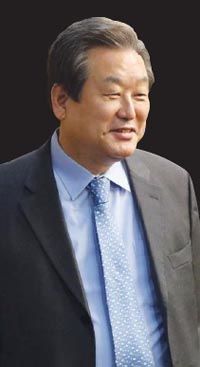
Kim Moo-sung Former chairman of the ruling Saenuri Party
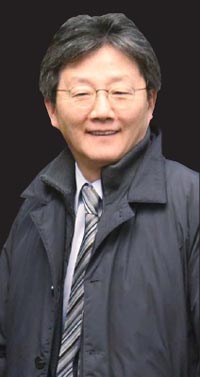
Yoo Seong-min Former floor leader of the ruling Saenuri Party
.jpg)
Ahn Cheol-soo Former co-chairman of the opposition People's Party
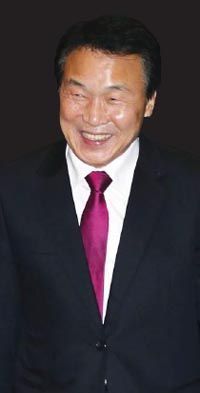
Sohn Hak-kyu Former Gyeonggi Province governor and opposition advisor
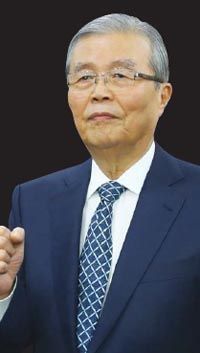
Kim Chong-in Former interim leader of the main opposition Democratic Party of Korea
A proposed constitution revision could bring interested parties together from both the conservative and liberal camps, political observers say, raising the likelihood that the political circles may align with each other ahead of the 2017 presidential race.
Observers speculate that the outgoing U.N. Secretary-General Ban Ki-moon and Reps. Kim Moo-sung and Yoo Seong-min may band together with Rep. Ahn Cheol-soo and Sohn Hak-kyu owing to a shared interest in the proposed constitutional revision.
Rep. Kim Chong-in, former interim leader of the main opposition Democratic Party of Korea (DPK), is another political figure who could join forces with them.
Ban, who will finish his term of office at the intergovernmental organization at the end of the year, has hinted at beginning a political career after returning home in mid-January, albeit he has yet to clarify which party he will join. He has been regarded as a conservative figure backed by the ruling Saenuri Party and President Park Geun-hye, who was impeached by the National Assembly, Dec. 9, following a high-profile influence-peddling political scandal.
Reps. Kim and Yoo of the governing party are also conservatives, while Rep. Ahn of the second largest opposition People’s Party and former opposition advisor Sohn are liberals.
All six potential presidential runners in the 2017 race have been behind Moon Jae-in of the DPK in opinion polls in recent weeks. However, Ban beat Moon, according to the latest survey results released Monday by pollster Realmeter, for the first time in eight weeks after the U.N. chief all but declared his bid for the South Korean presidency, Dec. 20. However, the gap between Ban and Moon’s popularity was within the margin of error.
Observers has raised the possibility of solidarity among the six political figures as such solidarity is needed to hold popular candidate Moon in check before the presidential campaign begins. The six mostly support a prompt constitutional revision to change the current five-year, single-term presidential system, while Moon has so far held back on the discussion.
Following President Park’s impeachment, the presidential election could take place within the first half of next year, instead of December later that year. The Constitutional Court is currently conducting the impeachment trial, and once it rules for the impeachment, Park will be completely stripped of her power as president, in which case the presidential election should take place within 60 days after the president’s departure, according to the Constitution.
The proposed amendment to the Constitution has taken center stage especially after Park’s impeachment, with a broad consensus among politicians that the current presidential system gave rise to the so-called “imperial presidency” that was regarded as one of the major causes of the influence-peddling scandal involving Park and her close friend Choi Soon-sil.
There have been various proposed changes to the Constitution, including a four-year, two-term presidency; parliamentary system; and semi-presidential system, under which a president would be responsible for foreign and national security affairs while a prime minister would be responsible for domestic affairs.
But the potential presidential runners have disagreed about when to conduct a full discussion about the constitutional revision, wary of such discussion’s political ramifications for them.
Kim Moo-sung, Sohn Hak-kyu and Kim Chong-in are calling for an immediate discussion in an apparent effort to attract voters’ attentions in the lead-up to the 2017 presidential race. On the other hand, Moon is claiming that now is not the time to begin such a discussion and that it is more appropriate for the next president to push for the revision after being sworn in.
Rep. Kim Moo-sung, who has led the Park dissenters at the governing party, said, “We need to try to resolve matters related to the Choi Soon-sil scandal and to the Constitutional revision at the same time.”
He plans to launch a new conservative party, after defecting from the Saenuri Party with fellow lawmakers, including Yoo Seong-min, who shares the belief in the need for a constitutional revision.
“The current presidential system has limits,” Yoo said. “Other alternatives, such as a four-year, two-term presidency, would be necessary.”
But Yoo added that a cautious attitude is required in dealing with the issue.
Ban is likely to join the new conservative party once it is formed, according to observers. Though Ban was believed to have been backed by Park and her loyalists as the ruling party’s presidential candidate, the U.N. chief has recently criticized the scandal-ridden leader, in an attempt to distance himself from the pro-Park faction.
Observers say there is little possibility of him joining the Saenuri Party but great possibility of him joining the new conservative party to be set up by the anti-Park faction.
Once the new party is established, Rep. Kim Moo-sung is expected to make significant efforts to expand the support base to include not only conservative voters but also centrists.
“I can hold hands with anybody except for the pro-Park faction and the pro-Moon faction,” he said.
The efforts would include joining forces with Rep. Kim Chong-in of the DPK, who has also been pushing for a constitutional revision, all while criticizing Moon for his hesitance on the issue.
Though Rep. Kim Chong-in currently belongs to the opposition party, he previously worked at the Saenuri Party as a chief campaigner in the lead-up to the 2012 presidential poll.
According to sources, Reps. Kim Moo-sung and Kim Chong-in, along with Rep. Park Jie-won, the floor leader of the People’s Party, either recently met with each other or talked on the phone about the proposed constitutional amendment.
Once they agree on the need for the constitutional revision, it is possible for the People’s Party and its presidential runner Ahn Cheol-soo to band together with the new conservative party, observers said.
Indeed, Kim Dong-cheol, the interim leader of the People Party, earlier told reporters, “We could form a solidarity with the anti-Park faction and Ban if we share the same set of values.”
Sohn has also been making efforts to find a faction to partner with upon returning to politics in October after over two years away from the political arena. He appeared to have asked Ahn to join forces, saying Ahn’s political influence, which dramatically came to the fore in 2012, is still strong.
Until recently, Ahn had remained lukewarm on the constitutional revision issue but has since pushed for it.
“Presidential candidates should clearly present a method for revising the Constitution during the election and should conduct a referendum in 2018,” he said Thursday.
On Friday, the People’s Party officially decided to push for a revision before the presidential election next year. However, in the case that the Constitutional Court makes a decision on Park’s impeachment faster than expected, the party will follow Ahn’s suggestion to get the revision done in 2018.
For the revision to take effect, it should be approved by two-thirds of the 300 Assembly members and by the majority of votes among the attending citizens in the following referendum.
For his part, Moon continues to criticize those who are pushing for the revision, downplaying their move as “a political calculation.”
“All talks regarding the alignment of the political circles and the solidarity of rival figures are being made under a political calculation,” he said.
Moon said it is more appropriate for the next president to push for the revision in the early stages of the presidency after suggesting a method for the revision during the campaign.
But Rep. Kim Chong-in criticized Moon’s comment, saying those who make such an argument are mostly nostalgic about the imperial presidency.
During the presidential election in 2012, Park, who was then a candidate of the ruling party, also pledged to push for a four-year, two-term presidency, though she reversed her support after being sworn in the following year.