Seoul delivers firm position on THAAD to Beijing
By Jun Ji-hye

Kim Jang-soo
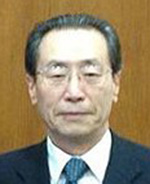
Wu Dawei
South Korean Ambassador to China Kim Jang-soo met with Beijing’s special representative for the Korean Peninsula, Wu Dawei, Monday, to reiterate Seoul’s firm position on the necessity to deploy a U.S. anti-missile system on Korean soil, officials said, Tuesday.
It marked the first time that the government delivered its position to China through an official diplomatic channel. The meeting came after Beijing escalated its criticism of the deployment by mobilizing the country’s state-run media from last week.
“Kim delivered the government’s clear position on the deployment of the Terminal High Altitude Area Defense (THAAD) system to Wu,” a diplomatic source said on condition of anonymity. “The two also exchanged views on other issues surrounding the peninsula, including North Korea’s recent missile provocations.”
Since South Korea and the United States announced on July 8 that the THAAD unit will be deployed in South Korea by the end of next year, Beijing has been expressing strong opposition, apparently out of concern that the battery’s AN/TPY-2 radar could spy on China’s military activities and missile capabilities.
Beijing’s protest appears to have intensified from Aug. 3 when the People’s Daily, the official mouthpiece of China’s Communist Party, said in an editorial that President Park Geun-hye should resolve the issue prudently to avoid driving her country to ruin.
Then on Aug. 6, the Global Times under the auspices of the People’s Daily claimed that South Korean lawmakers, who have been opposed to the deployment of THAAD, encountered attacks from the government, the ruling Saenuri Party and the media ahead of their visit to China.
Six first-term lawmakers from the main opposition Minjoo Party of Korea (MPK) left for China on Monday for talks with Chinese officials and scholars over the deployment of the THAAD system.
Ambassador Kim was originally scheduled to meet the lawmakers upon their arrival in China, but the plan was canceled amid strong opposition by Seoul’s presidential office to their visit to Beijing.
Kim met with Wu instead of meeting the opposition lawmakers.
Observers say that Kim probably told Wu that the THAAD deployment is an inevitable self-defense measure to safeguard the South Korean people and better deter evolving nuclear and missile threats from North, reiterating the government’s existing position.
“The government clearly delivered its position to China, but it remains to be seen how the Chinese government will react,” a government official said on condition of anonymity.
For their part, the MPK lawmakers met with Chinese scholars as well as South Korean residents and press correspondents in China, Tuesday.
They pushed ahead with the visit despite a warning from Cheong Wa Dae that the visit will only bolster Beijing’s stance over THAAD and exacerbate the growing division among South Koreans.
Soon after they left for China, President Park criticized them, saying they were sympathizing with the opinions of China as well as North Korea. She also said some politicians have openly made “ridiculous” claims that South Korea has nothing to say on the THAAD plan even if the North engages in another provocation.
Regarding belligerent statements from Chinese media, Cheong Wa Dae said Beijing should raise questions over Pyongyang’s nuclear and missile threats, instead of criticizing the planned installation of the anti-missile system.
THAAD is an integral part of the U.S.-led missile defense system (MD), designed to shoot down short- and medium-range ballistic missiles at the end-stage of their flights.
Beijing believes that the system is a strategic weapon for the U.S. and regards the deployment as an attempt by Washington to get its Asian ally to join the MD system to contain its influence in the Asia-Pacific region.
The Ministry of National Defense has rejected such a perception, saying that THAAD is a weapons system only to defend the Korean Peninsula and that the nation has held its position not to join the U.S. MD.