Ex-President denies ordering shooting in 1980
By Kim Hyo-jin
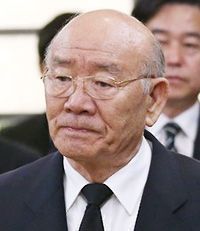
Chun Doo-hwan
Former President Chun Doo-hwan has denied that he ordered troops to open fire on participants of the 1980 pro-democracy movement in Gwangju, drawing protests from the victims’ families and opposition parties.
“In fact, I had nothing to do with the popular uprising in 1980. Who on Earth would order the army to fire at your own citizens?” Chun said during an interview with Shindonga, a monthly magazine.
“The security commander, a position which I held at the time, was in charge of intelligence and investigation. The position has no power (to order the shooting) against the will of Cheong Wa Dae.”
Chun was sentenced to life imprisonment in 1996 for his commanding role in the bloody suppression of the 1980 uprising and a 1979 military coup but was later pardoned by then President Kim Young-sam.
At the time of the massacre, Chun was an Army lieutenant-general who headed the powerful Defense Security Command. Through his position, he declared martial law, taking power away from the politically weakened civilian government led by President Choi Kyu-hah and becoming de facto leader of the country.
Lee Soon-ja, Chun’s wife who accompanied him during the interview, backed his argument, saying, “We’d do anything to clear up the misunderstanding of the bereaved families of the May 18 uprising.”
When asked if he is willing to apologize, Chun only replied, “What am I supposed to do on the visit to Gwangju?” and didn’t comment further.
The interview, published a day before the 36th annual commemoration of the 1980 Gwangju Democratization Movement, prompted a fierce backlash from the opposition bloc.
Rep. Woo Sang-ho, floor leader of the main opposition Minjoo Party of Korea (MPK), denounced Chun, describing his remarks as an “insult to the victims of the massacre.”
“It is preposterous to argue that such a large number of soldiers fired their guns on their own volition,” Woo said. “I’m really not sure if it is appropriate for the person who was punished for treason, who was held accountable for the past, should speak like that ahead of the commemoration day.”
Later that day, Min Jeong-ki, a former presidential secretary and close aide to Chun, said in a press release it was not Chun’s official stance on the Gwangju Uprising.
“It was not the prepared answer for the media interview,” Min said, adding that his stance will be described in his memoir, which is scheduled to be published in June.
According to the May 18 Bereaved Family Association, at least 165 civilians died during the uprising and 76 were unaccounted for, presumed dead.
In 1995, the National Assembly passed a special law that enabled those responsible for the Dec. 12 coup and the May 18 massacre to be prosecuted.
Chun and his successor Roh Tae-woo were sentenced to life imprisonment and a 22.5-year jail term, respectively, but in 1997, President Kim pardoned them based on the advice of then President-elect Kim Dae-jung.