Ahn Cheol-soo emerges as game changer
By Kim Hyo-jin
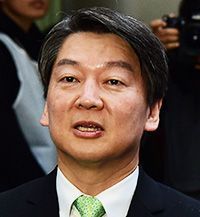
Ahn Cheol-soo
The results of the general election are expected to provide a springboard for Rep. Ahn Cheol-soo to increase his political influence, with his party and powerbase strategically positioned between the two biggest parties.
With Ahn’s newly founded People’s Party becoming a National Assembly negotiating bloc, a three-party system could emerge in Korean politics.
Ahn’s political status will be increased as the party holds a “casting vote” between the two major parties _ the ruling Saenuri Party and the main opposition Minjoo Party of Korea (MPK).
Moreover, if the opposition camp renews discussions on forming an alliance in the run-up to the 2017 presidential election, Ahn will have a bigger voice with strong support from within the southwest Jeolla region, the traditional opposition stronghold.
Meanwhile, although the MPK is still the main opposition party in terms of shares of Assembly seats, it will have to court the People’s Party when pushing for legislation or a coalition for the next presidential bid. Its lead in the opposition bloc has been be chipped away, pundits said.
“A three-party system would boost the splinter group People’s Party because it could be a balancing influence when the major parties adopt different stances on a bill and suffer conflict,” said Lee Chung-hee, a politics professor at Hankuk University of Foreign Studies.
Under the current National Assembly Law, a bill can be put to a vote with the support of three-fifths of the 300 members.
According to vote counting as of 11:00 p.m., the Saenuri Party fell short of securing a majority of seats, meaning whether it will be able to pass controversial bills is now in the hands of the People’s Party. It is eyeing pushing pending labor reform bills and an anti-cyber terrorism bill in the 20th Assembly.
Lee added that Ahn could raise his profile further in the process of legislation as neither of the two major parties secured a majority of seats; but one hurdle is whether he can find a balance between his vision and the voices of his party members, mostly based in the Jeolla region.
“Ahn could face challenges in dealing with regional sentiment internally, while acting as a counterweight outside the party,” he said.
While Ahn is gaining momentum in the run-up to the 2017 presidential election, the MPK could stumble due to possible infighting over the results of the election, said Lee Jun-han, a professor at Incheon National University.
“The MPK could be in turmoil as the party struggles to find ways of luring back its traditional voters on its home turf in the Jeolla region.”
Some observers say that the three-way party system could lead to talks of unity within the opposition bloc in order to put forward a single candidate in the next presidential election.
“The MPK won’t be able to lead the discussion while the People’s Party is absorbing overwhelming support in the Jeolla region, which gives Ahn more power in deciding how or when to form an alliance,” said Lee Nae-young, a politics professor at Korea University.
But others doubt the possibility of such discussions because of Ahn’s increased influence.
“Ahn is the person who set up his own party with an eye on a presidential bid. And now that he has secured a stable share in the Assembly, he will become less flexible about joining forces with the MPK,” Lee Jun-han said.
“Though Jeolla-based lawmakers in the party have favored the idea of an alliance, such voices are likely to wither if the party has a higher profile.”