Sexual assault victims encouraged to seek help
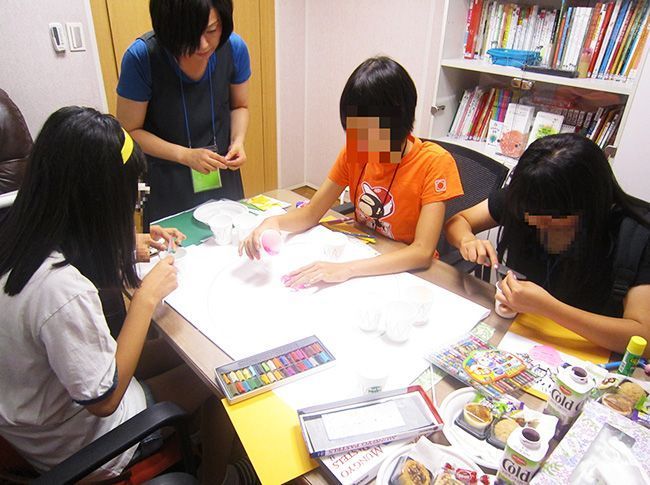
Sexual assault victims participate in a group therapy program held at the Seoul Sunflower Center in Hyehwa-dong, Seoul. / Courtesy of Seoul Sunflower Center
By Kim Bo-eun
Park Ji-na, 23, was sexually assaulted by her father for 12 years from the age of eight. Out of fear, she kept quiet about the abuse until she started having hallucinations. She then mustered up the courage to visit a local community center for adolescents.
After receiving initial aid from the center, she was referred to the Seoul Sunflower Center, where she was able to receive medical aid and counseling.
Since 2012, Park has been visiting the center on a weekly basis, taking part in counseling and therapy sessions.
“I feel like I am alive,” Park said of her experience in the sessions in an interview with reporters at the center.
Park’s mother also received counseling and participated in therapy sessions for mothers of victims.
“Although I was not involved in what happened, I had a sense of guilt toward my daughter,” she said. “The counselors at the center helped me overcome this.”
Park’s mother and others created a group through which they could share their experiences dealing with the aftermath of sexual assault.
Park and her mother both said that it required courage for them to disclose what had happened and seek help. A 2013 survey on sexual violence conducted by the Ministry of Gender Equality and Family showed two out of three victims keep silent, and fighting social stigma continues to be the greatest challenge for them and their families.
“People, including family members, have prejudice against victims — so they keep quiet about the matter for the sake of family,” Park’s mother said.
“It is really important for victims to realize that they are not the ones that tear apart their families by speaking out; instead, they are the ones who save the family.”
Park and her mother also received legal aid from the center and the perpetrator faced criminal punishment.
As such, the Sunflower Center provides counseling and medical expenses as well as help on criminal and legal matters in collaboration with police. The center can also provide medical aid because it is located within Seoul National University Hospital.
There are currently 36 centers nationwide for victims of sexual violence, domestic violence and prostitution. These centers provide emergency services as well as post-recovery programs.
The Seoul center opened in 2011, and 4,669 victims, including foreigners, have either called or visited it since. Over 90 percent of them are women and they are mainly victims of sexual assault.
Young women in their teens and 20s constitute the largest ratio of sexual assault victims, although the number of male victims is also on the rise, according to the center. According to 2013 data from the National Police Agency, an average of 79 sex crimes occurs daily.
“Victims and their families are very cautious about being revealed. They don’t like having centers located on main roads, and they do not want the name of the center to indicate that it aids sexual assault victims,” said a Seoul center official.
“This is the greatest barrier for victims, but we spoke out with the hope that other victims would summon up their courage to seek help,” Park and her mother said.
The center official advised victims to visit the center as soon as possible after the assault, within 72 hours and without changing or showering if possible, so that physical evidence can be collected. “Without physical evidence, police can only rely on victims’ testimonies,” she said.