Jeju seeks eco-friendly development
By Chung Ah-young
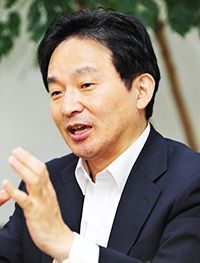
Won Hee-ryong Jeju governor
Won Hee-ryong, governor of Jeju Special Self-Governing Province, said that development and preservation can go side by side on the nation’s largest resort island.
“I will not allow investment and development which can destroy Jeju’s natural value. We will continue to push for eco-friendly development,” Won said in a recent interview.
He said that any project which spoils the landscape would destroy the island’s identity.
“We need to strengthen regulations to protect nature and prevent overdevelopment, but we welcome investment in keeping with Jeju’s values,” he said.
When the provincial government set up the Jeju International Free City development project in 2002 to attract foreign investments, the island received little attention from abroad.
But in recently years, Jeju’s clean natural assets have drawn much attention from international investors, particularly from China, Won said.
Chinese investors have initiated resort development projects in recent years, often creating conflict with residents. But he said that developments in other sectors, such as health, recreation, leisure, education, clean energy and smart businesses, can create synergy based on the island’s natural assets.
“We are trying to set up long-term policies as far as natural values can be prioritized rather than short-term infrastructure investments so that investors and islanders can coexist,” he said.
Over the last five to six years, the population on Jeju has surged by 60,000, a major expansion, and the number of Jeju residents is expected to reach 640,000 by the end of this year.
The influx of residents has created much speculation in the real estate market and lured investment. But Won said that it is more important to ensure that the natural environment can endure such development to meet this soaring demand for residential facilities.
“So we are seeking ways to provide houses in the long term while achieving a balance between development and the preservation of nature,” he said.
As part of this move, the province is seeking to designate Jeju a Carbon-Free Island by 2030 through renewable energy resources.
Under the plan, all fossil fuels will be replaced with renewable energy by utilizing wind via land and sea turbines, solar energy and electrical storage facilities. The province aims to replace all vehicles with electric ones.
“This plan is a model for our island’s policy which encourages both natural preservation and development using future industries which contribute to improving the quality of life. This landmark change is happening here,” he said.
In line with this, the provincial government plans to establish a platform for what it calls “smart tourism” based on information and communication technology, electric vehicles and smart grids.
“Tourists can book flights and check the departure and arrival times and other information on various facilities around the airport at a glance through their smartphones,” he said.
The province plans to intensify its smart tourism infrastructure when a new airport is built.
The second airport with one runway will be on the eastern part of the island costing 4.1 trillion won. Construction will start in 2018 and be completed in 2024 for a scheduled opening in 2025.