'Print media have new roles to play in the future'
By Kim Hyo-jin
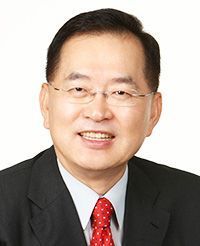
Prof. Shim Jae-chul
A noted scholar said Thursday that traditional print media can play a more constructive and responsible role in the future, though it is unable to be an opinion-maker like it was in the past.
“Society needs more persuasive and convincing news reporting as guidance. And I believe the print media can play a better role in doing so than online media,” said Professor Shim Jae-chul, president of the Korean Society for Journalism & Communication Studies (KSJCS).
“As the number of news providers increased and their platforms became diverse, they became irresponsible in terms of choosing and delivering news,” said Shim, concurrently dean of the School of Media and Communications at Korea University.
Shim explained that is because the print media is likely to deliver more refined news, as it has a limit in changing content that is already printed out.
“The media lost public trust. It is high time to redefine the media’s role to chart a path for the future of journalism,” he added.
The KSJCS led by Shim is organizing a nationwide conference in a bid to raise awareness of the challenges in journalism despite a perceived lack of credibility in news reporting.
The annual conference will be held at Pohang University of Science and Technology (POSTEC) from May 15-16, under the theme of the “Crisis of Korean Society and Public Communications.”
About 400 people, including academics, journalists, and government officials, plan to attend.
A notable presentation on the schedule will be, “Studies on the expansion of conspiracy theories regarding the death of Yoo Byeong-eun, the de facto owner of sunken Sewol ferry,” which will be presented by Lee Gyu-yeon, a reporter at the Joongang Ilbo, and Hong Joo-yeon of Kookmin University.
The whereabouts of the owner became the center of attention after the ferry Sewol sank off the country's southwestern coast in April last year.
At the time, the competitive media coverage was under criticism due to its excessive focus on Yoo’s whereabouts.
Shim said that the media needs a viewpoint to report trustworthy news. That is possible when academia provides proper journalism theories and models, he said.
“I hope the conference can contribute to presenting a way for the media to restore public trust.”
The two-day conference will comprise 51 sessions and presentation of 118 papers.
Attendees will discuss the impact of increasing media platforms and ways to cope with such rapid technological changes. There will be a special session focused on the features of online platforms.
For government public relations, how to make use of online social networks and smartphones will be also discussed.