Muslims find comfort comes with hardship
By David Keelaghan
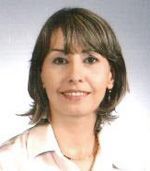
Fatemeh Yousefi
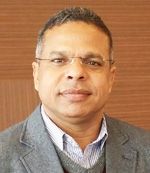
Salah Elgebily
Most of the Muslim community appears to feel at home in Korea, but with comfort comes hardship.
Sajid Anwar, a Pakistani or a Ph.D. in Seoul National University (SNU), told The Korea Times, “There are a lot of opportunities and it’s a good place for hard workers.” he said.
SNU Muslim Students’ Society has 60 members from India, Bangladesh, Pakistan, Yemen, Egypt, Algeria, Tunisia and Ethiopia.”
Anwar, who has been living in Korea since 2007, said that things sometimes get blown out of proportion.
He cited an example in a recent Korea Times article about a Pakistani student from Sungkyunkwan University.
He said the article correctly stated that the student had not been found guilty of any charges but it was titled, “Pakistani student probed for alleged terror plot.”
“It could have a negative impact on prospective students seeking scholarships in Korean universities. Our group frequently discusses the importance of abiding by Korean and international laws,” he said.
Of approximately 155,000 Muslims residing in Korea, around 35,000 are Korean.
Indonesians are the largest group within the Muslim community.
In modern times, the contribution made by Turkish troops during and after the Korean War improved perceptions of Muslims here.
A surge in their number was seen during the 2000s when a relaxation of immigration rules brought a new wave from Indonesia and Malaysia.
Dr. Fatemeh Yousefi of Hankuk University’s Foreign Studies campus talked about a major change since she first came to Korea in 1988.
“When I first came here you would never see any foreigners. People would look at me like I was from another planet,” she said. “Nowadays when I go on the subway, you see foreigners everywhere. It is a hard place to live as a foreigner though.”
“Everything is different now; there is freedom,” said Yousefi. “You can talk about whatever you want. The newspapers can write whatever they want. Nowadays, it is very developed economically. I would like to see the government do more for the poor, the elderly and disabled people though. The social programs here for those people are not good.”
Salah Elgebily an Egyptian who lectures at Hankuk University, said, “I arrived here in September 2013; the military coup (in Egypt) was in July that year,” he said.
“The political troubles in Egypt made me want to leave. I wanted a break from all the fighting there; fighting over politics is not good for a person.”
“This is a democratic society so the people live in freedom. I don’t think there is distrust between Koreans and non-Koreans. They don’t mind about religion here, if you’re a Christian, or a Muslim or anything else. This is good for a country,” he said.