President Park's appointments erode public trust
Kim Ki-choon
Odd choices raise many eyebrows
By Jun Ji-hye
President Park Geun-hye sometimes perplexes the public with her odd choices of people appointed to senior posts in government and other important positions.
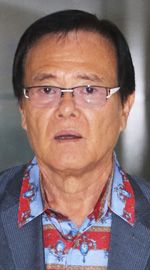
For instance, her selection of former Korean-American actor and comedian, Johnny Yune, to be auditor of the Korea Tourism Organization (KTO) raised more than a few eyebrows because of his obvious lack of qualifications for the job.
It was rumored that Ryu Jin-ryong, formerly minister for culture, tourism and sports, was fired for objecting to Yune’s appointment.
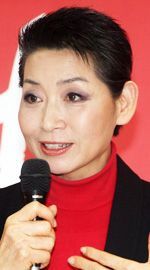
The most recent odd choice is Kim Sung-joo, who was named president of the Korean Red Cross late last month. Kim is a businesswoman, who is now under fire for going to Beijing to attend a meeting of Red Cross officials, but which some critics say was in order to avoid scrutiny in the vetting to be conducted by the National Assembly regarding her appointment.
One thing common to these appointments made by Park is that both people chosen made significant contributions during Park’s presidential campaign.
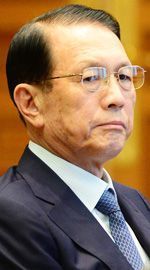
Another appointment that troubles citizens is Kim Ki-choon, chief of staff at Cheong Wa Dae, who Park retains despite a series of incidents that have continually alienated the public.
Admittedly, Park needs to show appreciation for those who support her and make use of people she trusts in order to pursue her agenda, but one question is often raised: Are these worth trading for the loss of public confidence?
Rep. Kim Sung-ju of the main opposition New Politics Alliance for Democracy (NPAD) stated, “It is unacceptable that the head of an organization subject to an audit has refused to attend the session and left the country.”
Before she was appointed, Kim Sung-joo was a core campaigner for Park during the 2012 election. When she became president of the Korean Red Cross, it was the first time that its leader was chosen from the business sector.
Kim was embroiled in additional controversy after it was revealed that she had not even paid her annual membership fees to the humanitarian body.
Rep. Lee Myoung-su of the ruling Saenuri Party said, “The committee members are discussing whether to hold a separate session to question Kim after she returns home.”
At a session led by the National Assembly Science, ICT, Future Planning, Broadcasting and Communications Committee, Koak Sung-moon, who was appointed as CEO of the Korea Broadcast Advertising Corp. last month, became the focus of criticism for a letter he submitted to apply for the position.
He wrote in the letter: “I naturally became one of the closest confidants of Park, and spared no efforts to help her become President.”
Rep. Choi Min-hee of the NPAD who disclosed the letter said, “It is inappropriate to give emphasis on close relations with the President when assuming a public post.”
The controversy escalated further when Koak was asked about who told him to apply for the position, after he answered, “I spoke to pro-Park lawmakers.”
Former Korean-American actor and comedian Johnny Yune, who was appointed as auditor of the KTO in August, was embroiled in a similar controversy because he also stated that he has close relations with President Park in a letter that he submitted.
During the presidential poll, he was in charge of promoting Park to Koreans living overseas.
Indeed, controversy over the significant number of Park’s appointment fiascoes has continued ever since she was inaugurated, among them that of former presidential spokesman Yoon Chang-jung who was dismissed for sexually assaulting a female intern in her early 20s in a Washington, D.C. hotel room while accompanying Park on a state visit there last year.
Follow Jun Ji-hye on Twitter @TheKopJihye