Being first is not always fantastic
By Kang Hyun-kyung
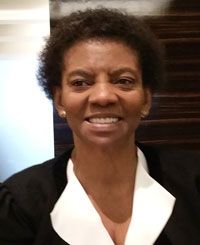
South Africa’s Deputy Foreign Minister Nomaindia Mfeketo
South Africa’s Deputy Foreign Minister Nomaindia Mfeketo, who previously served as mayor of Cape Town, says being first, particularly in politics, is not always as fancy as it sounds.
Some of the record-breakers end up falling victim to an expectation game as the public use higher standards when evaluating their performances, according to her.
To avoid this scenario, Mfeketo advises that leaders must make sure community members take part in key decisions, understand policy priorities and be motivated to share the burden.
Mfeketo, now deputy minister of the Department of International Relations and Cooperation, says the job of mayor was the most exciting role she had ever taken in the public sector, despite its many challenges.
“I think what is nice about being mayor is that you are getting immediate satisfaction from community members as people benefit from what you are doing,” she said during an interview with The Korea Times at the Lotte Hotel on Friday.
Mfeketo said the job was rewarding but often daunting, and she found it difficult at times to handle the huge expectations of her constituents.
“There was a high level of expectation from those who were neglected for many years (during the apartheid era),” she said. “They thought things would happen quickly. Some of them expected a quick change.”
Mfeketo became the first black woman to serve as mayor of Cape Town when she was elected in 1998 and re-elected in 2002, holding the position until 2006.
She took office in the local government four years after Nelson Mandela was elected the first black president of South Africa, which signaled the end of the five-decade long racial segregation.
Mfeketo recalled that she was under a lot of pressure partly because of citizens’ grand expectations and partly because the budget the city authorities could use was constrained.
“It was challenging. But you can minimize those challenges if you are able to act with the different communities to resolve their problems,” she noted.
Faced with limited financial resources, handling competing policies was another difficult task for the city leader. During her time as mayor, she said, calls to reduce poverty among black people in the underprivileged areas of South Africa’s largest city were ubiquitous, while urgent problems related to infrastructure such as water shortages were a constant issue.
“When I came in as mayor there was a real water shortage in Cape Town. We were told that if we didn’t build another dam within three years we would not have water because there was only one dam,” she said.
“We explained to the public how much money we had and what was needed to maintain infrastructure. We told them that part of the budget must go toward another dam and that three percent of budget increase would go to the dam.”
Mfeketo said her efforts to reach out to all communities, including the poor, those in the business sector and the residents of the affluent neighborhoods, helped her to convince the constituents.
She noted that hope was in the air and people were optimistic during this time, adding that such a positive atmosphere partly helped her finish her job as mayor successfully.
The South African official had led a notable career path before joining the foreign ministry in May this year.
Prior to her current job, she had also served as deputy speaker of the National Assembly from 2009 to 2014. Before joining the political area, she also worked as a community worker.
The South African deputy foreign minister arrived in Seoul on Wednesday for the eighth Korea-South Africa policy consultative meeting with Korean foreign ministry officials. Mfeketo led the South African delegation consisting of government officials and business leaders.