Top NK diplomat to visit Europe
By Kang Seung-woo
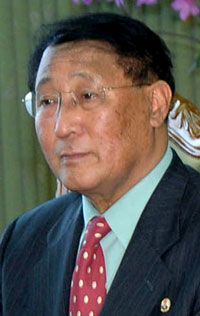
Kang Sok-ju
North Korean diplomat and politician Kang Sok-ju is expected to visit Europe this week in an apparent move to break the secretive regime out of international isolation, the foreign ministry said Tuesday.
The Central Committee of the Workers' Party of (North) Korea secretary, 75, has a prominent role in foreign affairs.
He will visit political figures in Germany, Belgium, Switzerland and Italy, according to the ministry.
The ministry said Kang's visit did not include meetings with government officials, but given his status in the North's political hierarchy there is speculation that he will have a specific mission of some sort.
His tour comes as the Stalinist country plans to send Foreign Minister Ri Su-yong to the U.N. General Assembly in New York on Sept. 24.
“Dispatching Kang and Ri to Europe and New York, respectively, means that the North is focusing on breaking its diplomatic isolation to get over financial difficulties," said Dongguk University professor Koh Yoo-hwan.
Some have speculated that the U.S. has been shifting its stance toward North Korea amid unconfirmed reports that high-ranking U.S. government officials secretly visited Pyongyang to discuss three Americans detained there. However, U.S. officials said on Sunday that their stance toward the North remained unchanged.
"It seems that something is under way for the North to work its way out of isolation," Koh said.
"Through the two planned visits, the North may come up with eye-catching measures to improve its image in the international community."
Kang is also expected to meet with Japanese officials secretly during his trip, although the South Korean government does not have specific information about this.
In May, Pyongyang and Tokyo agreed to a full investigation into the abduction of Japanese citizens. In return, Tokyo lifted sanctions against the North. A Japanese official handling the abduction issue will be in Geneva for a seminar at the same time as Kang’s visit.
As the North’s former chief nuclear envoy, Kang negotiated the 1994 Geneva Agreed Framework between Pyongyang and Washington, which called for freezing North Korea's nuclear facilities in exchange for internationally financed light-water reactors and oil.