New law increases foster child lessens adoption
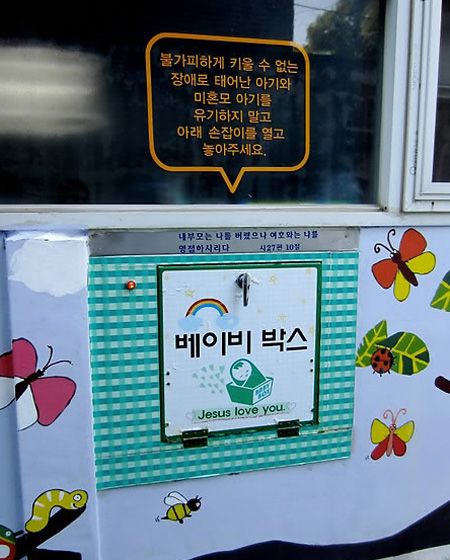
Adoption of abandoned babies won’t be as easy as it has been.
An amended law dictates that without the registration of the biological mother, the court’s grant, or the family background, the child cannot be adopted.
It has been in effect since August last year.
Left with no choice, financially challenged single moms have turned to the church’s Babybox instead.
The number of abandoned newborns in a Babybox in front of JooSarang church in the Gwanak district in southwestern Seoul has been increasing for three years, the church said Sunday.
The figure was four in 2010, 37 in 2011 and 79 in 2012, according to the Seoul city government.
Obviously the change in the law led the rise in number, said a church official and a city official.
The babies in the Babybox have been put up for adoption through domestic adoption agencies, the city official said.
But the new law made it illegal to do so.
Single moms have nowhere to turn to but the church, the church official explained.
“Most single mothers wrote in letters that because of the new law, they had no choice but to leave the child at the church. They said ‘please put up my child for adoption.’”
But the reality is stacked against the hope for the moms.
After regular check-ups in a hospital, every child who was in the box is put in foster care, not transferred to adoption agencies, said the city official.
Another problem is that there are not enough people to take care of the increasing number of babies, according to a church official.
“There is only one city official responsible for the job. Taking the babies to the hospital and attending to them is in no way a one-woman job.”
Seoul City is struggling with the situation as well.
An official Cho Hyun-ok from Women and Family Policy department said that they have asked for a government subsidy of 3.6 billion won ($ 3.1 million).
“Childcare centers are getting full, and it’s all on city’s budget. That’s why we have asked for the government subsidy.”
“Also, Seoul Metropolitan Children’s Welfare Center is taking the abandoned babies nationwide. Other regions should take responsibility, too,” she added.