Science, fisheries ministries still lack leadership

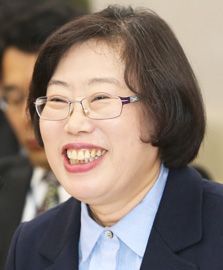
Choi Mun-kee
By Jun Ji-hye
Two government agencies intended as central pillars of President Park Geun-hye’s government organization are still without ministerial leadership.
Park, who was sworn in on Feb. 25, established the Ministry of Science, ICT and Future Planning to nurture her envisioned “creative economy,” and the Ministry of Oceans and Fisheries to effectively respond to change in maritime issues.
However, members of the National Assembly committee appointed to approve two candidates to lead the ministries rejected reports supporting the nominees after confirmation hearings were held last week.
President Park has had to postpone the receipt of five-year plans to be submitted from these two ministries. She originally planned to receive these from members of her Cabinet by the end of this week.
Although the president is not legally obliged to follow the Assembly’s decision regarding ministerial nominees, she still has to wait 20 days after the initial request to hold such hearings was submitted to the parliament in order to finalize appointments.
Regarding Choi Mun-kee, the nominee to head the science ministry, and Yoon Jin-sook, the nominee to head the Ministry of Oceans and Fisheries, Park is able to appoint them from next Monday.
Choi, whose confirmation hearing was held last Monday, received an unfavorable evaluation from legislators of the main opposition Democratic United Party (DUP).
“He lacks the ability to understand the meaning of the creative economy. He has been embroiled in allegations over tax evasion and real estate speculation as well,” the DUP said.
Choi is the second nominee for the ministerial post, after former designate Kim Jeong-hoon withdrew under pressure over holding dual American and Korean citizenship and for previously working for company funded by the United States Central Intelligence Agency (CIA).
Objections to Yoon appear to be even more serious because some lawmakers of the ruling Saenuri Party expressed skepticism about her qualifications to stand.
During her hearing held last Tuesday, Yoon became a target of criticism after repeatedly answering “I don’t know” to questions from legislators.
Following mounting criticism, Yoon issued a written apology on Monday, saying, “I could not answer the lawmakers’ questions properly because I was so embarrassed at my first ever confirmation hearing. But I have a clear vision and beliefs to develop the nation’s ocean and fishery affairs ministry.”
Despite this apology, Rep. Chung Woo-taik of the ruling party called for Yoon to voluntarily step down at the party’s supreme council meeting. He previously served as the oceans minister in late President Kim Dae-jung government before the ministry was eliminated by Park’s predecessor Lee Myung-bak.
“I could not recognize Yoon’s qualification to serve as head of the ministry. I doubt what we can expect from her,” he said, adding that, “I expect Cheong Wa Dae to make a ‘wise’ decision.”
Despite mounting criticism, many expect that Park will forge ahead and ensure the two nominees are appointed because it appears increasingly difficult to find another nominee so late in the day.
“The oceans ministry has been left incomplete for so long. It is urgent to have operating normally, considering the recent circumstances in Northeast Asia,” said Rep. Kyung Dae-soo of the ruling party.
However, controversy about Park’s failure to successfully select nominees will likely continue to put pressure on her to ability to manage affairs of state. This is exemplified by a comment from political analyst Lee Kang-yun who commented, “Yoon is the grand finale of Park’s appointment fiasco.”
The creation of the Ministry of Science, ICT and Future Planning was the main factor that delayed passage of the Park government’s restructuring bill because of a parliamentary stalemate that lasted more than 50 days. This was due to a long running dispute between the ruling and opposition parties over whether the ministry should have jurisdiction over broadcasting policies.