Korean-born US scientist to lead KAIST
By Na Jeong-ju
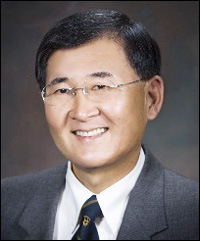
Kang Sung-mo
Kang Sung-mo, the former chancellor of the University of California, Merced (U.C. Merced), has been named as the new president of the state-run Korea Advanced Institute of Science and Technology (KAIST), the country’s top technology school.
The university announced Thursday it selected the 68-year-old electrical engineering professor to be its next head, succeeding Suh Nam-pyo. Kang will begin his four-year term on Feb. 23, if he is endorsed by the education minister.
Kang, a naturalized U.S. citizen, served as chancellor of U.C. Merced from 2007 to 2011.
One of the biggest challenges for Kang is a recalcitrant council of KAIST professors. Suh, also a naturalized American citizen, tendered his resignation in October amid conflict with the council over stricter tenure rules for professors, through which he sought to strengthen their research capabilities.
Suh’s predecessor, Robert Laughlin, also couldn’t finish his term and quit after clashing with professors over the way he managed the school.
School officials hope Kang will clear up the current mess and present new visions for KAIST so that it can become one of the top technology schools in the world.
Kang was born in Yangpyeong, Gyeonggi Province, in 1945 as the country was being liberated from Japanese colonial rule.
His grandfather is known to have fought for Korea’s independence from Japan and helped him emigrate to the U.S. when he was attending Yonsei University.
He received his bachelor’s degree from Fairleigh Dickinson University in 1970, his master’s from the State University of New York in Buffalo in 1972 and a Ph.D. from U.C. Berkeley in 1975.
Kang was selected above three other candidates ― Baik Sung-gi, former president of Pohang University of Science and Technology, and KAIST professors Park Sung-joo and Yu Jin.
Park and Yu were recommended to the board by the professors’ council.
The group’s deep involvement in the election raised concerns that the school could be swayed by only a handful of “political” professors who have resisted reform.
Suh earlier said he was working to create a school environment, in which talented, hard-working people could take leading positions, not the political professors who have “taken students hostage” to maintain their vested interest.
Last year, the council even raised allegations of patent theft by Suh, which were later found to be false in a police investigation.