Military service required for presidency
By Chang Se-moon
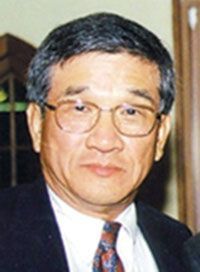
My ID number in the Korean military begins with two zeros. This is because I served in the Korean military as a student soldier in 1960 or 61. It has been such a long time ago that my memory of dates in this article will be more approximate than exact. I can clearly remember my student military number, however, probably because I had to repeat it so many times while serving.
At the time, I had two close friends. We remain, these many years later, still close. Two of us volunteered to join the army before we were drafted. The third one also volunteered. After he was rejected due to health problems, he volunteered again. When he was rejected the second time, he gave up on military service.
My recollection is that all my friends from top schools and good families never had a thought of avoiding or evading our duty to complete our mandatory military service. We were all proud of our service. We never considered hiding from it to be an option.
As for my service, I was a private first class in the Tiger Company of the Capitol Division. We greeted each other by saying “Maengho” meaning ferocious tiger. I eventually ended my service with a reconnaissance company in the Demilitarized Zone (DMZ) near the Hantan River.
We could hear the North Korean loud speakers blasting propaganda. We maintained the route through which our South Korean spies were sent north. We even had a night when our guards caught a glimpse of a North Korean spy trying to infiltrate. If I recall correctly, it was on Feb. 17 of 1961 or 1962.
It is alarming to observe how times have changed in the span of our lifetime.
Every time I pick up Korean news media, I see that many politicians treat the military as a political game. One example relates to the controversy involving the burial site of General Paik Sun-yup, who was one of the soldiers who literally saved the country from the invasion by North Korea. Another example relates to the controversy involving how Korea treated soldiers who lost their lives in 2002 when defending Yeonpyeong Island against an attack by North Korean patrol boats.
In recent years, powerful politicians have done everything they can to make life for their sons during mandatory military service as comfortable as possible, often leading to likely violations of rules and regulations. Worse yet, many political allies of these powerful politicians say whatever is needed to defend their friends. They don't mention that they themselves haven't served a day in the military.
Based on my personal experience of having served in the Korean military, I can say these politicians would have never behaved the way they do if they had completed their service. I can honestly tell you that my service in the army taught me life lessons, especially regarding self-discipline, that I could not possibly have learned anywhere else.
I have one proposal for the future of Korea, and the United States as well.
My proposal is for Korea and the U.S. to enact a law that requires candidates for the President to be limited to those who were honorably discharged from the military, retired from the military or completed mandatory military service. No exceptions for not serving in the military, nor for serving truncated periods should be accepted.
South Korea mandates that every able-bodied male complete military service. This new law, at least in South Korea, may also require that all members of the Cabinet and the National Assembly complete military service, too.
The voluntary army system, as practiced in the U.S., is doing more harm than good to the country because the sons and daughters of the wealthy and powerful are not likely to volunteer. This makes it very easy for political leaders to be aggressive militarily since their sons and daughters will only be watching the war on a TV screen, if that.
Occasional mention of the possible voluntary army system by politicians in South Korea is nothing but a smokescreen for allowing the rich and powerful to shelter their sons from having to serve.
I have no doubt that some logistical issues will have to be worked out. For instance, a limited time of service for female soldiers who may want to pursue a political career, specialty services for disabled persons, and other unique cases may be established to accommodate everyone who wants to serve in the military.
The greatest benefit of my proposal for Korea, the U.S., and any other country for that matter, is to protect us from having hypocritical politicians who use the military as a tool for political games without understanding its true value in a shared experience and commitment to one's country.
Chang Se-moon (changsemoon@yahoo.com) is the director of the Gulf Coast Center for Impact Studies.