BOK might be among first to cut, but will not rush
By Park Chong-hoon
We recently revised our view on the Bank of Korea's (BOK) policy rate and now expect a cut of 25 basis points in the first quarter of 2024 instead of the fourth quarter of 2023. This change in view is in line with the central bank's more hawkish stance recently and we expect it to stay on hold until the end of this year. Just as the BOK was among the first central banks to increase rates in the current cycle, we expect it to be the first to lower the base rate, but it may choose to do so based on its own unique needs.
Korea's inflationary pressures have not yet been eliminated and so we view the BOK needs to monitor the monetary policies of other central banks before starting to cut rates. It may need to align with major central banks and adopt a cautious approach to avoid moving prematurely, as a significant interest rate difference against the U.S. or Europe could result in sudden capital outflows from Korea. That said, we do not anticipate that the BOK will raise its base interest rate on concerns about possible hikes by the U.S. Federal Reserve and European Central Bank (ECB).
The hawkish stance of other major central banks could have adverse consequences for Korea's economy, which may drive the BOK to take a different approach. Tightening global monetary policy is expected to slow global demand and economic growth, decreasing energy prices. While this seems advantageous because lower energy prices would help suppress domestic inflation, slower global growth would have negative repercussions for Korea's export-oriented economy, affecting industries such as manufacturing and trade. Inflation in Korea is primarily driven by a rise in energy prices, and its consumer price index (CPI) inflation has fallen below 3 percent, much lower than in many developed economies.
Before adjusting its policy path, we believe the BOK will consider crucial factors such as the domestic economy's growth recovery in the second half of the year, the persistence of inflation, financial stability and the state of the real estate market. We think balancing these factors will be essential to sustain growth and navigate the evolving global economic landscape.
Korea's economy appears to be at the bottom of its cycle ― we project growth of 1.3 percent in 2023. The downside risk from weak export growth due to a global recession is balanced out by potential benefits from China's recovery and improved Korea-China relations. We do see short-term challenges ahead, with the second quarter unlikely to have posted a second consecutive quarter of positive GDP growth. Similarly, we expect only modest growth in the third quarter, which would result in a negative growth gap. Despite these headwinds, the following drivers may contribute to a more favorable growth outlook. Net exports are likely to pick up in the second half as the trade balance shifts to a surplus on declining imports and slower export growth. Additionally, the shipbuilding, car manufacturing and semiconductor industries are experiencing a boom, which should support growth. Finally, if China lifts its ban on group tours to Korea, foreign tourist flows could increase in the second half compared to the first half, benefiting services exports.
Meanwhile, we expect inflation to decline, as consumer prices slowed by 2.7 percent year-on-year in June, helped by a significant drop in international oil prices. Core inflation, which provides an insight into underlying price trends, also hit 3.5 percent, its lowest level in 13 months. Headline CPI rose only 2.7 percent year-on-year in June, entering the 2 percent range for the first time in nearly two years. Although CPI inflation is currently lower than we expected, caution is still warranted as weaker energy prices and a favorable base effect were likely contributing factors. We expect the BOK to deliver a message that it is too early yet to look past inflationary pressures.
Looking at the real estate market, the Korea Federation of Community Credit Cooperatives' (KFCC's) exposure to real estate-related loans is a concern, particularly as the default rate surged to 6.2 percent in June, increasing risk significantly. The government has taken action by forming a crisis control team in collaboration with relevant agencies to address the situation. To restore confidence, it has guaranteed all customer deposits and announced a thorough examination of the KFCC. While we do not expect another credit crunch in Korea, the government's commitment to stability and the success of its past interventions are reassuring. The central bank will probably monitor the situation closely and make informed decisions about financial stability and its impact on monetary policy.
The housing market's outlook remains highly uncertain. While Seoul is experiencing a recovery with increased transactions and rising home prices, challenges persist in non-Seoul areas and in the pre-sale market. Although the growth of unsold apartments has eased, the number of unsold apartments has increased in the provinces. Regional polarization and conflicting market expectations between buyers and sellers contribute to the complexity of the housing market. As such, we think it is crucial to approach the situation with caution and learn from past transition periods when market conditions were similarly chaotic.
Considering the current inflation path, sluggish economy, tight credit environment and weak real estate market, there is likely ample reason for the BOK to take a more judicious approach which is unique to Korea's situation. We expect the base rate to be lowered eventually, but do not foresee a near-term rate cut, as the BOK will likely first align its monetary policy with other central banks' hawkish tilt to avoid sudden capital outflows. Thereafter, we expect it to assess each upcoming data print carefully and move only with a view to achieving a balance between controlling inflation and fostering economic growth.
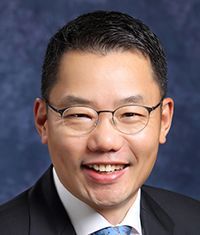
Park Chong-hoon (ChongHoon.Park@sc.com) currently heads the Korea Research Team at Standard Chartered Korea. Before joining the bank, he worked as a senior research fellow and head of telecommunication policy at the Korea Information Society Development Institute (KISDI).