So Kim's not Korean anymore?
By Jason Lim
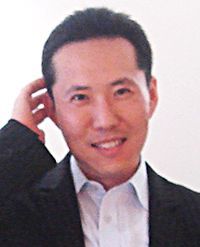
After the recent mob invasion of the U.S. Capitol, Andy Kim, the just reelected Representative from New Jersey's 3rd congressional district, helped federal law enforcement and local police officers clean up the rotunda of the Capitol. His actions were captured by the media and quickly went viral, representing a ray of serenity and quiet decency in midst of all the chaos and vitriol that had roiled over the nation since the presidential election and culminated with the attack.
The story also made it over to the Korean media. It seemed natural since Kim is a second-generation Korean immigrant with a feel-good American dream story. You couldn't find a better, more idealized story of a Korean immigrant family done good than Kim's. I mean, the guy was a Rhodes Scholar and served on the Nation Security Council in the Obama Whitehouse.
What I found interesting, however, were the portal site comments below the story. I had expected the typical, positive comments of ethnic pride about local boy done good and outshining the Americans in America. And some of the comments were exactly that. However, many comments were focused on the fact that Kim was an American, not really Korean, and shouldn't really be the subject of a story in a Korean media outlet. Quoting some comments here: “Please note accurately that he is an American of Korean descent”; “He's only a black-haired American”; “Thank you, nice American”; “The reporter is clueless. He's just an American.”
What these comments reminded me of was when the administrator of the Military Manpower Administration recently appeared at a National Assembly hearing and insisted on calling Yoo Seung-joon by his American name, Steve Yoo, since he was an “American.” While Yoo is a special case that merits a separate discussion, there is definitely a noticeable, tangible trend on how Koreans in Korea seem to be increasingly wary, and even resentful, of embracing the ethnic Korean diaspora as “authentic” Koreans.
So, this is a far cry from the times when Korea seemed eager to assert its ethnic branding on any individual Koreans who had made good, no matter how tenuous their connection to Korea many have been. Remember the hoopla surrounding Michelle Wie or Fleur Pellerin? They were just the most famous cases, but I recall countless articles featuring anyone of Korean descent who achieved prominence in any field. Ethnic Koreans were actively invited to come and work in Korea, given favorable visa status and treatment, to share their globally gained knowledge and contribute to the motherland. Oh, how the value equation has changed.
Much of this new distancing seems to be driven by the impression that ethnic Koreans who are citizens of other countries are taking advantage of their ethnicity to come to Korea and freeload off Korea's better social support system, especially the national health insurance, without paying a dime. Instead of sources of pride, they are now potential underserving competition for scarce resources. The recent COVID-19 pandemic seems to have added to this impression by reminding local Koreans how superior their health system is compared to other countries, which means that, surely, others will be trying to take advantage of it. Ethnic Koreans are especially suspect. Only “authentic” Koreans need apply.
Which is what I wanted to write about in the first place: how the concept of “authenticity” of who's a real Korean or not really varies depending on multiple, often competing, variables. The dynamic is actually very similar to those we see with the anti-immigration studies in which anti-immigrant sentiment increased in countries where perceptions of economic insecurity also increased and anti-immigrant sentiment decreased in countries where perceptions of economic insecurity declined.
In this vein, I wouldn't be surprised if studies show that the young in their 20s and 30s, who tend to perceive the economy pessimistically, are the most opposed to the generous Korean branding for ethnic Koreans who aren't Korean citizens. When you add in the particular and peculiar Korean resentment surrounding those who don't serve mandatory military duty for this age group, you now have the explosive anger and resentment targeting any sense of unfair privilege wielded by non-authentic Koreans. It's fascinating to note the particular Korean trend in which the older generation tends to have a more global and expansive outlook while the young are more insular and hermetic about what little that they have.
It's further fascinating to see the formation of this tribe and associated trappings and culture in real time. Throw in the fact that Korea's birthrate is the lowest in the world and that the population actually decreased for the first time ever in 2020, and you now have a situation in which the local, indigenous Koreans are insisting more and more tribal authenticity based on an increasingly narrow definition of the said tribe while socioeconomic reality will result in more immigration and a future Korean population that don't look traditionally Korean. This authenticity fight is just starting.
Jason Lim (jasonlim@msn.com) is a Washington, D.C.-based expert on innovation, leadership and organizational culture.