Shattering self-betrayal
By Jason Lim
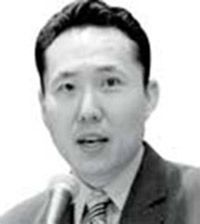
Strangely enough, when I heard that Seoul Mayor Park Won-soon had taken his own life, an obscure passage from one of the Dune books popped into my head. I can't recall the specific text or the even the characters that uttered the words, but the passage featured the Bene Gesserit, an all-female quasi-religious and political society, as they were planning a conspiracy against the “Kwisatz Haderach,” the all-seeing god-king.
Ironically, the Bene Gesserit had purposely engaged in a carefully calculated breeding scheme over millennia to produce the Kwisatz Haderach, an individual who would be endowed with the gift of prophesy that they could use to tighten their grip over humanity. But the Kwisatz Haderach had moved beyond their control and, instead, turned into their oppressor as the emperor of the known universe. As you can sympathize, it's difficult to sneak up and kill someone who can prophesy everything about to happen in the future. So, the Bene Gesserit were consulting with Bene Tleilax, another specialized secret society, who had also created their own Kwisatz Haderach but managed to overcome and kill him.
“How?” the Bene Gesserit sisters asked.
The Bene Tleilax representative told them that Kwisatz Haderach's were creatures of pure essence ― basically beings of pure evil or pure good ― who can be destroyed by forcing them to become their opposites.
“What does that mean?” they asked.
“It means that he committed suicide when he was forced to become the opposite of what he thought his essence was.”
And maybe that explains why Park killed himself.
When faced with the sexual harassment complaint, he was forced to face himself as someone who was the opposite of the person he always cultivated and thought himself to be. Imagine how jarring that realization must have been. It would have been a fundamental betrayal that was perpetrated upon himself by himself, one that he didn't have the strength to live through.
Park did leave behind a short apology note before his death. However, a deeper insight into how Park viewed himself can be attained from something he wrote to his family back in 2002 as a part of his book published in the same year. Addressing his children, he writes, “Don't be cowed that you didn't inherit anything from your parents. Beginning can be humble but the end can be different. Life is a like a long marathon. A life well-lived is a life that goes on consistently. Moreover, life is not something that can be judged by only money and titles. It's enough that you do your best to live your life. I wish that you live recognizing that there are worthy values in life much bigger than money and titles.”
He then goes on to address his wife, apologizing but nevertheless proud of how he walked the walk, instead of just talking the talk, in living the just and sharing life that he wanted society to adopt. And by all indications, Park was remarkably consistent in his words and deeds throughout his career.
Even before he became the mayor of Seoul, Park was already a significant figure as a leading human rights lawyer and civil activist. He was a fearless advocate on behalf of the weak and vulnerable throughout his career. Especially, he is credited for having brought the concept of workplace sexual harassment into the mainstream vocabulary by winning a case against a Seoul National University professor in the Seoul High Court in 1998. He established a series of well-regarded non-profits and advocacy groups whose influence is still being felt today. It's probably not too much of an exaggeration to say that he was primarily responsible for popularizing a “giving culture” for good causes through his work with the Beautiful Foundation.
We all create stories about ourselves. This narrative identity is the lens through which we make sense of the world and construct meaning in our lives. To be sure, this “story of me” is a selective (and rose-colored) reconstruction of the autobiographical past and a narrative anticipation of the imagined future that serves to explain, for myself and others, who I am and what I stand for.
Imagine that you are, one day, forced to face incontrovertible evidence to the contrary of your foundational story of self. Park was the flawless epitome of a “good guy.” That was his essence. Especially to himself. Then, suddenly, he wasn't. Ironically, it might have been the sheer strength and consistency of his self-narrative that drove both his life and, ultimately, his death. At the end, his reality and his self-narrative diverged. It might have been just a temporary break, but we will never know. To Park, it might as well have been an irredeemable chasm. There was only a shattering self-betrayal, and he could no longer face the reality of what he had become.
Rest in peace.
Jason Lim (jasonlim@msn.com) is a Washington, D.C.-based expert on innovation, leadership and organizational culture.