Shaping our future through cooperation
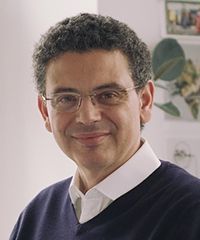
By Pedro Conceicao
We live in uncertain times. Wildfires, droughts and massive storms upend lives in all corners of the world.
But this doesn't have to be the only view of today's world ― there are alternative narratives.
Human development can be defined as the process of enlarging people's freedoms and opportunities, and improving their well-being.
This school of thought is anchored in Nobel laureate Amartya Sen's work on human capabilities, often framed in terms of whether people can “be” and “do” desirable things in life. The concept of human development has become the North Star for people-centered policymaking over the past three decades. It provides a structured, measurable template for policy, which can be used to address the unfolding poly-crisis of the post-pandemic era.
Our latest 2021-22 Human Development Report confirmed a dim reality: for the first time ever, the global indicators measuring human development declined two years in a row, driven by a new “uncertainty complex.”
Constituting it are three volatile and interacting layers: the destabilizing planetary pressures of the Anthropocene, the pursuit of sweeping societal transformations to ease those pressures and the widespread political polarization within and across countries.
The combination of these forces makes it harder for us to come together to tackle shared problems at a time when we need it the most. However, strong, committed partnerships have the potential to determine the course the world takes.
The Republic of Korea has been engaged in such successful international collaborations through the Ministry of Foreign Affairs as well as through the Korea International Cooperation Agency (KOICA). We are pleased that the Republic of Korea has supported our research. It is thanks to this partnership that we were able to formulate and propose the following three policies for tackling the interconnected and simultaneously developing crises.
First, we recommend investments in a resilient future, especially renewable energy, preparedness for pandemics and the response to extreme natural hazards. The investments into tsunami preparedness following the 2004 Indian Ocean tsunami are a good example of smart, coordinated action. It has led to the launch of the Early Warnings for All initiative to ensure that everyone on Earth is protected from hazardous weather, water or climate events through life-saving warning systems by the end of 2027.
Second, insurance, which helps protect everyone from the contingencies of an uncertain world. The global surge in social protection in the wake of the COVID-19 pandemic did just that, while underscoring how little social insurance coverage there was before and how much more remains to be done. Investments in universal health coverage and education also afford an insurance function.
Lastly, the third policy is innovation, which is going to be vital in responding to unknown and unknowable challenges that humanity will face.
We have proposed a policy way forward through investments into resilience, insurance and innovation. The task ahead of us now is to inform decision makers of various approaches to solutions and support them in their implementation, while continuing to adapt to evolving challenges.
Partnerships will be key to navigating the complex landscape of global development in an era marked by uncertainty and transformation. It can be done. We can make the needed progress on Sustainable Development Goals. As the last G20 Communique proclaimed, “Together we have an opportunity to build a better future.” Indeed, if we all put our heads to it, we can jointly build a better future for all.
Pedro Conceicao is director of the Human Development Report Office at the United Nations Development Programme (UNDP).