World in trouble
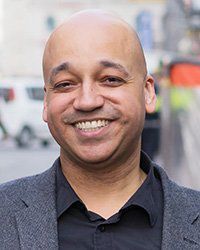
By Casey Lartigue Jr.
Martin Luther King Jr. wrote, “Injustice anywhere is a threat to justice everywhere.” I don't doubt the wisdom, but I would like to point out that King didn't (and couldn't) go everywhere to fight injustice. That's not a knock against the great King. There are so many injustices in the world that even an army of Martin Luther King Jr.-like-minded generals and soldiers could not have fought against them all.
I thought about that King quote when I attended the 16th Geneva Summit for Human Rights and Democracy on May 17. The annual Geneva Summit provides a platform for human rights activists, dissidents, and former political prisoners to testify about their battles against injustice. The summit is held around the time that the main annual session of the United Human Rights Council gathers foreign ministers together.
Along with two South Korean colleagues, I attended the summit along with North Korean refugee Han Song-mi, co-author with me of her memoir “Greenlight to Freedom” and one of the invited speakers at the summit.
Our team met and heard from some hardcore activists fighting against human rights abuses in the world. I had seen clips and articles about Frances Hui and finally had a chance to meet her. She's the first Hong Kong activist granted political asylum in the U.S. because of her activities against the Chinese government. I visited Hong Kong a few months shortly before China took control of it from the U.K., in 1997, and now decades later I am watching an activist born in 2002 who is fighting against Chinese control.
When I met Nila Ibrahimi, a 15-year-old Hazara activist who narrowly escaped the Taliban takeover of Afghanistan, I thought about how innocent my own childhood was in Missouri City, Texas. The backyard football game “kill-the-man-with-the-ball” was as rough as things got for us. I had trouble listening to the testimony by Marie-Claire Kakpotia, a survivor and activist fighting to end female genital mutilation.
We heard from and met many human rights activists who have been jailed and tortured for their political activities or were sharing stories of others close to them.
After attending the summit I talked with my South Korean colleagues about it. Their first main observation: the world is in trouble! They focus so much on North Korea that they didn't realize there was so much injustice in the world. They learned about many other countries with blatant human rights abuses.
Second, during the conference, I pointed out that most of the speakers appealed to people to get involved. That's even though the people at the summit were already involved enough to be there. Activists can't help themselves, we make the appeal even to each other. Many people are apathetic or focused on their own lives. I am not, by the way, blaming people for this human reality.
Adam Smith noted centuries ago that as much as people may care about others, they care about themselves even more. He gave the example that if all of China “was suddenly swallowed up by an earthquake,” caring humanitarians may express sorry, but they would go back to their own lives “with the same ease and tranquility, as if no such accident had happened.” On the other hand, if that caring humanitarian “was to lose his little finger tomorrow, he would not sleep tonight.” Others may be going through emergencies, but for most of humanity, your emergency is your own.
Third, South Koreans often praise Westerners for showing up to meetings about North Korea or for volunteering for North Korean refugees. I have previously written and told South Koreans that few Westerners stay involved for long. Again, people have their own lives and interests, and those interests often change. Some of our volunteers have also been involved in other issues, ranging from advocacy for abortion rights, animal rights, LGBTQIA rights, political campaigns, Black Lives Matter, etc. Injustice against North Koreans is one of many issues in this world for people. Some people may get involved short-term, then get back to their own lives and or join other causes.
Fourth, even though those activists are fighting injustice around the world, there were many smiles and hugs. It was a small community of people who know how difficult it is to engage in activism that family, friends, and Internet commentators often don't understand.
Fifth, as involved as I am involved with empowering North Korean refugees to speak out, I could be called apathetic by people in other causes. An injustice anywhere may be an injustice everywhere, but no one can get involved everywhere.
I left the summit more informed and inspired, but also aware that I can't get involved in every injustice everywhere. The old saying “think global, act local” still seems to be the best way to make the world a better place.
Casey Lartigue Jr. (CJL@alumni.harvard.edu) is co-founder with Lee Eun-koo of Freedom Speakers International (FSI), co-author with Han Song-mi of the book "Greenlight to Freedom," and a Seoul honorary citizen.