Building evidence for effective policies using tax service data
By Leora Klapper

Leora Klapper
As economists, we rely on access to accurate and reliable data to assess the impact of fiscal or monetary policies on economic outcomes.
The good news for us ― and for all researchers ― is that the South Korean National Tax Service (NTS) has opened its NTS data lab to data requests, providing “pseudonymized” individual or firm level tax data, including global income tax, value-added tax, withholding tax and other important taxes. This data reflects Korean fiscal policy related to tax benefits such as support for firm creation, employment and the adoption of new technologies.
Studying the data from the NTS data lab can provide valuable insights for researchers interested in how tax policies can enable economies to optimize tax incentives, encourage taxpayers to use new technologies and adapt to a changing global environment.
For instance, analyzing data in the years before and after enacting a fiscal policy can reveal lessons for policy design, public finances, firm innovation and technology adoption.
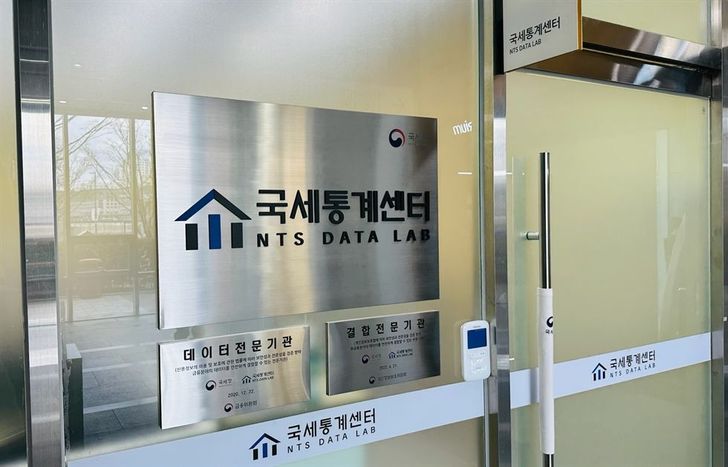
National Tax Service (NTS) data lab / Courtesy of NTS
Our research team has been one of the beneficiaries of the NTS data lab. We are analyzing around seven years of an entrepreneur-level panel dataset of value-added tax reporting, global income tax and withholding of salary taxes. Our research focuses on the impact of tax credits to encourage the adoption of electronic payments by consumers, and of payment terminals by firms. This research is a collaboration between the KAIST Business School and the World Bank Development Research Group.
The process for researchers to request data from the NTS data lab involves applying for a consulting session, submitting a research proposal, conducting data analysis at the NTS data lab and making available the research outputs outside of the data lab. The NTS data specialist team led by statistics experts reviews the research proposal and advises on data availability, data structure, sampling method, and other requirements. The data specialists also help researchers in coordinating access schedules and answering questions regarding data. All outputs are reviewed by the NTS to ensure anonymization.
The NTS data lab provides an opportunity to study the behavioral changes of taxpayers in response to changes in fiscal policy. Given the richness of the data and the assistance provided by NTS, our experience has been positive, resulting in research outputs that we hope will benefit the broader global economic community.
Researchers can consult the annual release of tax statistics by NTS to determine if the data could be useful for one of their studies. Most aggregated-level information in the yearly release is available at the individual level through the NTS data lab. It enables researchers to test various hypotheses at the micro level and explore heterogeneity across multiple dimensions.
We are grateful for our collaboration with NTS and look forward to sharing the results of our research based on NTS data.
Leora Klapper is a Lead Economist in the Development Research Group at the World Bank.